









Learn what cholesterol is, what healthy levels look like and how diet, exercise, plant sterols and treatment can help manage high cholesterol.
🕒 10 min read
Cholesterol lowering at a glance
Lowering cholesterol usually involves a combination of diet and lifestyle changes and, for some people, medication. Cutting down on saturated fat, choosing unsaturated fats, eating more fibre-rich foods, staying physically active, maintaining a healthy weight and not smoking can all help.
Specific foods and food components including oats and barley, nuts, soya and plant sterols or stanols can also help lower LDL cholesterol when consumed in effective amounts.
What is cholesterol?
Cholesterol is a fatty substance found in the blood and in every cell in the body. We need some cholesterol to function normally: it helps form cell membranes and is used to make hormones, bile acids and vitamin D.
Most cholesterol is made by the liver. Cholesterol also comes from food, although for most people the amount of dietary cholesterol eaten has less influence on blood cholesterol than the overall balance of fats in the diet.
In particular, eating too much saturated fat can raise blood cholesterol. Replacing saturated fats with unsaturated fats can help lower it.
What are the different types of cholesterol?
Cholesterol cannot travel around the bloodstream by itself, so it is carried in particles called lipoproteins. A cholesterol blood test usually looks at several different measurements rather than total cholesterol alone.
LDL cholesterol
LDL stands for low-density lipoprotein. It is often called 'bad' cholesterol because high levels of LDL cholesterol can contribute to fatty deposits building up in the walls of arteries.
HDL cholesterol
HDL stands for high-density lipoprotein. It is often called 'good' cholesterol because it helps transport cholesterol away from tissues and back to the liver.
Non-HDL cholesterol
Non-HDL cholesterol is your total cholesterol minus your HDL cholesterol. It includes LDL and other cholesterol-containing particles associated with cardiovascular risk and is an important measure when assessing and treating high cholesterol.
Triglycerides
Triglycerides are another type of fat found in the blood. They provide and store energy, but raised triglyceride levels can also contribute to cardiovascular risk and are usually assessed alongside cholesterol.
What is a healthy cholesterol level?
Healthy targets depend on your overall health and cardiovascular risk. The following figures are a general guide for healthy adults in the UK. If you already have cardiovascular disease, diabetes or another condition that increases your risk, your healthcare professional may recommend different targets.
| Measurement | General guide for healthy adults |
|---|---|
| Total cholesterol | Below 5.0 mmol/L |
| Non-HDL cholesterol | Below 4.0 mmol/L |
| LDL cholesterol | Below 3.0 mmol/L |
| HDL cholesterol | Above 1.0 mmol/L for men and above 1.2 mmol/L for women |
| Fasting triglycerides | Below 1.7 mmol/L |
| Non-fasting triglycerides | Below 2.0 mmol/L |
These figures should not be interpreted in isolation. Your GP or other healthcare professional will consider your cholesterol alongside factors such as age, blood pressure, smoking, diabetes and family history when assessing cardiovascular risk.
See the NHS guide to cholesterol levels or HEART UK's cholesterol test guidance for more information.
What causes high cholesterol?
High cholesterol often develops because of a combination of factors rather than one single cause.
Factors that can contribute include eating a diet high in saturated fat, being physically inactive, smoking, drinking too much alcohol and living with excess weight. Cholesterol levels also tend to change with age.
Some medical conditions, including an underactive thyroid and diabetes, can affect blood lipids. Certain medicines can also influence cholesterol levels.
Genetics can play an important role too. Familial hypercholesterolaemia (FH) is an inherited condition that causes very high cholesterol from a young age and requires medical assessment and treatment.
Why does high cholesterol matter?
High cholesterol usually causes no symptoms, which is why a blood test is needed to identify it.
Over time, high levels of LDL and other cholesterol-containing particles can contribute to fatty deposits developing in the walls of arteries. This process, known as atherosclerosis, increases the risk of cardiovascular disease including heart attack and stroke.
Cholesterol is only one part of cardiovascular risk. High blood pressure, smoking, diabetes, age, family history and other factors also affect your overall risk.
High cholesterol and high blood pressure are separate cardiovascular risk factors, and they often occur together. Managing both can be an important part of reducing your overall cardiovascular risk.
How can you lower cholesterol?
There is no single food or lifestyle change that works for everyone. A combination of sustainable changes generally provides the best approach.
1 Follow a heart-healthy eating pattern
A Mediterranean-style eating pattern is a useful framework. Base meals around vegetables, fruit, wholegrains, beans and pulses, nuts and seeds, with fish and unsaturated oils such as olive or rapeseed oil.
You do not need to drink alcohol to follow a Mediterranean-style diet. If you do drink, keep within UK low-risk drinking guidelines.
2 Replace saturated fats with unsaturated fats
Eating too much saturated fat can raise blood cholesterol. Common sources include butter, ghee, fatty and processed meat, cream, cheese, cakes, biscuits and foods containing large amounts of coconut or palm fat.
Where possible, replace these with foods containing unsaturated fats such as olive or rapeseed oil, unsaturated spreads, nuts, seeds, avocado and oily fish.
3 Include foods that can help lower cholesterol
Some foods and food components have particularly good evidence for lowering LDL cholesterol when eaten regularly and in effective amounts.
| Food | What it provides | Why it may help |
|---|---|---|
| Oats and barley | Beta-glucan soluble fibre | A daily intake of 3g beta-glucan from oats or barley has been shown to lower blood cholesterol. |
| Nuts | Unsaturated fats, fibre and plant protein | A regular handful of unsalted nuts can contribute to a cholesterol-friendly diet and has a modest LDL-lowering effect. |
| Soya foods and drinks | Soya protein and unsaturated fats | Soya can help when it replaces foods higher in saturated fat, and sufficient soya protein can produce a modest reduction in LDL cholesterol. |
| Plant sterols and stanols | Plant compounds structurally similar to cholesterol | Intakes of 1.5g to 3g daily can lower LDL cholesterol by around 7% to 12.5%. |
| Unsaturated oils and spreads | Mono- and polyunsaturated fats | Replacing saturated fats with unsaturated fats can help reduce LDL cholesterol. |
| Oily fish | Unsaturated fats including omega-3 | Oily fish can replace foods higher in saturated fat and forms part of a heart-healthy eating pattern. |
| Fruit, vegetables, beans and pulses | Fibre and a wide range of nutrients | Increasing fibre-rich plant foods supports an overall diet that is lower in saturated fat and better for cardiovascular health. |
For practical meal and snack ideas, see our six food swaps to lower cholesterol.
4 Sit less and move more
Regular physical activity supports cardiovascular health and can improve your overall blood-fat profile.
The NHS recommends aiming for at least 150 minutes of moderate-intensity activity or 75 minutes of vigorous activity each week. Brisk walking, cycling and swimming are good examples.
5 Look at your wider cardiovascular risk
If you are living with excess weight, gradual sustainable weight loss can improve several cardiovascular risk factors. If you smoke, stopping is one of the most important things you can do for your cardiovascular health.
Alcohol can also affect triglycerides and overall cardiovascular risk, so keep within recommended limits and have alcohol-free days.
6 Consider plant sterols
Plant sterols and stanols are natural plant compounds with a similar structure to cholesterol. They reduce the amount of cholesterol absorbed in the intestine.
According to HEART UK, consuming 1.5g to 3g daily can lower LDL cholesterol by around 7% to 12.5%, with benefits seen within around two to three weeks.
Natural foods contain only small amounts, so effective quantities are generally obtained from fortified foods or supplements.
Find out more about how plant sterols work to lower cholesterol, or browse the Healthspan Plant Sterols range.

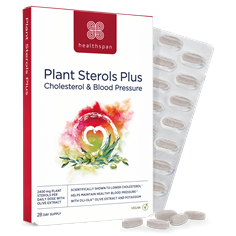
Plant Sterols 800mg
Scientifically shown to lower cholesterol
- 800mg plant sterols per tablet
- 2–3 tablets daily provide 1,600–2,400mg plant sterols
- 1 tablet daily contributes to the maintenance of normal blood cholesterol levels
7 Take medication when it is recommended
Lifestyle changes are important, but they are not always enough on their own. Some people will need cholesterol-lowering medication because of their cholesterol level, existing cardiovascular disease or overall risk of heart attack and stroke.
Statins are the most commonly used cholesterol-lowering medicines. NICE recommends discussing lifestyle changes before starting statins for primary prevention where appropriate, while people who already have cardiovascular disease generally require medication alongside lifestyle measures.
Other medicines, including ezetimibe, bempedoic acid, inclisiran and PCSK9 inhibitors, may be used in some circumstances. Your doctor will recommend treatment according to your individual risk, cholesterol response and tolerance.
If you have been prescribed cholesterol-lowering medication, do not stop or change it without speaking to your doctor or pharmacist.
Can you take plant sterols with statins?
Plant sterols and statins lower cholesterol in different ways and plant sterols can be used alongside statins. However, supplements should not be treated as a replacement for prescribed medication.
Compare how plant sterols and statins lower cholesterol, possible side effects and whether they can be taken together.
Read the guide
Know your overall cardiovascular risk
Cholesterol results are only one part of your overall cardiovascular risk. Healthcare professionals also consider factors including age, blood pressure, smoking, diabetes and family history.
In the UK, QRISK3 is used to estimate a person's risk of developing cardiovascular disease over the next 10 years where appropriate.
NICE recommends offering atorvastatin 20mg for primary prevention to many adults whose 10-year QRISK3 score is 10% or more, following an informed discussion about risks, benefits and individual circumstances.
Cholesterol: frequently asked questions
What foods help lower cholesterol?
Foods that can help include oats and barley, nuts, soya foods and products fortified with plant sterols or stanols. More broadly, choose plenty of fruit, vegetables, wholegrains, beans and pulses and replace foods high in saturated fat with foods containing unsaturated fats.
What vitamins lower cholesterol?
No vitamin supplement is routinely recommended specifically as a treatment for high cholesterol. Niacin, or vitamin B3, has been used in the past at medicinal doses, but NICE does not recommend nicotinic acid for preventing cardiovascular disease.
Evidence-based non-prescription dietary approaches include beta-glucan from oats and barley and plant sterols or stanols, although these are not vitamins.
What is the difference between LDL and HDL cholesterol?
LDL transports cholesterol around the body and high LDL levels can contribute to fatty deposits in arteries, which is why it is commonly called 'bad' cholesterol. HDL helps transport cholesterol back towards the liver and is commonly called 'good' cholesterol.
Can exercise lower cholesterol?
Regular physical activity can improve your overall blood-fat profile and cardiovascular health. The NHS recommends at least 150 minutes of moderate-intensity activity or 75 minutes of vigorous activity each week for adults.
How quickly can cholesterol come down?
There is no single timeframe because the response depends on your starting cholesterol, genetics, diet, activity, weight and whether you use medication. Some dietary interventions act relatively quickly: for example, an effective daily amount of plant sterols can produce a cholesterol-lowering effect within around two to three weeks.
Do plant sterols lower cholesterol?
Yes. Daily intakes of 1.5g to 3g of plant sterols or stanols have been shown to lower LDL cholesterol by around 7% to 12.5%. They work by reducing cholesterol absorption in the intestine.
When are statins needed for high cholesterol?
The decision is based on more than the cholesterol number alone. Your doctor considers your overall cardiovascular risk, medical history and other risk factors. NICE recommends atorvastatin for many people with a 10-year QRISK3 score of 10% or more and recommends lipid-lowering treatment for people with established cardiovascular disease.
Small changes can make a meaningful difference
High cholesterol is common, but there are several ways to improve your cholesterol profile and wider cardiovascular health. Focus on a heart-healthy diet, regular physical activity, reducing saturated fat, eating more fibre-rich plant foods and addressing other risk factors such as smoking and high blood pressure.
If you know your cholesterol is high, discuss your results and overall cardiovascular risk with your GP or another healthcare professional rather than relying on a single cholesterol number.
For more practical advice, read our six food swaps to lower cholesterol and our guide to how plant sterols work.
Top ↑



%20Sep24-v2.png)
