














Turmeric has been used in Ayurvedic medicine for millennia, and may also be helpful to use directly on your skin as a face mask. Jocelyn Bailey explains.
🕒 6 min read
There's nothing new about turmeric. The golden spice has been used in Ayurvedic medicine for thousands of years, but why has it become such a buzz ingredient, especially in skincare, and what can it do for you?
What are the benefits of turmeric for skin?
The potential benefits of turmeric for skin largely come from curcumin, a naturally occurring compound with antioxidant, anti-inflammatory and antimicrobial activity. However, clinical research into topical turmeric is still limited, so many popular skincare claims are not yet proven.12
| Potential benefit | What the research suggests |
|---|---|
| Anti-inflammatory activity | Curcumin has anti-inflammatory properties and has been investigated in a number of inflammatory skin conditions, although more high-quality clinical research is needed. |
| Antioxidant activity | Curcumin has antioxidant activity that may help protect cells from oxidative stress, but this does not mean a homemade turmeric mask has been proven to prevent skin ageing. |
| Antimicrobial activity | Laboratory research has demonstrated antimicrobial effects, but there is insufficient evidence to recommend a turmeric face mask as a treatment for acne or skin infections. |
| Skin appearance | Clinical studies have investigated turmeric and curcumin for areas including facial redness, photoageing and skin moisture, but the evidence remains limited. |
How does turmeric work on the skin?
Turmeric's key ingredient is the high concentration of curcumin, which also gives it that vibrant shade of yellow; to simply enjoy it in your diet add a little of its peppery, slightly bitter flavour to soups, stews, curries or smoothies.
When it comes to beauty, turmeric and curcumin have been studied for their effects on inflammation, oxidative stress and a range of skin conditions. A systematic review of clinical research found some promising results from both topical and oral turmeric or curcumin, but concluded that the available studies were limited and that further research was needed.2
This means turmeric can be an interesting cosmetic ingredient, but it should not be regarded as a proven treatment for problems such as acne, hyperpigmentation or wrinkles.
Turmeric can temporarily stain both skin and fabrics. It can also cause contact reactions in some people.3
Patch-test any new topical mixture on a small area of skin first and stop using it if you develop burning, itching, redness or swelling. Avoid applying homemade treatments to broken or already irritated skin.
Avoid adding lemon or other citrus juice to a homemade face mask. Citrus juice on skin followed by exposure to sunlight can cause a phototoxic skin reaction known as phytophotodermatitis.4
Turmeric and inflammation
One reason turmeric has attracted interest in skincare is curcumin's anti-inflammatory activity. Clinical research has investigated turmeric and curcumin in several inflammatory dermatological conditions, although the quality of evidence varies considerably between conditions.1
This does not mean that ground turmeric should be used to treat inflamed or damaged skin. If you have persistent redness, irritation, eczema or another skin condition, speak to a pharmacist, GP or dermatologist rather than relying on a homemade treatment.
A simple turmeric face mask
If your skin tolerates turmeric and you want to try it as a cosmetic face mask, keep the mixture simple and patch-test it first.
Ingredients
- 1 tablespoon plain yoghurt
- 1 teaspoon honey
- 1/4 teaspoon ground turmeric
Method
- Mix the ingredients together to form a paste
- Apply a thin layer to clean skin, avoiding the lips and eye area
- Leave on briefly and remove immediately if your skin feels irritated
- Rinse thoroughly with lukewarm water and pat dry
- Finish with your usual moisturiser
Tip: Turmeric can stain the skin temporarily, so use a small quantity and take care around clothing and towels.
Does turmeric have antioxidant benefits for skin?
Curcumin has antioxidant properties and can interact with processes involved in oxidative stress. This is one of the reasons it has been studied in relation to skin health and photoageing.1
However, the evidence does not show that applying kitchen turmeric to the face will prevent collagen breakdown or reliably reduce lines and wrinkles. Formulation, concentration and delivery method can all affect how curcumin behaves when applied to the skin.
A turmeric, honey and coconut milk mask
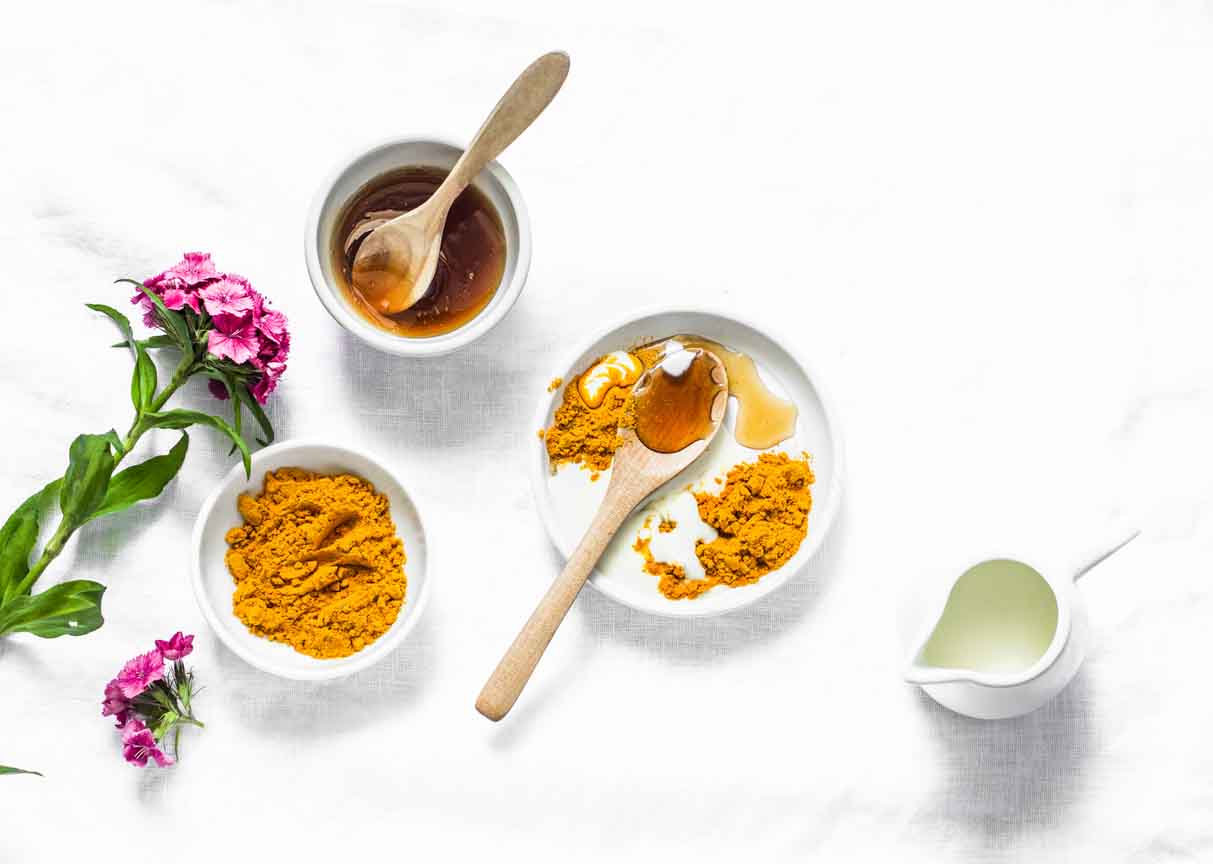
Ingredients
- 1 1/2 teaspoons ground turmeric
- 1 teaspoon honey
- 1 tablespoon coconut milk
Method
- Mix to a thin paste, adding extra coconut milk if necessary
- Apply to clean skin, avoiding lips and eyes
- Leave on briefly and remove immediately if irritation develops
- Rinse off with lukewarm water and pat dry
- Finish with moisturiser
Tip: Add a small amount of flour if your mask seems too thin and runny. For dry skin, use ground oatmeal instead.
Can turmeric help blemish-prone skin?
Curcumin has demonstrated antimicrobial activity in laboratory research, which has led to interest in its potential role in blemish-prone skin. However, laboratory activity is not the same as proving that a homemade turmeric mask treats acne.
Clinical reviews have found some early evidence for turmeric and curcumin in dermatology, but larger and better-designed trials are still needed.12
Turmeric and yoghurt face mask
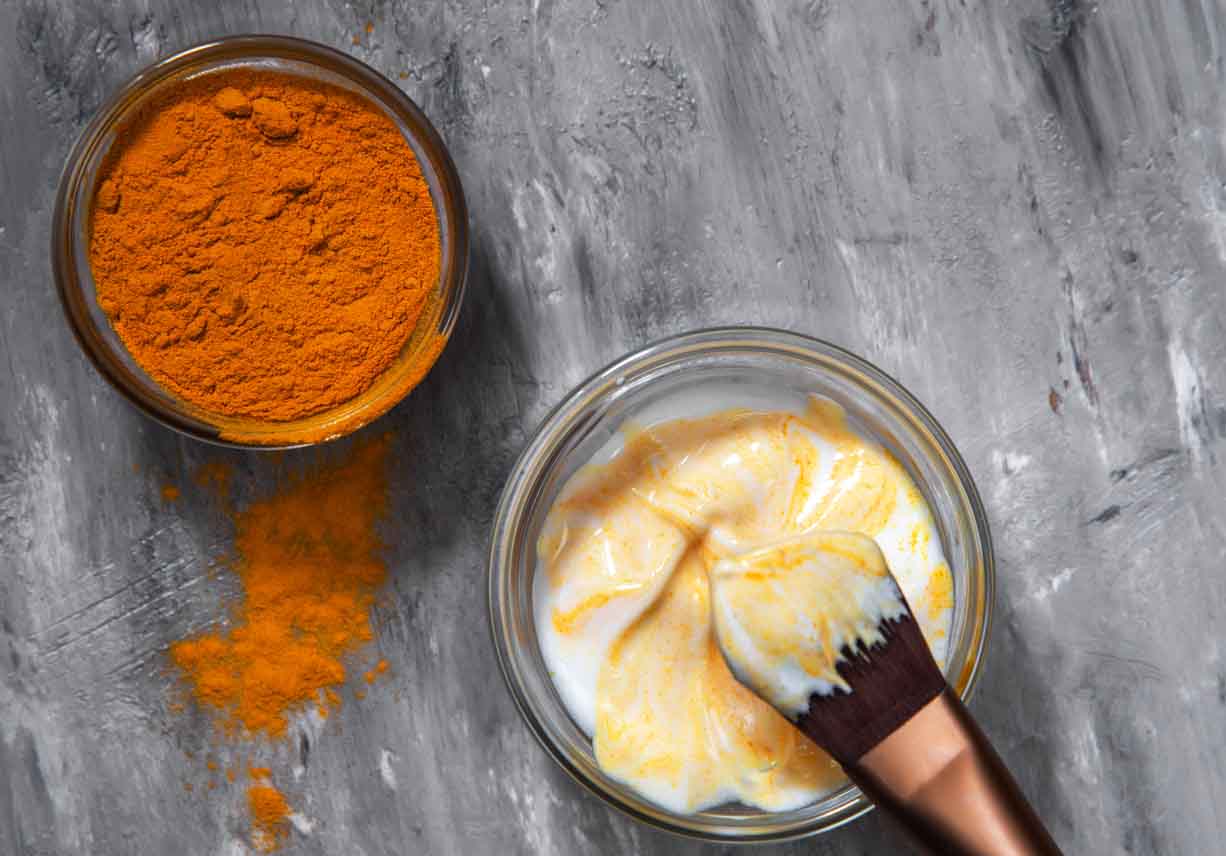
Ingredients
- 2 tablespoons flour
- 1 teaspoon ground turmeric
- 3 tablespoons yoghurt
- A few drops of honey
Method
- Mix the ingredients to a paste
- Apply thinly to your skin, avoiding the lips and eye area
- Leave on briefly and stop if you experience irritation
- Rinse off with lukewarm water and pat dry
- Finish with moisturiser
Never leave a homemade turmeric treatment on overnight. As well as the potential for irritation, turmeric readily stains skin, towels, clothing and bedlinen.
What about turmeric supplements for skin?
Research has also investigated orally consumed turmeric and curcumin in relation to skin health. Reviews have reported some potentially beneficial findings, but the studies remain limited and do not establish turmeric supplements as a treatment for skin conditions.2
If you're interested in oral turmeric products, you can explore our turmeric supplements range.
Frequently asked questions
What are the benefits of turmeric for skin?
Curcumin has antioxidant, anti-inflammatory and antimicrobial properties and has been studied for several areas of skin health. However, clinical evidence is still limited, so turmeric should not be considered a proven treatment for skin conditions.
Is turmeric good for your face?
Some people use turmeric as a cosmetic ingredient on the face, and curcumin has been investigated in dermatology. Turmeric can also stain or irritate the skin, so patch-test it first and stop using it if you develop redness, itching or discomfort.
Can turmeric help with acne or blemishes?
Curcumin has shown antimicrobial and anti-inflammatory activity in laboratory research, but there is not enough good clinical evidence to recommend a homemade turmeric mask as an acne treatment. Persistent or severe acne should be discussed with a pharmacist, GP or dermatologist.
Can turmeric help with dark spots or hyperpigmentation?
Turmeric is frequently promoted for pigmentation, but there is currently insufficient clinical evidence to show that a homemade turmeric mask reliably fades dark spots. If pigmentation is persistent or changing, seek professional advice.
Does turmeric stain your skin?
Yes. Turmeric's strong yellow pigment can temporarily stain the skin as well as towels, clothes and bedding. Using a small amount and rinsing it off thoroughly can help reduce staining.
Are there really 20 benefits of turmeric for skin?
Lists claiming 20 or more turmeric benefits for skin often go beyond the available clinical evidence. Research supports studying curcumin for its antioxidant, anti-inflammatory and antimicrobial properties, but many specific cosmetic benefits still require better human trials.