













The key to a healthier, stronger body, improved mental wellbeing and a way to slow the process of ageing? Physical activity – and it's never too late to start.
Physical activity isn't just for the young and fit. In fact, it can be tailored to everyone's unique needs and is hugely important as we get older in order to maintain functional muscle mass and strong joints.
The most important thing is to find something you enjoy – that way, you are far more likely to stick at it – and consistency is key. Often it can also be done for free, because you don't necessarily have to join a gym or an exercise class.
Shouldn't I be slowing down with age?
Although no one would suggest working out in the same manner as you did in your twenties, maintaining movement is so important for bone, muscle and general joint health. You are literally 'oiling' the joints as you move them, releasing fluid into the joint capsule to keep the cartilage plump and supple, cushioning the joint to protect it from wear and tear.
The trick is to find the right form of exercise for each life stage.
The benefits of staying active as we age
Continuation of daily activities
Keeping active helps our bodies to remain strong and flexible, so we can continue to carry out the basic activities of daily living (ADL) into old age. From climbing stairs to getting out of an armchair or bending down to pick something up off the floor, building strength now will pay off in the future.
Improved cardiovascular health
Staying fit also means we function better on the inside, as our cardiovascular system benefits from regular aerobic exercise, supporting cardiovascular health.
Strong bones and muscles
Our muscles and bones naturally lose mass as we age, but with regular weight-bearing exercise, we are less likely to develop osteoporosis or muscle wastage (sarcopenia).
Even if you're not thinking about gaining visible muscle or improving muscle tone or shape, muscle is also important for metabolism, which lowers with age, so building muscle mass helps maintain a healthy weight.
Prevent injury and maintain mobility
I often say a strong core means a strong body, because if kept strong and healthy, the muscles of the core will take on the work of our daily activities – walking, sitting, getting out of a car, bending down to put the washing in the machine – instead of the back and/or neck taking the strain.
Recovery, rehabilitation and staying fit
As we get older, we are all likely to experience a few health knockbacks, from illness to injury and surgery.
However, a strong body that functions better also recovers better; in fact, people who exercise regularly have been shown to bounce back more quickly from illnesses and operations, as their bodies have more inbuilt resilience.
If you have time to build strength before an operation, it's an excellent way to boost your recovery.
The exercise
A key thing to remember is to work the body as a whole, as whatever your exercise goals, you can't 'spot reduce' – the claim that you can reduce fat in certain places of the body through the exercise of specific muscles in that area.
By trying to do this, you also risk causing injury by developing a muscle imbalance, as what happens in one part of the body can affect somewhere else entirely. For example, tight hamstrings can cause lower back pain and a tight chest can weaken your upper back.
This is one reason why Pilates is an ideal, balanced form of exercise. It incorporates resistance work to strengthen muscles and bones, as well as stretches to improve flexibility. By incorporating stretches into our exercise plan, we can also maintain a good range of movement in the joints, in order to aid recovery and help prevent injury. Joseph Pilates actually devised his method of training the body to help himself recover from a sickly childhood.
Furthermore, it also focuses on improving posture, which can progressively worsen as we age, by incorporating exercises to work our core – basically all the muscles that support our torso: shoulders, back, abdomen and hips. A healthy spine supports everything we do and helps us to maintain our independence for longer.
Another huge advantage is that it is a low-impact form of exercise that can place less stress on the joints.
How much and how often?
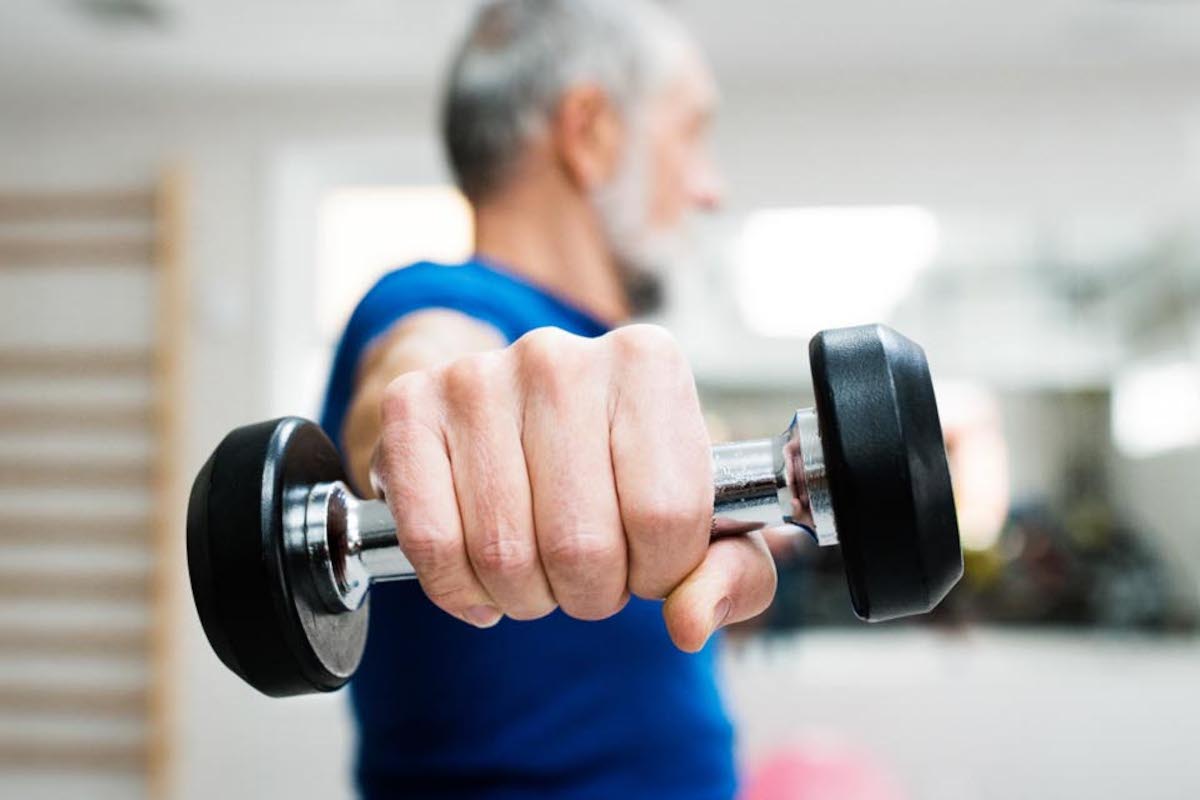
Maintenance of healthy muscles, as opposed to bodybuilding, should involve lots of repetitions with a lighter resistance – whether that resistance is weights, bands or simply your own body weight – working to fatigue the muscles, without feeling too sore to move the next day.
Options are always offered in classes, so you can choose the level at which you want to work.
Resistance training should occur two or three times a week, with at least 48 hours between each session to aid recovery.
The diet
How you feed your body makes a difference, too. Focus on consuming a balanced diet with plenty of fresh vegetables and fruit, proteins for muscle repair and calcium for healthy bones. The NHS Eatwell Guide shows what kinds of food you should eat, and in what proportions, to contribute towards a healthy and balanced diet.1
Of course, there may be times when extra help is needed. For instance, protein is especially important post-surgery as it helps to repair damaged body tissues, build muscle, form antibodies to fight infection and synthesise collagen, which is needed for scar formation.
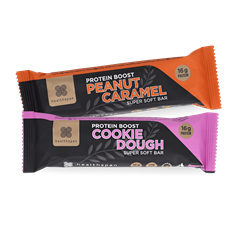
Collagen can be found naturally in lean meat, fish, nuts and seeds, while protein supplements, including powders or convenient options such as Protein Boost Bars – Mixed, may also be recommended.
Foods such as fatty fish, some nuts, green leafy vegetables and dark fruits such as blueberries can also form part of a healthy, balanced diet after surgery.
The supplements
Glucosamine, chondroitin and vitamin C are often mentioned in connection to joint health. Both glucosamine and chondroitin are found naturally in the body's connective tissues and are structural components of joint cartilage, but our body is less able to produce these as we get older.
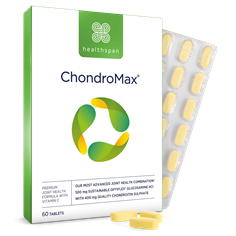
A combined formula such as ChondroMax® Advanced Joint Support provides glucosamine and chondroitin alongside vitamin C.
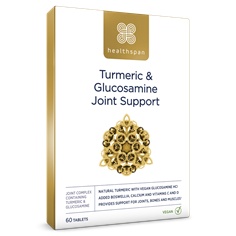
Vitamin C contributes to normal collagen formation to support cartilage function and is also commonly combined with turmeric as well as glucosamine and chondroitin.
Whatever you choose, always check first with your health professional that these are compatible with any prescribed medication.