











In athletes, given the amount of training they undertake, maintaining healthy connective tissue is an important part of everyday life. Here Wendy Martinson discusses the role of collagen in the maintenance, repair and remodelling of connective tissue.
🕒 6 min read
Collagen supplements provide amino acids and peptides that researchers have studied for activity-related joint discomfort and connective-tissue responses to exercise. Results are promising in some studies, but benefits depend on the formulation and outcome measured. Wendy explains the evidence and how supplementation can fit into a wider nutrition strategy.1, 7
Why is collagen important?
Collagen is a major structural protein of ligaments, tendons, bone and cartilage. Maintaining the integrity of these connective tissues is critical to enabling physical movement and activity. Collagen itself is a protein that is rich in the amino acids glycine, hydroxyproline and proline, which are provided through our daily food intake.1
Collagen is one of approximately 300 proteins that make up the complex system of the extracellular matrix (ECM) that gives structural and biochemical support to the surrounding connective tissue.2 Good nutrition and exercise are fundamental in maintaining the function of this matrix.
Type I versus type III collagen: what is the difference?
Both are structural collagens found in connective tissue, but their distribution and roles differ.
| What to compare | Type I collagen | Type III collagen |
|---|---|---|
| Where it is found | Abundant in tendons, ligaments, bone and skin. | Found alongside type I in tissues such as skin and blood-vessel walls. |
| Structural role | Forms strong fibres that help tissues withstand tension. | Contributes to the organisation of connective-tissue fibres and tissue structure. |
| In hydrolysed supplements | Commonly supplied by bovine and marine collagen ingredients. | Often supplied alongside type I in bovine collagen ingredients. |
Type II is the main collagen in joint cartilage. Hydrolysed collagen is broken down into smaller peptides; the type on the label does not mean it travels intact to one particular tissue. Compare the source, daily serving and evidence for the actual formulation.14
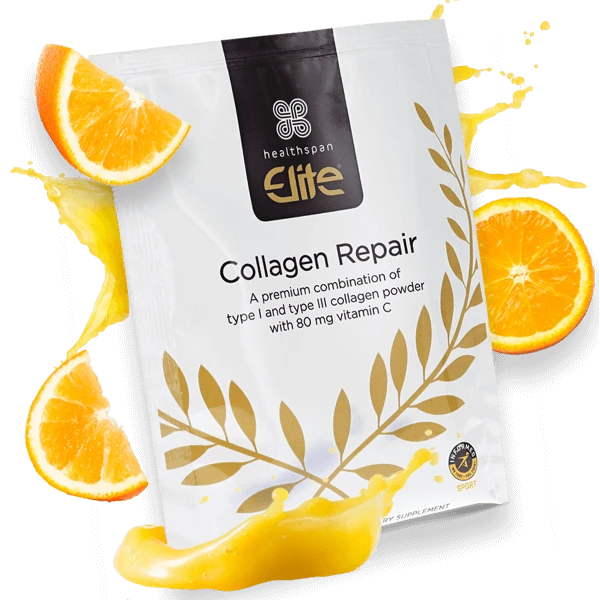
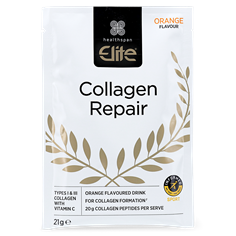
Elite Collagen Repair
Type I and type III collagen in an orange-flavoured drink.
- 20g hydrolysed collagen peptides per sachet
- 80mg added vitamin C per sachet
- Vitamin C contributes to normal collagen formation for the normal function of cartilage
How does collagen supplementation work?
First and foremost, a good diet is crucial to provide the right balance of macro- and micronutrients that the body needs to stay healthy and function normally. This is especially important for athletes undertaking a challenging training program. However, there may be specific periods of time, during injury for example, when supplementation may be beneficial to help support repair and remodelling of the injured tissues.
Although there is still much more work to be done in this area, current research does suggest that supplementing with hydrolysed collagen or gelatin and vitamin C will provide the amino acid building blocks that may promote greater collagen synthesis in connective tissue.3, 4 Vitamin C acts as a co-factor; this means it is required for the activity of the enzyme involved in the production of hydroxyproline, an amino acid found in collagen.5
There have been several studies looking at the impact of collagen supplementation on connective tissue. One small pilot study observed MRI changes consistent with changes in cartilage proteoglycan content in some knee regions after 24 weeks of collagen hydrolysate supplementation. This did not establish that cartilage had thickened, and clinical outcomes did not differ significantly between groups.6 Another study reported improvements in some measures of activity-related joint pain in athletes taking 10g collagen hydrolysate daily over 24 weeks.7
A 2019 study looked at the effect of different preparations of collagen supplements on a blood marker associated with bone collagen synthesis. Subjects took 15g collagen enriched with 48mg vitamin C, either as a drink containing gelatin or hydrolysed collagen, or as a gummy containing equal parts of both.1
To load the musculoskeletal system and stimulate bone collagen synthesis, subjects did 6 minutes of continuous jump rope 1 hour after consuming the supplement. After another 4 hours blood levels of Procollagen 1 N-terminal Propeptide (PINP) were measured. PINP is used as a marker of bone formation. Measuring it gives an indirect indication of collagen-related activity, rather than directly measuring healing in an injured tendon or ligament.
Results showed firstly that the components of the collagen supplements were absorbed, as levels of glycine, lysine, proline, hydroxyproline and hydroxylycine were all elevated in the blood at the 1-hour time point after consumption. Earlier studies have also shown blood levels of collagen-specific amino acids to increase following collagen hydrolysate supplementation.8, 9
Secondly, changes in PINP levels suggested that collagen synthesis increased approximately 20% (although not statistically significant) from baseline in the gelatin and hydrolysed collagen groups, but not in the gummy (authors suggested this may be due to a lack of vitamin C which could have been deactivated due to heat exposure) or placebo group 4 hours after completing the 6-minute jump rope.
Previous work done looked at collagen synthesis in bone but also in engineered ligaments. The randomised crossover study was designed to compare the impact on collagen synthesis of a supplement containing either 0g, 5g or 15g gelatin with 48mg vitamin C taken 1 hour before the 6-minute rope skipping to load the musculoskeletal system.10
Those subjects consuming 15g gelatin showed around twice the blood level of the collagen-formation marker compared with placebo or the 5g group. When serum from the subjects with increasing doses of gelatin was added to engineered ligaments for 6 days there was a corresponding increase in collagen content.
What collagen supplementation strategy could you use?
If you have an injury or niggle in your joints or connective tissue, then first of all make sure you are eating regularly with good sources of protein (including leucine-rich sources), essential fats, vitamin C, zinc, copper and calcium to name a few of the key elements involved in healing and repair. Plan your meals and use the spare time you may have, if not able to train as much, to try some new recipes.
In addition to establishing a good meal pattern, specific supplementation may be beneficial. There is growing evidence that combining specific loading exercise (make sure you get advice on this) with nutritional interventions may provide the stimulus to the cells of tendons or ligaments to influence collagen synthesis during rehabilitation.10, 11, 12 Such interventions include supplementing the diet with hydrolysed collagen or gelatin, both of which contain specific amino acids required for collagen synthesis, alongside vitamin C.
Exercise stimulates blood flow, and timing nutrient ingestion before exercise has been explored as a way to make nutrients available around the exercise stimulus. Blood flow to inactive tendons and ligaments is limited, so the combination of targeted loading and nutrition is of interest in rehabilitation.12, 13
In summary, the research discussed here includes daily 10g collagen hydrolysate over 24 weeks and 15g vitamin C-enriched gelatin or hydrolysed collagen taken around 60 minutes before exercise. These are research protocols, rather than one established dose for every injury. For an individual plan, combine appropriate nutrition with advice from a sports dietitian or physiotherapist.1, 7, 10
Choosing a collagen supplement for joints and activity
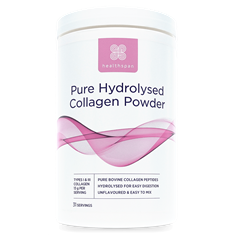
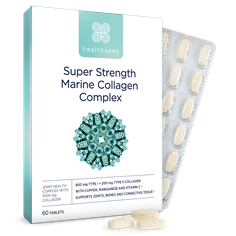
Start by comparing the collagen source, form and labelled daily serving. A powder or drink can provide a gram-level serving, while some capsules use a different collagen form and a much smaller amount. These formats should not be compared by weight alone.
Explore our collagen supplement range to compare powders, drinks and capsules. Look at any added nutrients, too: vitamin C contributes to normal collagen formation for normal cartilage function. Follow the pack directions and choose a formulation that fits your routine.