










Losing weight, doing more exercise and eating more healthily are some of the most common New Year's resolutions, but making them happen isn't always an easy task. Here's how to make those resolutions stick.
A New Year's resolution is a goal or change you choose to work towards in the year ahead. It might involve your health, relationships, hobbies or everyday habits. The most useful resolution is one that matters to you and can be turned into a small, repeatable action.
These ten ideas cover exercise, weight, food, proactive healthcare, learning, wellbeing, relationships, alcohol, smoking and screen time. You do not need to tackle all ten: choose one place to start.
How to make New Year's resolutions achievable
Write down what you will do, when you will do it and how you will check your progress. Try framing the goal around an action you want to add, such as walking after lunch, rather than only something you want to avoid. In a study of 1,066 people, participants with approach-oriented resolutions reported greater success than those with avoidance-oriented goals.1
- Start small: choose a first step that fits your current routine.
- Make it specific: name a time, place or regular cue for the action.
- Plan for busy days: decide on a smaller version you can still manage.
- Review and adjust: check in weekly and change the plan if it is too demanding.
1. Exercise more
How to make it achievable
Try this goal: I will take a ten-minute walk after lunch on Monday, Wednesday and Friday.
If you don't like running, trying to get up at 6am every day to go for a jog probably won't last long – so first off, find a form of exercise you enjoy.
Second, be specific about your goal, whether it's cycling to work twice a week, going to a dance class every weekend, or getting off the bus one stop early. This gives you a clear guide to whether you are doing what you set out to do.
Lastly, make sure that goal is achievable. The key is to start small, and build from there.

Staying active doesn't have to mean spending hours in the gym. Nicola Addison, fitness and wellbeing expert, shares her advice on how to start exercising.
2. Lose weight
How to make it achievable
Try this goal: I will plan my weekday lunches on Sunday and review how the routine is working after a fortnight.
Most of us have been on a diet at one point or another. The problem is that they're often too restrictive and not sustainable in the long term.
It's also important to consider your motivations for losing weight: is it necessary for health reasons, or is it because of societal pressure?
If losing weight is appropriate for you, slow and steady is the aim. NHS advice suggests aiming for around 0.5 to 1kg (1 to 2lb) a week. Your needs may differ, so ask for individual support if you have a medical condition or a history of eating difficulties. Focus on sustainable habits and remember that progress is not always linear.2
Our bodies allow us to run, cycle or do yoga, hug our loved ones, go on holiday, to see and smell beautiful things – and ultimately keep us alive every day, so be kind and cut yourself some slack.
3. Eat more healthily
How to make it achievable
Try this goal: I will add one extra portion of vegetables to dinner on four evenings this week.
Simply telling yourself you'll eat more healthily without a solid plan, or any specifics about what a healthy diet entails, is a common mistake – as is making any eating plan too restrictive.
Instead, set specific, achievable goals, such as:
- Choosing wholegrain varieties of bread, rice or pasta more often
- Planning a fruit, yoghurt or nut-based snack you enjoy
- Replacing the sugar on your cereal with fruit
- Including beans, lentils or other pulses in a meal each week
- Adding an extra portion of vegetables to your evening meal
Aim for variety across the week, rather than trying to make every meal perfect.3 For more ideas, read our guide to a balanced diet.
4. Take a more proactive approach to health
How to make it achievable
Try this goal: I will check which routine appointments are due and book the first one this week.
Small, everyday steps can help us look after our health. Rather than trying to change everything at once, choose one useful action you have been putting off.
As with many of the other resolutions, define exactly what you mean by being proactive, and which areas of your health you're talking about. Making appointments in advance for the rest of the year (for any health check-ups or dentist visits, for example) is one way to ensure things don't slip off your radar.
Reviewing your nutritional needs could be another. If a multivitamin supplement suits your diet and circumstances, link it to a regular routine and follow the label. You can also explore Subscribe & Save for products you already use. Supplements should complement a balanced diet.
At this time of year, looking after your immune system might be a good place to start.
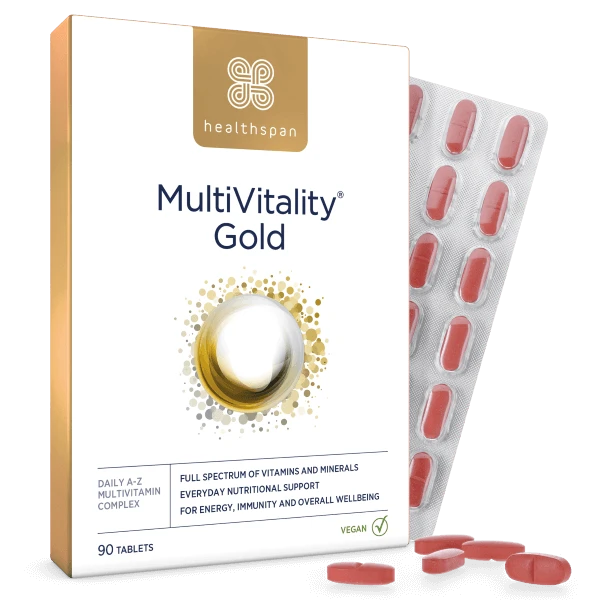
MultiVitality Gold
A one-a-day multivitamin and mineral formula
- A-Z vitamins and minerals in one tablet
- Includes vitamins B12, C and D
- Suitable for vegetarians and vegans
5. Learn a new skill or hobby
How to make it achievable
Try this goal: I will spend 20 minutes learning or practising my chosen hobby on Tuesday and Saturday.
Some of the main challenges when it comes to maintaining a hobby are time and money, so it's important to consider these from the beginning.
- Make the most of classes. These will help keep you accountable and make it harder for you to make excuses. Likewise if you commit to a hobby or activity with a friend.
- Block out the time in your diary. This will help you think of this time as an appointment, making it harder for you to simply book something else over the top.
- Find a time that consistently works for you. This helps you make your hobby a habit, and part of your regular routine. Many people find early in the morning works best, so they get the time in before life's other responsibilities take over.
- Ensure it works for your budget. Starting a new hobby doesn't have to mean paying a small fortune. There are plenty of low–cost options – from various arts and crafts to community classes or book clubs.
6. Spend more time on personal wellbeing
How to make it achievable
Try this goal: I will set aside ten minutes after dinner for reading, gentle movement or another activity I enjoy.
We are all different when it comes to the amount of time we need for ourselves, as well as what helps us unwind and de-stress.
Often ten minutes on your yoga mat every morning, or 20 minutes reading your book before bed, or a lunchtime walk will do the trick – but make sure you set a specific and achievable goal, and check in regularly to see what's working and what's not.
If winding down is your priority, our sleep-habits guide offers ideas for a more consistent evening routine.
7. Spend more time with family and friends
How to make it achievable
Try this goal: I will arrange one walk, call or meal with someone I care about each week.
Spending more time with loved ones is a goal many of us want to prioritise in the new year – but consistently finding free time for family and friends is a challenge, especially with conflicting schedules.
One way to make this easier is to agree a regular time together, whether that is a household meal, a walk with a friend or a weekly phone call. Choose something that works with everyone's schedules rather than making a rule that is difficult to keep.
8. Drink less alcohol
How to make it achievable
Try this goal: I will record my alcohol units for a week, then choose a realistic reduction plan.
Tracking your drinking can help you see where to make changes. UK guidance advises adults not to regularly drink more than 14 units a week. If you drink as much as 14 units, spread it over three or more days; having several drink-free days can help you cut down.4 If you're looking to cut back:
- Quantify your goal in units, rather than glasses, and plan drink-free days. Avoid saving up your weekly units for one occasion.
- Rope in your friends and family. This is a challenge that's easier to take on together – and will make it easier for you to succeed.
- Use the Try Dry app from Alcohol Change UK to track your units, calories and money saved.5
- Have a non-alcoholic favourite on hand so you have an option you enjoy.
If you think you may be dependent on alcohol or get withdrawal symptoms when you cut down, speak to a GP or alcohol support service before stopping suddenly.6
9. Stop smoking
How to make it achievable
Try this goal: I will choose a quit date and arrange support before that day.
Giving up smoking is notoriously challenging – but that doesn't mean it's not possible. Like any big or challenging goal, it can help to break it down and set smaller goals along the way.
Set a quit date and plan how you will handle cravings, with help from a stop-smoking service if possible. Celebrate milestones such as one day, one week and 28 days smoke-free. The NHS says reaching 28 days makes you much more likely to quit for good.7
The NHS Quit Smoking app is also a great tool for tracking your progress, seeing how much you're saving and getting daily support.7
10. Reduce your screen time
How to make it achievable
Try this goal: I will switch off non-essential notifications and put my phone aside for 30 minutes before bed.
Most devices will now allow you to see and monitor your screen time – and the number can be a shock. Social media is a common culprit, zapping away more time than we realise.
The first thing you can do is turn off notifications, and put rules in place dictating when you will check your phone.
If you find it difficult to impose rules on yourself, you can set usage limits on your phone itself, helping you cut down on things like social media. Alternatively, you can also set reminders on your computer or phone, telling you to take a break.
Make space for an evening screen break

Nutritionist Sarah Dumont-Gale explores screen use and blue light. If scrolling is taking up your evening, try setting a time to put your phone aside and choose a relaxing activity instead.
Find out more
What if your New Year's resolution slips?
Missing one walk or returning to an old habit does not mean the whole plan has failed. Look at what got in the way: was the goal too large, the timing awkward or the cue easy to miss? Make the next step smaller and restart at the next opportunity. Research on habit formation found that missing one opportunity did not materially disrupt the process.8
Keep a simple record and review what you have managed, as well as what needs adjusting. Your goal can change as your circumstances do. You do not have to wait until next January to try again.
New Year's resolutions FAQs
What are some common New Year's resolutions?
Common themes include exercising more, eating more healthily, managing weight, learning something new, spending time with loved ones and reducing alcohol or smoking. Research on resolutions also found physical health, weight and eating habits were popular priorities. Choose the one that matters most to you.1
What is a realistic New Year's resolution?
A realistic resolution fits your time, budget and starting point. Turn a broad aim such as 'get fitter' into an action, such as a ten-minute walk after lunch three times a week. Treat it as a starting plan you can adapt, rather than a test you must pass.
How do I stick to my New Year's resolutions?
Choose a clear action, connect it to a regular time or cue, and keep the first step manageable. Plan a smaller version for busy days and check your progress regularly. Repeating a behaviour in a consistent context can help it become more automatic.8
How many New Year's resolutions should I make?
There is no fixed number everyone should make. Starting with one priority can make your plan easier to organise and review. Add another change when your routine feels manageable, rather than treating this list as ten tasks to complete at once.
Does it take 21 days to form a new habit?
There is no universal 21-day rule. One study found that the estimated time for a behaviour to become largely automatic varied considerably, from 18 to 254 days. That range is not a deadline: the behaviour, circumstances and opportunities to repeat it all matter.8


