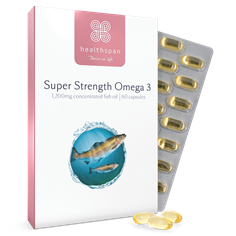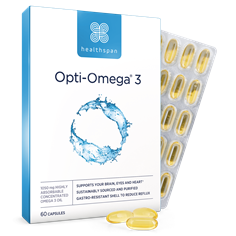













Omega 3 fatty acids EPA and DHA have recognised roles in normal heart, brain and eye function. Dr Hilary Jones explains the benefits, food sources and supplements.
🕒 7 min read
What are omega 3s?
Omega 3 fatty acids are a group of polyunsaturated fats that come in several different forms.
Alpha-linolenic acid (ALA) is an essential fatty acid, meaning the body cannot make it and it therefore needs to come from your diet. The body can convert some ALA into the longer-chain omega 3s EPA and DHA, but this conversion is limited.2
Eicosapentaenoic acid (EPA) and docosahexaenoic acid (DHA) are long-chain omega-3 fatty acids found primarily in oily fish and marine algae. You can learn more about the differences in our guide to EPA and DHA.
Is omega 3 good for you?
Yes. Omega 3 is an important part of a balanced diet, and the long-chain fatty acids EPA and DHA have recognised nutritional roles in the body. EPA and DHA contribute to the normal function of the heart, while DHA contributes to the maintenance of normal brain function and normal vision when the relevant conditions of use are met.1
| Body system | Recognised role | Relevant daily intake |
|---|---|---|
| Heart | EPA and DHA contribute to the normal function of the heart. | The beneficial effect is obtained with a daily intake of 250mg EPA and DHA combined. |
| Brain | DHA contributes to the maintenance of normal brain function. | The beneficial effect is obtained with a daily intake of 250mg DHA. |
| Eyes | DHA contributes to the maintenance of normal vision. | The beneficial effect is obtained with a daily intake of 250mg DHA. |
These are authorised nutrition and health claims listed in the Great Britain Nutrition and Health Claims Register.1
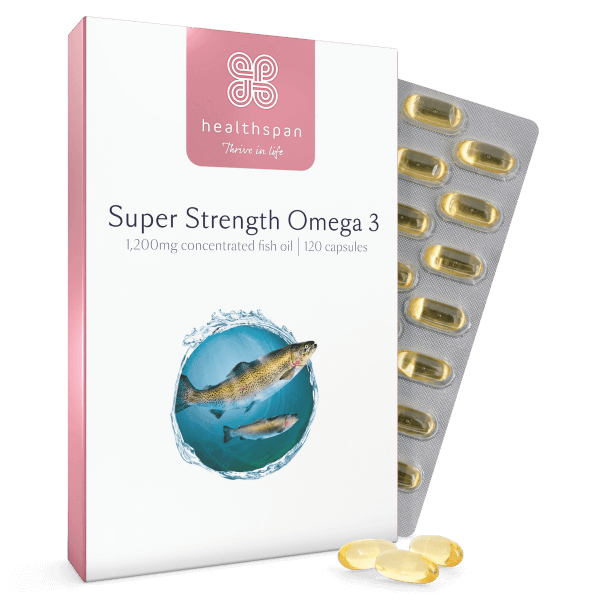
Super Strength Omega 3 1200mg
Highly concentrated, purified and sustainably sourced fish oil
Explore Healthspan's full omega-3 supplements range to compare fish-oil and vegan options.
What does omega 3 do in the body?
Omega-3 fatty acids form part of the phospholipids that make up cell membranes throughout the body. DHA is particularly concentrated in the retina and brain.2
EPA and DHA are therefore important long-chain omega-3 fatty acids, although their recognised nutritional roles should be distinguished from claims that omega-3 supplements can prevent or treat disease.
Fish oil or omega 3?
Omega 3 describes a family of fatty acids, while fish oil is one dietary source of the long-chain omega 3s EPA and DHA.
Good sources of ALA include nuts, seeds and their oils. Flaxseed, walnuts and rapeseed oil are particularly useful plant sources. However, only a limited amount of ALA is converted into EPA and DHA by the body.2
Oily fish such as salmon, mackerel, sardines, herring and trout are among the main dietary sources of EPA and DHA. White fish also contains omega 3, although generally in lower amounts.
The NHS recommends eating at least two portions of fish a week, including one portion of oily fish. Fish also provides other nutrients including protein, vitamins and minerals.3
It's possible for vegetarians and vegans to obtain omega 3 from their diet, while algae-derived supplements provide EPA and DHA without fish. Healthspan's Veg-Omega® 3 1000mg is one example.

If you don't eat fish, don't worry: vegan omega 3 supplements are available. Find out more about plant-based sources of EPA and DHA.
Find out more
What are the benefits of omega 3?
The best-established nutritional benefits of long-chain omega 3 relate to heart, brain and eye function. Research has investigated omega-3 fatty acids in many other areas of health, but findings from individual studies should not be interpreted as evidence that a food supplement can prevent or treat a medical condition.
Heart health
EPA and DHA contribute to the normal function of the heart. The beneficial effect is obtained with a daily intake of 250mg of EPA and DHA combined.1
Fish and seafood can also form part of a healthy, balanced diet, particularly when they replace foods higher in saturated fat.
Brain health
Omega-3 fatty acids are important components of cell membranes, and DHA is found at particularly high levels in the brain.2
DHA contributes to the maintenance of normal brain function, with the beneficial effect obtained from a daily intake of 250mg DHA.1
Research continues into omega 3 and areas such as cognition and mood, but this is separate from the authorised claim for maintenance of normal brain function and does not mean that omega-3 supplements prevent or treat cognitive or mental health conditions.
Pregnancy and infant development
DHA also has a recognised nutritional role during pregnancy and breastfeeding. Maternal DHA intake contributes to the normal brain and eye development of the foetus and breastfed infants. The beneficial effect is obtained with a daily intake of 200mg DHA in addition to the recommended daily intake for adults of 250mg EPA and DHA.1
Pregnancy changes the advice around some fish and supplements. Women who are pregnant, trying for a baby or breastfeeding should follow NHS guidance on fish intake, and cod liver oil or other supplements containing vitamin A (retinol) should not be taken during pregnancy.34
Eye health
DHA is highly concentrated in the retina and contributes to the maintenance of normal vision. The beneficial effect is obtained with a daily intake of 250mg DHA.12
This recognised role in normal vision should not be interpreted as evidence that an omega-3 supplement can prevent or treat eye diseases such as age-related macular degeneration or dry eye disease.
How much omega 3 do we need from our diet?
For most people, the practical starting point is the NHS recommendation to eat at least two portions of fish each week, including one portion of oily fish.3
Those who don't eat fish can obtain ALA from foods such as nuts, seeds, rapeseed oil and soya products, while algae provides a direct vegetarian and vegan source of EPA and DHA.
There isn't one universal omega-3 supplement dose for everybody. The amount of fish oil on the front of a pack is also not the same as the amount of EPA and DHA it contains. For a more detailed breakdown, read our guide to how much omega 3 to take per day.
What about omega 3 supplements?
Omega-3 supplements are available in several forms, including fish oil, cod liver oil and algae oil.
When comparing products, check the amount of EPA and DHA provided by the recommended serving rather than relying only on the total fish-oil figure. Strength, source, format and quality can all differ between products.
For more guidance, read what to look for in an omega-3 supplement or browse our complete Omega 3 supplements range.
Cod liver oil also provides EPA and DHA, but differs from standard fish oil because it naturally contains vitamins A and D.

Both cod liver oil and omega 3 fish oil contain DHA and EPA, but cod liver oil also provides vitamins A and D. Find out which option may suit you.
Find out more
Omega 3 supplement safety
Always follow the directions on the individual product and do not exceed its recommended daily intake. Food supplements should not be used as a substitute for a varied, balanced diet and healthy lifestyle.6
Some people experience effects such as an unpleasant taste or digestive discomfort when taking fish oil.
If you take prescribed medication, have a medical condition, are pregnant or breastfeeding, check with a doctor, pharmacist or other appropriate healthcare professional before starting a food supplement.6