











Omega fatty acids have a role in your pet’s skin, coat and wider wellbeing. This guide explains omega 3, 6 and 9, what fish oil provides and how to choose an option for your cat or dog.
🕒 5 min read
What do omegas do for dogs and cats?
Omegas are families of fatty acids. Omega 3 and omega 6 include essential fats that pets need from their food, while their bodies can make omega 9. The type and amount matter: a product labelled “omega 3 6 9 for dogs” is not automatically a better choice than an omega-3 supplement.
A complete, balanced diet is the foundation. Fatty-acid deficiencies are uncommon in pets eating an appropriate, properly stored complete food, but extra omega support may be useful for particular needs.1
Omega 3: what does fish oil provide?
Omega 3 is a family of fats that includes ALA, EPA and DHA. Fish oil provides EPA and DHA directly; flaxseed and other plant oils mainly provide ALA. Dogs convert ALA to EPA and DHA inefficiently, and cats have even more limited conversion. These sources are therefore not interchangeable.2
EPA and DHA are involved in the body’s inflammatory response. Vets may use fish oil as part of care for conditions such as skin allergies or arthritis. DHA also has a role in developing brain and eye tissues. The potential benefit depends on the animal, the reason for use and the amount of EPA and DHA supplied.3, 4
If your pet has a dull coat or dry skin, omega support may be worth discussing. Persistent itching or hair loss also needs a vet’s assessment: it does not, by itself, show that your pet needs more oil. Read our guide to reasons your dog’s coat is dry and dull.

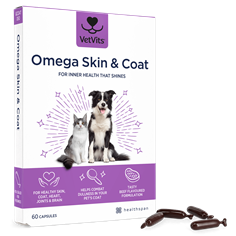
Omega Skin & Coat
A fish-oil blend for cats and dogs, with omega 3 and 6.
- Provides EPA and DHA from fish oil
- With evening primrose oil, vitamin E, biotin and zinc
- Twist-off capsules to mix into food
Omega 6: an essential part of the diet
Omega 6 is vital to your pet, playing an important role in growth and immunity as well as skin and coat health. Linoleic acid is essential for both dogs and cats; cats also need dietary arachidonic acid. These omega-6 fats occur in animal fats and plant oils used in pet foods.1
What is the right omega-6 to omega-3 ratio?
There is no single ideal ratio established for every dog and cat. The original food, the individual fatty acids and their total amounts all matter. Rather than trying to create a fixed ratio at home, check what your pet’s food already supplies and ask your vet which addition would suit them.2
Omega 9: does your pet need extra?
Probably the least well-known of the three, omega 9 differs because the body can produce it. This means it is not an essential dietary fatty acid in the same way as the essential omega-3 and omega-6 fats. When comparing supplements, look beyond the “3 6 9” label to the ingredients and amounts that meet your pet’s needs.
How to choose an omega supplement for your pet
Top tip! Compare the EPA and DHA amounts, rather than just the total fish-oil weight on the front of the pack. Not every milligram of fish oil is EPA or DHA. Your vet can account for any omega 3 already in your pet’s food, especially if they eat a veterinary diet.4
- Choose for your pet: check the species, age and weight guidance.
- Make it easy: choose a liquid or capsule format you can measure and give consistently.
- Read the whole label: note added ingredients and the storage instructions.
VetVits Omega Skin & Coat provides 165mg EPA and 110mg DHA per capsule. It is suitable for cats and dogs over eight weeks old. The twist-off tip lets you squeeze the contents over food; follow the current pack directions and consult your vet before changing your pet’s diet.
Key takeaways
Omegas have a reputation as multitaskers, but choosing well starts with your pet’s everyday diet. Identify the reason for adding a supplement, compare its EPA and DHA content and use the appropriate serving. Our pet skin and coat range lets you explore a relevant option.
Omega and fish oil FAQs
Is omega 3 or omega 3 6 9 better for dogs?
It depends on what their diet already provides. If the aim is to add EPA and DHA, compare those amounts first. A combined formula can be convenient, but more omega types do not automatically mean a better match.
Is salmon oil the same as omega 3?
Salmon oil is a source of omega-3 fats, rather than another name for them. Its EPA and DHA concentration can differ from other fish oils, so compare the amount provided by the recommended serving.
How much fish oil should I give my dog?
Follow the pet product’s directions and your vet’s advice. There is no one capsule count for every dog: body size, diet, product concentration and the reason for use affect the amount needed.
Can cats have omega-3 supplements too?
Yes, suitable fish-oil products are used in cats. Choose one labelled for cats and follow its serving guidance. A dog’s serving is not a guide to how much a cat should receive.
Can I give my dog fish oil every day?
Some pet omega supplements are designed for daily use. Check suitability with your vet, particularly if your pet takes medicines or already eats an enriched diet. Fish oil can cause digestive upset; contact your vet if it does not agree with your pet.
How long does fish oil take to work in pets?
It may take several weeks to see the full effects. Keep a simple record of the change you hope to see and agree a review point with your vet. Avoid increasing the serving because you have not noticed an immediate result.