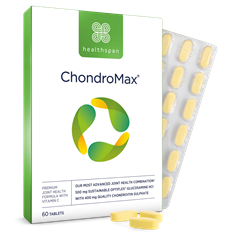












If you are looking for a supplement to support the health of your joints, chondroitin is one option to explore. Here’s how it works in the body, what research shows and what to look for in a formula.
🕒 4 min read
What is chondroitin?
Chondroitin is a naturally occurring component of cartilage, the connective tissue that cushions joints. Chondroitin sulphate is a structural substance that forms an integral part of the connective tissues binding the body together.1
It is also available in supplements, on its own or alongside glucosamine. Compare chondroitin and our glucosamine supplement range to explore the different formulas.
What does chondroitin do, and how does it work?
Within cartilage, chondroitin helps retain water and contributes to its ability to resist compression. This helps explain its role in the cushioning tissue at the ends of bones.3
Within joints, chondroitin sulphate binds to protein to form long chains of proteoglycans. These combine with hyaluronic acid to form 'springy' molecules that strengthen the cartilage matrix and increase its elasticity and resilience.
By attracting water, these proteoglycans help cartilage withstand the loads placed on a joint. As you get older, cartilage cells become less able to maintain and restore the cartilage matrix, which is linked with degenerative changes in ageing joints.1
What are the benefits of chondroitin?
Chondroitin’s main area of research is joint comfort and function, particularly in people with osteoarthritis. Its natural role in cartilage has prompted studies into whether taking it as a supplement can help with symptoms or changes in joint structure.3
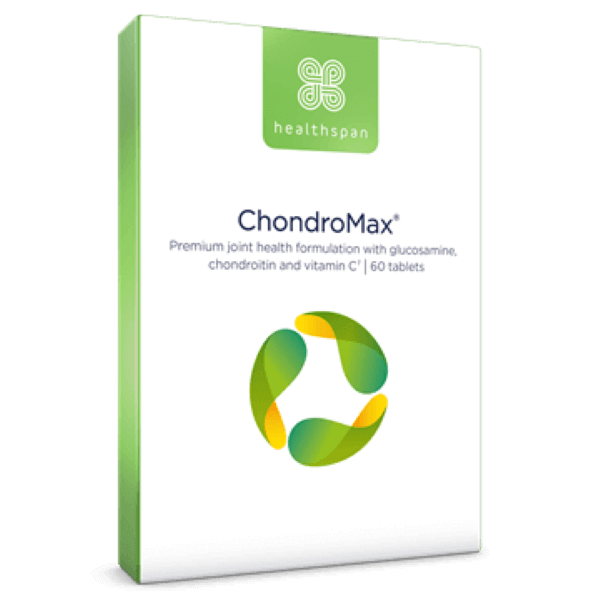
ChondroMax® Advanced Joint Support
A combination of glucosamine and chondroitin with vitamin C for joint cartilage
- 400mg chondroitin sulphate 90% per tablet
- 500mg shellfish-free Optiflex® glucosamine HCl per tablet
- Vitamin C supports normal collagen formation for the normal function of cartilage
Joint health
Chondroitin sulphate has been investigated for its effects on joint pain and function. In the six-month CONCEPT trial involving 604 people with knee osteoarthritis, a pharmaceutical-grade chondroitin sulphate preparation improved pain and function compared with placebo.2
Findings across the wider research are mixed, and studies have used different formulations. Some trials have also examined cartilage loss or joint-space narrowing, but the evidence does not establish that every supplement protects cartilage or delays osteoarthritis progression.3 When choosing a product, look at the actual formulation and daily serving rather than assuming all chondroitin products are interchangeable.
Longevity: what does the research show?
A study following 77,510 adults for up to eight years examined whether glucosamine and chondroitin use was associated with mortality.
Current chondroitin use was associated with a 14 per cent lower risk of death during follow-up compared with never using it. This was an observational study: it identified an association, rather than proving that chondroitin caused people to live longer.4
How to choose and take a chondroitin supplement
Start by deciding whether you want chondroitin alone or a combined formula. Chondroitin 400 offers chondroitin sulphate with vitamin C, while ChondroMax combines it with glucosamine. Liquid formulas provide another option if you prefer an alternative to tablets.
- Check the daily serving: the amount per tablet is only part of the picture. ChondroMax’s directions are two tablets daily, providing 800mg of chondroitin sulphate 90% alongside glucosamine.
- Compare the ingredient grade: 90% grade refers to the stated purity of the chondroitin ingredient, rather than a percentage absorbed by the body.
- Look at the full formula: vitamin C contributes to normal collagen formation for the normal function of cartilage.5
Follow the product’s directions and avoid combining several formulas that duplicate the same ingredients. If you take warfarin, check with your prescriber before taking chondroitin: an increased bleeding risk has been reported. Seek advice before use during pregnancy or breastfeeding, as safety information is limited.3
Dosage: Follow your chosen product’s daily directions; formulas and serving sizes differ.
Watchpoints: Compare the grade and amount per daily serving, and check suitability if you take medicines.
Common partner: Glucosamine is often combined with chondroitin in joint-health formulas.
Chondroitin FAQs
What is the difference between glucosamine and chondroitin?
Both occur naturally in cartilage. Glucosamine is a building block for compounds called glycosaminoglycans, while chondroitin is one of the substances that helps cartilage resist compression. They are distinct ingredients, often combined in one formula.3
Can I take chondroitin and glucosamine together?
Combination products offer both ingredients in one routine. Check the daily directions and quantities, especially if you already take a joint supplement, so you do not double up unnecessarily. Explore our glucosamine supplement range.
How long does chondroitin take to work?
Research generally assesses changes over months rather than hours or days; the CONCEPT trial ran for six months. Follow your product’s directions and review whether your routine is helping with a healthcare professional.2
How much chondroitin should I take?
Follow the directions for your chosen formula. ChondroMax’s two-tablet daily serving provides 800mg of chondroitin sulphate 90%, while Chondroitin 400’s three-tablet serving provides 1,200mg. Check the daily serving rather than the amount per tablet alone.
What does 90% grade chondroitin sulphate mean?
It describes the stated purity of the chondroitin sulphate ingredient. It is not an absorption rate or a guarantee of results. Compare the ingredient grade, quantity per daily serving and the full formula.
Why is vitamin C included in chondroitin supplements?
Vitamin C contributes to normal collagen formation for the normal function of cartilage. It complements the chondroitin in formulas such as ChondroMax and Chondroitin 400.5