









Stress, low mood, anxiety and tiredness can all occur during perimenopause and menopause. B vitamins do not treat menopause, but several contribute to normal psychological function, nervous-system function and energy metabolism, making an adequate intake important throughout this stage of life.
🕒 7 min read
Why can stress and mood change during menopause?
Perimenopause and menopause are associated with changing hormone levels, particularly oestrogen and progesterone. Alongside physical symptoms such as hot flushes and night sweats, some women experience anxiety, low mood, irritability, sleep problems, problems with concentration and changes in how well they cope with everyday stress.
Sleep can be particularly important. Night sweats and other menopausal symptoms can make it more difficult to get enough good-quality sleep, and poor sleep can leave you feeling more tired, irritable, stressed or anxious the following day.
There may also be other pressures at this stage of life, from work and relationships to caring responsibilities and changes in body image. This means stress during menopause rarely has one single cause.
If mood changes, anxiety or stress are having a significant effect on your daily life, speak to your GP or another healthcare professional rather than assuming menopause or a nutrient deficiency is solely responsible.
What role do B vitamins play during menopause?
The B-vitamin family includes eight essential nutrients: vitamins B1, B2, B3, B5, B6, B7 (biotin), B9 (folate) and B12.
They perform many different functions throughout the body. Several B vitamins contribute to normal psychological and nervous-system function, while others contribute to normal energy-yielding metabolism and the reduction of tiredness and fatigue.
Vitamin B6 also contributes to the regulation of hormonal activity. This does not mean that vitamin B6 or other B vitamins can correct the hormonal changes of menopause, but it does mean they have recognised nutritional roles that remain important during this stage of life.
For a more detailed look at each of the eight nutrients, read our guide to what B vitamins do.
B vitamins at a glance
| B vitamin | Relevant nutritional role | Food sources |
|---|---|---|
| B1 (thiamine) | Contributes to normal psychological function, nervous-system function and energy-yielding metabolism. | Wholegrains, fortified cereals, pork, peas, nuts and seeds. |
| B2 (riboflavin) | Contributes to normal energy-yielding metabolism and nervous-system function, and helps reduce tiredness and fatigue. | Milk, eggs, mushrooms, fortified cereals and some meats. |
| B3 (niacin) | Contributes to normal psychological and nervous-system function and helps reduce tiredness and fatigue. | Meat, fish, eggs, peanuts and fortified foods. |
| B5 (pantothenic acid) | Contributes to normal mental performance and energy-yielding metabolism, and helps reduce tiredness and fatigue. | Chicken, beef, eggs, mushrooms, potatoes and wholegrains. |
| B6 | Contributes to normal psychological and nervous-system function, regulation of hormonal activity and the reduction of tiredness and fatigue. | Poultry, fish, potatoes, bananas, chickpeas and fortified cereals. |
| B7 (biotin) | Contributes to normal psychological and nervous-system function and normal energy-yielding metabolism. | Eggs, nuts, seeds, fish and some vegetables. |
| B9 (folate) | Contributes to normal psychological function and blood formation and helps reduce tiredness and fatigue. | Leafy green vegetables, broccoli, peas, chickpeas and other pulses. |
| B12 | Contributes to normal psychological and nervous-system function, normal red blood cell formation and the reduction of tiredness and fatigue. | Meat, fish, milk, cheese, eggs and fortified foods. |
Do you need more B vitamins during menopause?
Menopause itself does not mean that everyone needs to take additional B vitamins. A varied, balanced diet can provide most of the B vitamins you need.
Individual circumstances can make particular nutrients more important to consider, however. Vitamin B12, for example, is found naturally mainly in animal-derived foods, so people following a vegan diet need reliable fortified foods or a supplement.
Some health conditions, digestive disorders, surgery and medicines can also affect the absorption of vitamin B12. If you are concerned about B12 deficiency, particularly if you have symptoms such as persistent tiredness, weakness, pins and needles or changes in sensation, speak to your GP about whether testing is appropriate.
Find out more in our guide to vitamin B12.
What foods contain B vitamins?
B vitamins are distributed across a wide range of foods, which is one reason a varied diet is useful. Good sources include:
- Wholegrains and fortified cereals: particularly useful sources of B1, B2, B3 and folate.
- Meat and poultry: provide several B vitamins, including B3, B5, B6 and B12.
- Fish: provides B3, B6 and B12.
- Eggs and dairy foods: useful sources of B2, B5, biotin and B12.
- Pulses: including beans, lentils, peas and chickpeas, provide folate and other B vitamins.
- Leafy green vegetables: particularly useful for folate.
- Nuts and seeds: provide several B vitamins, including thiamine, niacin and biotin.
Folate is the form of vitamin B9 found naturally in food, while folic acid is the form commonly used in supplements and fortified foods.
Should you take a B-complex supplement during menopause?
A B-complex supplement can provide all eight essential B vitamins together and may be useful if you are concerned that your diet is not consistently providing enough. However, a B-complex supplement is not a treatment for menopause, anxiety or stress.
There is also no single B-complex dose that everyone going through menopause needs. Choose supplements according to your individual diet and requirements, follow the recommended intake on the pack and speak to a healthcare professional if you have concerns about deficiency or take medicines that may affect nutrient status.
You can explore Healthspan's Vitamin B range for B-complex and individual B-vitamin supplements.
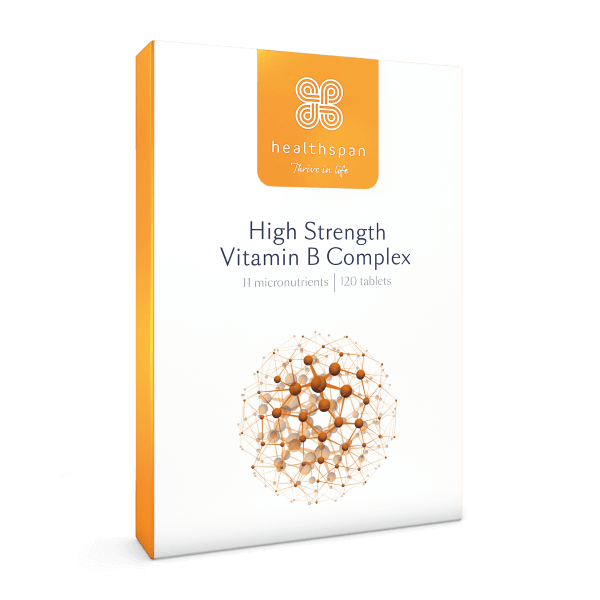
High Strength Vitamin B Complex
All eight essential B vitamins to support your brain, heart and energy levels
- High-strength blend of all eight essential B vitamins
- Supports normal psychological and nervous-system function
- Helps reduce tiredness and fatigue
What else can help with stress and mood during menopause?
Nutrition is only one part of looking after your wellbeing during perimenopause and menopause. Regular physical activity, getting enough rest, reducing stress where possible and making time for relaxing activities can all help support general wellbeing.
Cognitive behavioural therapy (CBT) can also help with low mood, anxiety and sleep problems associated with menopause. Your GP can discuss this and other treatment options with you if symptoms are becoming difficult to manage.
When should you speak to your GP?
Talk to your GP or another healthcare professional if anxiety, low mood, panic symptoms, sleep problems or stress are persistent, getting worse or significantly affecting your everyday life.
You should also seek advice if you think symptoms may be related to a vitamin deficiency rather than menopause alone. Blood tests may sometimes be appropriate depending on your symptoms, diet, medicines and medical history.
You can find further information about menopause and perimenopause symptoms on the NHS website.
B vitamins and menopause FAQs
Can B vitamins help during menopause?
B vitamins are essential nutrients with roles in functions including normal psychological function, nervous-system function and energy metabolism. They remain important during menopause, but B-vitamin supplements are not a treatment for menopause or its symptoms.
Which B vitamins are important during menopause?
All eight B vitamins have important roles in the body. For example, vitamins B1, B3, B6, biotin, folate and B12 contribute to normal psychological function, while vitamin B6 contributes to the regulation of hormonal activity. A varied diet can help provide the full range.
Do B vitamins help with stress?
B vitamins should not be viewed as a treatment for stress. Several B vitamins contribute to normal psychological and nervous-system function, while vitamins including B2, B3, B5, B6 and B12 contribute to the reduction of tiredness and fatigue.
Is vitamin B12 good for menopause?
Vitamin B12 is an essential nutrient throughout life. It contributes to normal psychological and nervous-system function, normal red blood cell formation and the reduction of tiredness and fatigue. It does not treat menopause itself, and whether you need a supplement depends on factors such as your diet and ability to absorb B12.
Can low B vitamins affect mood?
Deficiencies in some B vitamins can affect normal neurological or psychological function, but mood changes have many possible causes. During menopause, symptoms such as anxiety and low mood can also be related to hormonal changes, sleep and other health or lifestyle factors. Speak to your GP if symptoms are persistent or concerning.
Should you take a B-complex during menopause?
Not everyone going through menopause needs a B-complex supplement. A varied diet can provide B vitamins, while supplementation may be useful when dietary intake is insufficient or there is a particular risk of deficiency. Follow the recommended intake and seek professional advice if you are concerned about your nutrient status.
What foods contain B vitamins?
B vitamins are found across foods including wholegrains, fortified cereals, meat, fish, eggs, dairy products, pulses, leafy green vegetables, nuts and seeds. Vitamin B12 occurs naturally mainly in animal-derived foods, so people following a vegan diet need reliable fortified foods or supplementation.