







Products
Subtotal
£0.00
Est. delivery
FREE
Order total
£0.00

Please enter a promotion code

Sorry, the coupon code you have entered is invalid or has expired.

Finish


The benefits of subscribing

How much do I pay?

Save up to £5 compared to RRP by subscribing to your favourite Healthspan products.

Plus, our Price Match Promise* ensures you will always receive the best available price on your subscription products, even if the one-time purchase price on our website falls below your ongoing subscription price.

How do I sign up for Subscribe & Save?

It’s simple to subscribe to a product; just select the 'Subscribe & Save' option, choose the delivery frequency you require and click 'Set up now'. Your subscription will be added to your basket like a normal order.

After you have placed the order you will receive an email confirmation with all the details. You will then be able to see your subscription details on the ‘My Subscriptions’ page in your account area on the website too.

How do I change or delay my order?

You can change the number of packs, delivery frequency or next scheduled dispatch date of your subscriptions at any time by logging in to your account and going to My Subscriptions. You can also update your delivery address and credit card details.

Can I cancel a subscription?

Yes, you can cancel your subscription at any time by contacting our customer service team on 0800 7812345. Please note subscriptions must be cancelled 72 hours before the scheduled dispatch date to avoid any charges.

How do I return an item?

UK orders can be returned for FREE for a refund of the price paid for the product. Please note that returns must be made within 30 days of purchasing and can only be accepted if the products are unopened, undamaged and in their original packaging.

For further information please view our Returns Policy.

Where Is my order?

Orders are being processed and dispatched as normal, however can be subject to routine customs checks, which can cause delays. If you are concerned about the whereabouts of your order, please contact us at customercare@healthspan.co.uk or on 0800 73 123 77. If you are calling from outside the UK please phone +44 2392 714175.

Further information can be found on our Subscribe & Save Policy and Terms & Conditions pages.


*Price match promise is based on the one time purchase price excluding new subscription discounts and voucher offers.


Where is my order?

Orders are being processed and dispatched as normal.

Orders are regularly subject to routine customs checks, which can cause delays. If you are concerned about the whereabouts of your order, please contact us at customercare@healthspan.co.uk or on 0800 73 123 77. If you are calling from outside the UK please phone +44 2392 714175.

UK
CostTarget delivery times*
UK Super Saver - SubscriptionsFREE Approx. 3-4 working days  
UK Super Saver - orders over £30
FREEApprox. 3-4 working days 
UK Super Saver - orders under £30£2.45Approx. 3-4 working days
UK Priority Service£2.95Approx. 1-2 working days
UK Courier  Â£7.95Next working day (for orders placed before 1pm)**

*Remote delivery times may vary - details listed here
**Orders placed after 1pm on Friday or over the weekend will be dispatched on Monday.

Republic of Ireland

For orders to the Republic of Ireland, please visit www.healthspan.ie 

Europe (EU)
CostTarget delivery times
Royal Mail – Priority Service£7.95Up to 10 working days*
Royal Mail – Priority Service (Subscriptions)£3.95Up to 10 working days*

Rest of WorldCostTarget delivery times
Royal Mail – Priority Service£14.95Up to 15 working days*
Royal Mail – Priority Service (Subscriptions)£3.95Up to 15 working days*

*All transit times are dependent on country of destination and may vary.

Gut health, antibiotics and dysbiosis

Back to article list

Latest articles

Dysbiosis is the term for an imperfect balance of 'good' and 'bad' bacteria in the gut. A course of antibiotics can upset this delicate balance, which can cause all kinds of digestive problems.

Antibiotics and dysbiosis

Antibiotics are potentially life-saving drugs which, at one time, were readily prescribed 'just in case' to treat conditions for which they weren't needed, such as the common cold.1 Antibiotic prescribing is now more closely regulated due to a growing problem with bacterial resistance (in which bacteria adapt so key antibiotics are no longer effective).

There is also a growing recognition that certain antibiotics can cause health problems - especially in the gut - and, paradoxically increase your susceptibility to infections.2 This is a problem when broad-spectrum antibiotics are used which, rather than targeting just a few types of bacteria, have a scattergun approach which kills 'good' bacteria as well as the bad. This can lead to a condition known as gut dysbiosis.

What is dysbiosis?

Gut dysbiosis is an imbalance in the digestive bacteria normally found in the gut. Your gut is inhabited by a complex population of bacteria which, together, are referred to as the microbiota. The most beneficial digestive bacteria are strains of Lactobacilli and Bifidobacteria. These produce lactic acid, activate immune cells, stimulate antibody production and compete for nutrients to help suppress the growth of less beneficial or harmful bacteria. Probiotic bacteria also produce substances such as short-chain fatty acids (eg acetate) which 'feed' intestinal lining cells and increase the integrity of your gut barrier to reduce problems due to a leaky gut.3

Scientists who use special rDNA probes to identify which species of bacteria are present in the gut have found dramatic and long-term changes occur in the balance of the intestinal microbiota following antibiotic treatment. Taking the antibiotic, ciprofloxacin, for five days, can change the abundance of roughly one-third of gut bacterial species, for example.4

Although the microbiota mostly returns to normal one month after stopping ciprofloxacin treatment, several types of bacteria fail to recover, even after this relatively short course of antibiotics. Another study found that taking clindamycin for seven days greatly reduced the diversity of Bacteroides species present and these did not return to their original balance for up to two years after stopping clindamycin treatment.5 Among the most commonly used penicillin antibiotics, ampicillin and amoxicillin also produce persistent changes in gut microbiota, including the depletion of Lactobacillus species.6

Why is gut dysbiosis a problem?

Gut dysbiosis can cause a number of digestive symptoms, including bloating, flatulence and diarrhoea. In fact, diarrhoea is the most common gut side effect and affects between 5% and 35% of people taking antibiotics.7

Dysbiosis also increases the chance of gastroenteritis (food poisoning) with bacteria such as Salmonella and can reduce immune responses against influenza virus. Gut dysbiosis is also associated with long-term intestinal problems such as diverticular disease,8 irritable bowel syndrome and inflammatory bowel disease. Because gut bacteria help to prime the immune system, the latest research suggests that gut dysbiosis also increases the risk of health problems affecting other parts of the body, including asthma and allergies,9 diabetes and arthritis.10

How to reduce dysbiosis when taking antibiotics

There are times when antibiotics are undoubtedly needed and if your doctor has prescribed them you should always complete the full course. One of the most effective ways to reduce dysbiosis during and after a course of antibiotics is to take a probiotic supplement to replenish your levels of 'good' bacteria. A recent analysis of the results from 31 trials, involving 8,672 people, confirmed that taking a probiotic supplement can prevent even the most serious form of antibiotic-associated diarrhoea, caused by an overgrowth of Clostridium difficile, in adults and children.11 The study also confirmed that probiotics are safe and effective when used alongside antibiotics in patients who are not immunocompromised or severely debilitated.

For general health, I usually recommend taking a probiotic that provides between 5 billion and 20 billion probiotic bacteria per day. If you are taking antibiotics, however, then a supplement that provides 20 billion to 50 billion probiotic bacteria is advisable for adults. If in doubt, talk to your doctor and follow their advice.

If you'd like to read more about the benefits of keeping a healthy gut, as well as find more information on how you can promote good gut health, select Digestion from the Your health menu above.
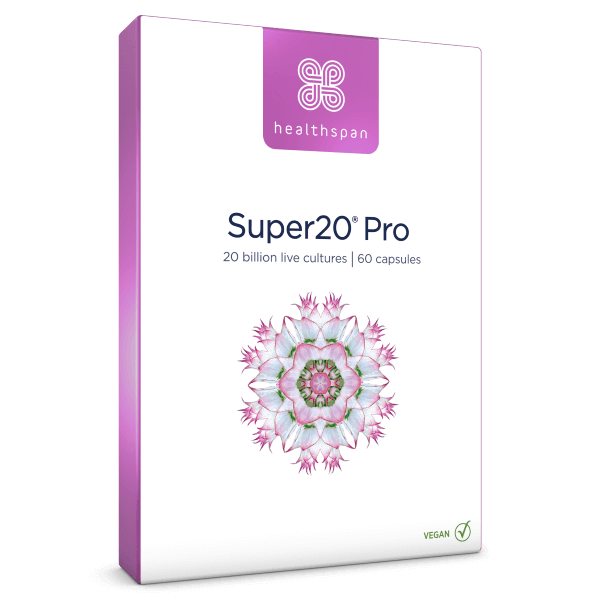
Super20 Pro pack

Super20 Pro

Our best-selling probiotic

  • 20 billion live cultures from 5 well-researched strains
  • Contains Lactobacillus acidophilus, Lactobacillus paracasei, Bifidobacterium lactis and Bifidobacterium bifidum
  • Supports the protective intestinal microflora in the gut
Shop now

Like this article? Share it!

 
Smiling woman reading something on her phone
References

1Piltcher, O.B. et al. (2018). How to avoid the inappropriate use of antibiotics in upper respiratory tract infections? A position statement from an expert panel, Brazilian Journal of Otorhinolaryngoly, 84;3:265-279
2Pamer, E.G. (2018). Resurrecting the intestinal microbiota to combat antibiotic-resistant pathogens, Science, 352; 6285:535-538.
3Fukuda, S. et al. (2011). Bifidobacteria can protect from enteropathogenic infection through production of acetate, Nature, 469:543-547.
4Dethlefsen, L. et al. (2008). The pervasive effects of an antibiotic on the human gut microbiota, as revealed by deep 16S rRNA sequencing, PLoS Biology, 6, e280
5Jernberg, C. et al. (2007). Long-term ecological impacts of antibiotic administration on the human intestinal microbiota, The ISME Journal, 1, 56-66
6Ubeda, C. Pamer, E.G. (2012). Antibiotics, microbiota, and immune defence, Trends In Immunology, 33; 9:459-466.
7McFarland, L.V. (2008). Antibiotic-associated diarrhoea: epidemiology, trends and treatment, Future Microbiology, 3;5:563-78
8Ubeda, C. Pamer, E.G. (2012). Antibiotics, microbiota, and immune defence, Trends In Immunology, 33; 9:459-466
9Wypych TP, Marsland BJ. Antibiotics as Instigators of Microbial Dysbiosis: Implications for Asthma and Allergy, Trends In Immunology, 2018 Mar 14. pii: S1471-4906(18)30045-0
10Ubeda, C. Pamer, E.G. (2012). Antibiotics, microbiota, and immune defence, Trends In Immunology, 33; 9:459-466
11Goldenberg, J.Z. et al. (2017). Probiotics for the prevention of Clostridium difficile-associated diarrhoea in adults and children, Cochrane Database Systematic Reviews, 12:CD006095