











Nutritionist Rob Hobson explains how to spot if you have IBS and how to treat it with diet and supplements.
🕒 6 min read
Irritable bowel syndrome (IBS) is a common condition that affects up to 20 percent of adults and can have a significant impact on daily life. IBS is characterised by abnormal muscle contractions, with the result of bouts of either diarrhoea, constipation, or both. Other symptoms include bloating, abdominal cramps and pain, wind, and nausea. Symptoms usually occur after eating, with the severity varying between people.
Can you get tested for IBS?
There is no test for IBS, and diagnosis is typically done based on symptoms and ruling out other conditions. Symptoms vary from one person to another.
If you experience symptoms including abdominal pain or discomfort, bloating, or a change in bowel habits, an assessment for IBS is advisable. According to the British Dietetic Association, diagnosis of IBS is only considered if abdominal pain is relieved by defecation or associated with bowel habit changes. This also needs to be associated with at least two of the following symptoms:
- Altered stool passage (straining, urgency, incomplete evacuation.)
- Abdominal bloating (more common in women than men), distension, tension, or hardness.
- Symptoms made worse by eating.
- Passage of mucus.
Are there any other symptoms associated with IBS?
Other symptoms of IBS can include nausea, lethargy, and bladder issues. As these symptoms can also occur in other undiagnosed gut conditions like coeliac or inflammatory bowel disease, they need to be ruled out when assessing for IBS.
Do symptoms differ between men and women?
Women may experience symptoms, or have more symptoms, around menstruation. Menopausal women have fewer symptoms than women who are still menstruating. In some women, it appears that symptoms increase during pregnancy. In men, symptoms are the same, but fewer men seem to suffer from IBS compared to women.
Does stress aggravate IBS?
The way your digestive system moves is controlled partly by your nervous system. When you are stressed your digestive system over-responds in response to your nerves. With IBS your colon may be very sensitive and overly responsive to any light digestive system disruption. IBS is also thought to be affected by the immune system, which in turn is affected by stress.
Try to find ways to address your stress. There are many ways of achieving this:
- Try yoga, pilates or any other stretching exercise regime.
- Try breathing exercises or other meditation techniques such as guided visualisation.
- Keep active and take regular exercise.
- Try essential oils, which can be used for massage and bathing.
- Adopt good sleep hygiene habits to help you get a good night's kip.
What should I eat and drink if I have IBS?
Diet undoubtedly plays a pivotal role in IBS, including what you consume and your eating habits. To help alleviate the symptoms of IBS, you should try the following:
- Eat regular meals throughout the day and avoid skipping meals or eating late at night.
- Eat smaller meals, which may help to avoid symptoms.
- Take your time eating and chew your food properly to aid digestion.
- Limit your intake of caffeine, alcohol, and fizzy drinks.
- Drink plenty of water throughout the day (at least 1.5 litres), especially if suffering from bouts of diarrhoea.
- Try to avoid rich foods high in fat, including processed meals, savoury snacks, fatty processed meats (sausages, bacon), and sweet snacks (chocolate, biscuits).
- Limit fresh fruit to three portions per day (one portion is 80g.)
- Try to establish an amount of fibre you can tolerate, meaning choosing white carbohydrate foods (bread, pasta, rice) over brown varieties.
How can diet help with specific symptoms of IBS?
Certain foods can be eaten or limited in the diet to help with specific symptoms of IBS.
If you have bloating or wind, try:
- Limiting the intake of 'windy' plant foods such as beans, pulses, Brussels sprouts, cauliflower, and broccoli.
- Avoiding sugar-free mints and chewing gum, as they contain polyols (a FODMAP food: see 'What about FODMAPs?' below).
- Drinking mint tea to alleviate bloating.
If you have constipation, try:
- Gradually increasing your intake of fibre from whole grains, oats, vegetables, fruit, and linseeds, which will help soften stools.
- Keeping well hydrated.
If symptoms include diarrhoea, try:
- Replacing lost fluids by drinking plenty.
- Limiting caffeine intake from tea, coffee, and soft drinks to three drinks per day.
- Reducing intake of high-fibre food (such as wholewheat breakfast cereals and bread).
- Avoiding sugar-free sweets, mints, gum, and drinks containing sorbitol, mannitol, and xylitol.
What about FODMAPS?
You may have heard of the low-FODMAP diet. This diet excludes short-chain fermentable carbohydrates (FODMAPs), which can aggravate symptoms of IBS. These foods are not digested properly by some people, which means that they pass through to the large intestine, where bacteria break them down by fermentation, which produces excess gas. FODMAPS can also cause water to be drawn into the gut by a process called osmosis, which can lead to an increased risk of diarrhoea.
The low-FODMAP diet is successful in some people, but it is best followed with the help of a dietitian. Here are some examples of high- and low-FODMAP foods. This is adapted from the full list from Monash University in Melbourne.
High-FODMAP foods | Low-FODMAP alternatives | |
Vegetables | Artichoke, asparagus, cauliflower, garlic | Aubergine, green beans, bok choy |
Fruits | Apples, apple juice, cherries, dried fruit | Kiwi fruit, mandarin, orange, pineapple |
Dairy and alternatives | Cow's milk, custard, ice cream, yoghurt | Almond milk, lactose-free milk, brie/camembert cheese, feta cheese |
Protein sources | Most legumes/pulses | Eggs, firm tofu, plain cooked meats/poultry/seafood |
Breads and cereals | Wheat/rye/barley-based breads, breakfast cereals | Corn flakes, oats, quinoa flakes, rice cakes (plain), sourdough spelt bread |
Sugars, sweeteners and confectionery | High-fructose corn syrup, honey | Dark chocolate, maple syrup, table sugar |
Nuts and seeds | Cashews, pistachios | Macadamias, peanuts, pumpkin seeds, walnuts |
Should I take a supplement?
Probiotics may be helpful in the treatment of IBS. These are helpful, or 'friendly', bacteria that are similar to the helpful bacteria already in your gut. Probiotics can help to maintain the balance of good and bad bacteria in the gut, with benefits from digestion to immunity and more.
Probiotics can be found in yoghurt, fermented milk drinks, and supplements. When choosing a probiotic for IBS, you should look for strains of Lactobacillus and Bifidobacterium. An extensive systematic review of 59 clinical studies published in the journal Frontiers in Pharmacology concluded that there was moderate evidence for the use and safety of probiotics in IBS.
Different types of probiotics can have different effects on different people. We'd recommend trying one type of supplement for four weeks, and if you don't see an improvement, try another.
Some people may find that simple dietary and lifestyle changes are all that is needed to help alleviate their symptoms of IBS. Keeping a food and symptom diary can help monitor your progress while you try to address the issue. If symptoms worsen or do not subside, then seek the help of your GP, who can refer you to a dietitian trained in the dietary management of gut health conditions.
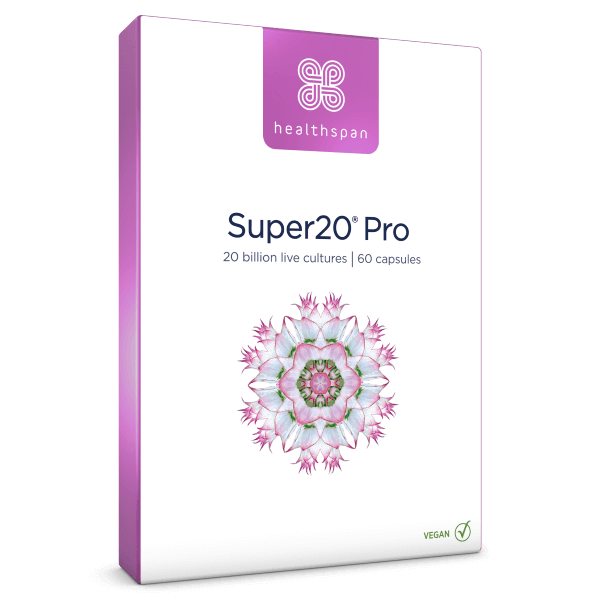
Super20 Pro
Best-selling probiotic
- 20 billion live cultures from 5 well-researched strains
- Contains Lactobacillus acidophilus, Lactobacillus paracasei, Bifidobacterium lactis and Bifidobacterium bifidum
- Supports the protective intestinal microflora in the gut
