













Buying seasonal food helps ensure it's as fresh as it can be and hasn't travelled too far – making it better for the environment and giving it the best chance to retain its nutrients. Here nutritionist Rob Hobson brings you his winter favourites and shows you how best to use them.
Some people may want to eat seasonally for both environmental and nutrition reasons, but may find it more of a challenge in autumn and winter given the reduced choice available. However, squash, pumpkin, beetroot and parsnips are in abundance during these months, as are dark green vegetables like kale.
There may be other vegetables that you haven't thought to try due to being unsure how best to prepare them. Here are three nutritious favourites and some tips on how to make them part of your winter diet.
Beetroot
This brightly coloured root vegetable comes in many varieties including red, golden and stripy.
Beetroot can be good for blood pressure as it contains high amounts of potassium and is a rich source of nitrates. These chemicals are converted into nitrite when combined with saliva in the body, and help to dilate blood vessels.
A large meta-analysis of the research linking beetroot to blood pressure showed that it had a significant effect, but the analysed studies were limited to beetroot juice and supplements.1
Nutrition highlights per 100g beetroot
Potassium 19% NRV
Phosphorus 7% NRV
Iron 7% NRV
Folate 75% NRV
Vitamin C 7% NRV
Fibre – 2.5g (9% recommended daily amount)
Beetroot is good raw or cooked – roasted beetroot is delicious when seasoned with lemon juice, coriander and salt.
Raw beetroot can be added to salads and works well as a healthy slaw with apple, carrot, cabbage and red onion, then dressed with a vinaigrette or just lemon juice. Coconut also works well with beetroot, especially in curry.
Celeriac
This vegetable has a nutty, celery-like flavour and is a source of vitamin B1, which helps convert food into energy and keeps your nervous system healthy.
Celeriac is also a good source of potassium, which is important for maintaining healthy blood pressure, and folate, which is required to make healthy red blood cells.
Nutrition highlights per 100g celeriac
Potassium 23% NRV
Phosphorus 9% NRV
Thiamin (B1) 16% NRV
Folate 26% NRV
Vitamin C 18% NRV
Fibre 4.6g (16% recommended daily amount)
Celeriac works well when it's mashed, making it a good alternative to potato. You can also mash celeriac together with cauliflower, to make something more nutritious that works well on healthy pies and hearty winter stews. Celeriac, like other root vegetables, also works well in soups, and can be used to make gratins when combined with other ingredients such as leeks, creme fraiche and cheese.
Jerusalem artichoke
This knobbly vegetable is also known as a sunchoke, but is not related to the more attractive looking globe artichoke. Jerusalem artichokes have a nutty and slightly sweet flavour, with a crunchy texture similar to water chestnuts. What makes this vegetable particularly impressive is its high content of fibre (inulin) which acts as a prebiotic in the body, helping bacteria in the gut to flourish.
Nutrition highlights per 100g Jerusalem artichoke
Potassium 21% NRV
Copper 12% NRV
Phosphorus 12% NRV
Thiamin (B1) 9% NRV
Fibre 9g (30% recommended daily amount)
Jerusalem artichokes work really well when sliced like potatoes over pies or as a gratin. These vegetables also work well roasted or mashed and are one of the few roots that can be eaten raw. You can also use Jerusalem artichokes to make delicious soups which work well with sage or a little truffle oil. They're also great sliced, roasted then cooled to use in salads.
Seasonal winter veg recipe: Beetroot, tomato and coconut curry
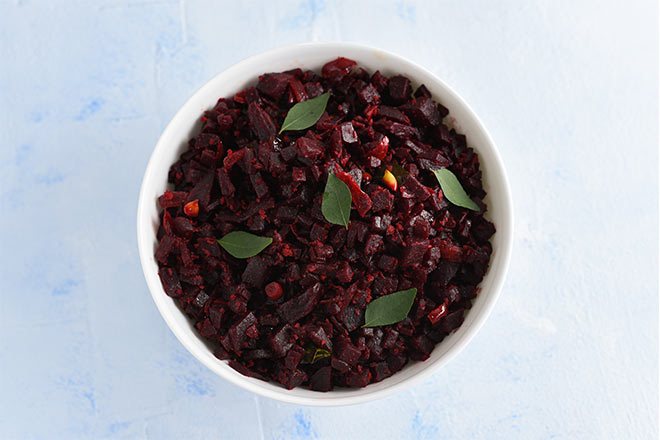
Serves 2
180 calories per serving
- 1 tsp coconut oil
- 1 large onion, finely diced
- 2 garlic cloves, finely chopped
- Thumb-sized piece fresh ginger, peeled and grated
- 1 tsp ground cumin
- 1 tsp ground coriander
- 1 tsp turmeric
- A pinch of ground cinnamon
- 2 cardamom pods
- 3 cloves
- 1 fresh green chilli, finely sliced
- 5 vine tomatoes, finely diced
- 4 raw beetroots, peeled and diced
- 100ml coconut milk
- Handful fresh coriander, finely chopped
- Juice of ½ lemon
- Set a large saucepan on a high heat and add the coconut oil, then add the onion and cook for 10 minutes until golden. Turn down the heat, add the garlic and ginger, and cook for a further 3 minutes.
- Stir in the spices, chilli, 100ml water and the tomatoes. Bring to the boil, then add the diced beetroot. Simmer for 20 minutes until tender.
- Add the coconut milk, chopped coriander and lemon juice. Stir well, then cook for a further 3 minutes to heat through. Remove from the heat and leave to rest for 10 minutes before serving with quinoa or brown rice.
