










Just like humans, pets need their sleep: but when should you be worried about their sleeping habits? Vet Joanna Woodnutt answers your questions.
🕒 5 min read
Normal sleep in pets
Pet parents often come to my consult room with questions about their pet's sleeping habits. Why do cats sleep so much? Why is my dog restless at night? Although every pet is different, studies have shown that domesticated cats sleep for around 12-15 hours a day, and more as they get older. Dogs, on the other hand, sleep for around 10 hours a day, with another few hours of rest time – although this varies hugely from dog to dog.
Puppies and kittens tend to sleep for longer – all those little catnaps add up to around 18 hours a day, which drops as they reach adulthood and then increases again as they reach old age.
Dogs, like humans, get most of their restorative sleep overnight – which is different to wild wolves and other canids like foxes, who tend to be more active at night. It's possible this is due to their domestication: they've adapted to fit our rhythms. Cats, on the other hand, tend to be more active at dawn and dusk, with periods of sleep and rest during the day and at night.
REM sleep in dogs and cats
Like humans, both dogs and cats have Rapid Eye Movement (REM) sleep (deep sleep when they're dreaming) but they do so for shorter periods than humans do, completing a sleep cycle in less time than a human. This can lead to disturbed sleep in busy households, as they spend less time in a deep sleep and more time in a state where it's easy to rouse them.

It's normal for cats to sleep for 12-15 hours a day, and dogs for around 10 (along with a few hours of rest breaks.)
Why is sleep important for pets?
We all know that sleep is important, but scientists still don't know all the functions of sleep in humans or animals. Like humans, dogs appear to need REM and non-REM sleep to aid learning and memory. Sleep deprivation can cause behavioural changes, increased sensitivity to pain, and even seizures in dogs prone to epilepsy.
Is my pet sleeping too much?
Although it's important, too much sleep can be a concern for dogs and cats. This is true both if they're sleeping more due to illness, or if they're sleeping more due to boredom; in other words, because they haven't got anything better to do.
As a result, if you notice your pet sleeping more than normal, don't panic. Instead, think about whether they have other symptoms that could indicate illness, such as:
- Changes in their eating habits
- Being thirsty
- Urination changes
- Getting tired on walks, or stopping playing early
- Hesitating to jump up or use the stairs
- Stiffness, especially when they get up
- Behavioural changes
If any of these apply to your pet, you need to get them an appointment with their vet for an examination.
Why is my pet sleeping badly?
There are lots of things that can disturb our pets' sleep, which can then affect their behaviour. Old pets tend to need more sleep, as their sleep quality tends to reduce. However, there are also illnesses and practical things that can impact their sleep quality.
Dementia (cognitive dysfunction)
Both cats and dogs have dementia-like conditions, and one of the major symptoms is a change in sleep-wake patterns, leading to disturbed sleep and activity at the wrong times of day. Medicines and supplements can help boost brain function and reduce symptoms, so it's worth talking to your vet if you think your pet has dementia.
Arthritis
Arthritis is painful, even for dogs taking medication. As well as making sure they have joint support (Flexi-Joints Plus can help), orthopaedic dog beds can make a lot of difference. Make sure it's big enough for your pet to lounge about, and provides support for joints.
Needing to urinate
Getting up to pee can really disturb sleep. The problem is, older pets often have diseases like kidney failure, diabetes, or Cushing's, that cause them to urinate more. Some of these can be controlled, so head to the vet if you notice your pet needing to urinate overnight.
Anxiety
Anxiety can also stop pets sleeping. Whether they're worried about strangers coming to the house, or the cat from next door bullying them again, this can really disturb sleep and lead to grumpiness.
Again, supplements like MagiCalm can really help, but there are prescription medications available for pet anxiety too, so talk to your vet. Don't forget to help your pet sleep by creating a calm, quiet space where they feel safe.
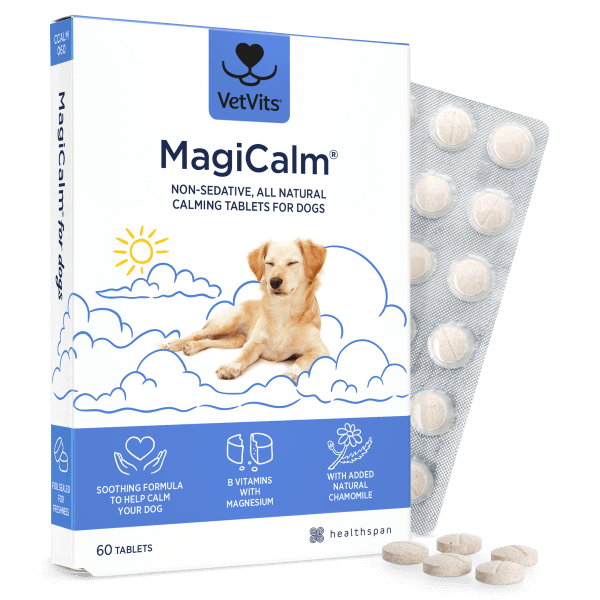
MagiCalm
For naturally calmer and less anxious dogs
- Magnesium to lower muscle tension, B vitamins for psychological wellbeing and relaxing chamomile
- Beef flavour enhanced with brewer's yeast
- Can help to calm your dog in stressful situations
Hyperthyroidism
About 1 in 10 cats suffer from hyperthyroidism, which causes hyperactivity that can disturb their sleep. Other symptoms include drinking more, urinating more, and eating lots alongside weight loss. Hyperthyroidism can cause heart problems, so talk to your vet about treating it as soon as you notice symptoms. Note that dogs don't get hyperthyroidism, but they do get hypothyroidism, which can make them sleep a lot.
Sleep apnoea
For dogs and cats bred with short snouts (brachycephalism), it can be hard to sleep normally. These dogs have over-long soft palates that get in the way of normal breathing, especially when they're relaxed or sleeping.
If your pet snores in their sleep, or if you notice their snoring suddenly stopping and them waking up, they might be suffering from sleep-disordered breathing, including sleep apnoea.
It's normal for pets to sleep for a lot of the day, especially when they get into their senior years, but sleeping too much can be a concern. Obviously, sleep deprivation is no picnic either, so optimising your pet's sleep by creating a calm, quiet area with a comfortable bed can help. For some pets, adding in supplements or medications is also needed to help them get a good night's sleep.
