








Taking your dog to the veterinary surgery can be a stressful experience, for dog and owner alike. Canine behaviourist Jackie Murphy explains how to help pets, young and old, feel calmer.
🕒 5 min read
Why do pets get stressed at the vet?
Fear of the unknown, clinical smells (that can become linked to intrusive examinations and remind pets of those first injections) as well as proximity to other pets can all add to the trauma of visiting the vet.
Of course, while some stress is normal (even plants can experience stress when they receive a lack of water), too much can have a wider impact on a dog's health. Keeping them calm will also make it easier for the vet to assess them, and result in a more positive experience for all involved.
Signs of stress in dogs
Recognising the signs of stress in your dog is the first step in being able to do something about it.
Physical signs of stress
Excessive panting (not just after exercise or if the weather is hot), visible trembling or shaking, increased drooling, sweaty paws, frequent yawning (not linked to tiredness), dilated pupils, and tense muscles (which can be displayed as a rigid body posture) are all signs of anxiety in dogs.
Other signs include frequent lip-licking or a tongue flick, having their ears pinned back against their head (although this is difficult to see in dogs who have drop ears, or ears that are close to the side of the head), and putting their tail between their legs, often tucked near to their tummies.
Behavioural signs of stress
No one knows your dog's normal behaviour better than you. Look for increased vocalisation (such as whining or whimpering), excessive barking, clinginess, trying to hide (behind you, under things, or in a corner), pacing, refusing treats, growling, snapping, or biting.
Physiological signs of stress
Your dog's heart rate will also increase while stressed, or they may toilet somewhere inappropriate.
How to help an anxious dog with vet appointments
The good news is that there are short- and long-term ways to help make vet visits calmer – even for older pets who already have a history of vet-related anxiety.
These apply for all dogs, and should be applied for every appointment.
- Take your dog for a walk, and ensure they have toileted. This will reduce anxiety.
- Consider arriving early to give them time to settle, either in a quiet corner (if the surgery is quiet), or stay outdoors and let them mooch around.
- Take their favourite toy or blanket to help them relax, as well as a few treats.
- Tell the vet that your pet is anxious, so they can give them that extra time to relax before any examinations take place.
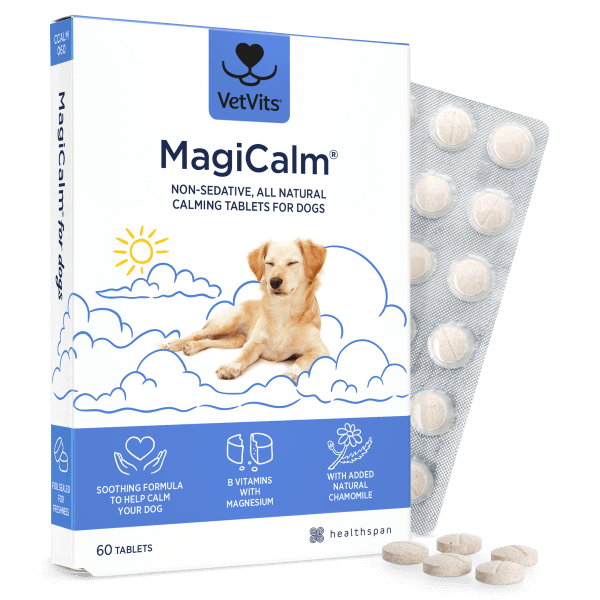
MagiCalm
For naturally calmer and less anxious dogs
- Magnesium to lower muscle tension, B vitamins for psychological wellbeing and relaxing chamomile
- Beef flavour enhanced with brewer's yeast
- Can help to calm your dog in stressful situations
How to train puppies for vet visits
When it comes to puppies, establishing routines early in their life will pay dividends down the line.
I always recommend preparation starts at home, with some gentle handling of their paws, ears, mouth, body, and tail while they are young, to help them get used to the process. In addition:
Get your puppy used to the car
Take trips to all sorts of places – the vet as well as fun places – so your pet doesn't associate car journeys solely with stressful experiences. Treats such as licking mats and stuffed kongs can help to enhance their experience. I also recommend using one of their favourite rugs.
Make social visits to the vet
Take short trips to the veterinary surgery without an appointment, and just let them have a walk around the car park, and perhaps near the door.
This is a great way to acclimate your puppy to the surgery, and reduce anxiety during future medical visits. A maximum of 15 minutes is ideal.
Once they have got used to that, ask the veterinary surgery about a quiet time that your pet can come in, meet staff and have a walk around reception, as well as potentially visit a consulting room.
Use high-value treats (such as cooked chicken, liver cake or hot dogs) to reward your puppy for positive interactions and calm, inquisitive behaviour.
Make a calm exit
Always leave the surgery in a calm way, and do not rush out the door or appear stressed.
I always recommend doing something fun afterwards, such as visiting the local park, going on a woodland walk, or meeting one of their friends for a play session.
Advice for senior dogs
Helping older dogs feel comfortable at the vet requires special attention and care due to their unique needs and potential health issues. As well as the advice above on social visits, I also recommend:
Regular appointments
Don't avoid appointments on account of their anxiety. More regular appointments will actually help reduce their anxiety, normalise the environment and create predictability.
If you need an incentive, just remember that older dogs are more likely to have health issues, so regular appointments are essential.
Positive reinforcement
Older dogs can benefit from reward-based training, so bring treats to reinforce the positive associations and interactions while you're at the vet. Stay calm, stroke your dog, and speak to them to provide reassurance.
Consider their specific health issues
Whether it's a physical adjustment (for example, ramps for the car) or a decline in their senses, senior dogs often need a little extra care. If their hearing and vision aren't what they once were, give your vet the heads-up about approaching them slowly and without any sudden movements.
As with all dogs, give your pet chance to relieve themselves before your appointment, and if the surgery is running a bit behind, then perhaps give them another opportunity while you wait.
Last words of advice
A well-formulated calming supplement can work wonders, and can be a useful aid throughout the training process, as well as to support their routine appointments.
MagiCalm includes dual-source magnesium to help lower muscle tension, a B vitamin complex to encourage mental and psychological wellbeing, and the essential amino acids L-trytophan and L-tyrosine to promote a sense of calm. The well-known ancient herbal remedy chamomile is also added for its relaxing properties.
