








Products
Subtotal
£0.00
Est. delivery
FREE
Order total
£0.00

Please enter a promotion code

Sorry, the coupon code you have entered is invalid or has expired.

Finish


The benefits of subscribing

How much do I pay?

Save up to £5 compared to RRP by subscribing to your favourite Healthspan products.

Plus, our Price Match Promise* ensures you will always receive the best available price on your subscription products, even if the one-time purchase price on our website falls below your ongoing subscription price.

How do I sign up for Subscribe & Save?

It’s simple to subscribe to a product; just select the 'Subscribe & Save' option, choose the delivery frequency you require and click 'Set up now'. Your subscription will be added to your basket like a normal order.

After you have placed the order you will receive an email confirmation with all the details. You will then be able to see your subscription details on the ‘My Subscriptions’ page in your account area on the website too.

How do I change or delay my order?

You can change the number of packs, delivery frequency or next scheduled dispatch date of your subscriptions at any time by logging in to your account and going to My Subscriptions. You can also update your delivery address and credit card details.

Can I cancel a subscription?

Yes, you can cancel your subscription at any time by contacting our customer service team on 0800 7812345. Please note subscriptions must be cancelled 72 hours before the scheduled dispatch date to avoid any charges.

How do I return an item?

UK orders can be returned for FREE for a refund of the price paid for the product. Please note that returns must be made within 30 days of purchasing and can only be accepted if the products are unopened, undamaged and in their original packaging.

For further information please view our Returns Policy.

Where Is my order?

Orders are being processed and dispatched as normal, however can be subject to routine customs checks, which can cause delays. If you are concerned about the whereabouts of your order, please contact us at customercare@healthspan.co.uk or on 0800 73 123 77. If you are calling from outside the UK please phone +44 2392 714175.

Further information can be found on our Subscribe & Save Policy and Terms & Conditions pages.


*Price match promise is based on the one time purchase price excluding new subscription discounts and voucher offers.


Where is my order?

Orders are being processed and dispatched as normal.

Orders are regularly subject to routine customs checks, which can cause delays. If you are concerned about the whereabouts of your order, please contact us at customercare@healthspan.co.uk or on 0800 73 123 77. If you are calling from outside the UK please phone +44 2392 714175.

UK
CostTarget delivery times*
UK Super Saver - SubscriptionsFREE Approx. 3-4 working days  
UK Super Saver - orders over £30
FREEApprox. 3-4 working days 
UK Super Saver - orders under £30£2.45Approx. 3-4 working days
UK Priority Service£2.95Approx. 1-2 working days
UK Courier  Â£7.95Next working day (for orders placed before 1pm)**

*Remote delivery times may vary - details listed here
**Orders placed after 1pm on Friday or over the weekend will be dispatched on Monday.

Republic of Ireland

For orders to the Republic of Ireland, please visit www.healthspan.ie 

Europe (EU)
CostTarget delivery times
Royal Mail – Priority Service£7.95Up to 10 working days*
Royal Mail – Priority Service (Subscriptions)£3.95Up to 10 working days*

Rest of WorldCostTarget delivery times
Royal Mail – Priority Service£14.95Up to 15 working days*
Royal Mail – Priority Service (Subscriptions)£3.95Up to 15 working days*

*All transit times are dependent on country of destination and may vary.

Stop your pet behaving badly

Dr Kate Mornement
Article written by Dr Kate Mornement

Date published 15 June 2021

Find out about the author

Back to article list

Latest articles

Whatever your pet's bad habits, animal behaviourist Dr Kate Mornement has seen – and solved – it all. We asked her some of your questions.

Q: What is the best way to stop a dog jumping up?

A: Behaviour is driven by consequences, which means that dogs repeat behaviours that pay off for them. Jumping up is a common problem, despite us telling them off and pushing them away – because being told off, or pushed, is reinforcing the jumping-up behaviour.

To teach your dog not to jump up, you must completely ignore him. Turn your back, cross your arms and pretend he's not there. More importantly, as soon as he stops jumping up (and has four paws on the floor) immediately turn to him and give him attention. You can also ask him to 'sit' for the attention and pats.

When you first start using this approach, the dog will typically jump up again when you give him attention. Repeat the above steps so the immediate consequence for jumping up is that your dog is ignored. With time, repetition and consistency, your dog will learn that sitting (or not jumping) gets him the attention he wants.

Q: Why won't my cat use the litter tray? She's an adult cat who has used her litter tray for years – but now she's started toileting around the house. Help!

A: Sudden refusal to toilet in the litter tray can be caused by a medical issue, such as a urinary tract infection (UTI) or bladder infection, so it's important to take your cat to the vet to either treat or rule out a physical cause.

If the vet determines the issue to be behavioural, then it can be treated as such. Cats typically stop using their litter tray due to stress, anxiety, fear or territorial behaviour. Try to determine the cause and alleviate any stress, anxiety or fear your cat may be experiencing.

Next, thoroughly clean all previous stains with an enzymatic cleaner specifically formulated for cat urine. Offer your cat some additional litter trays in other locations of the home, as sometimes they avoid their tray due to a negative association with the location (for example, next to a loud washing machine). Finally, use high-value treats to reward your cat every time you catch her using the tray. This will make her more likely to repeat the behaviour in future.
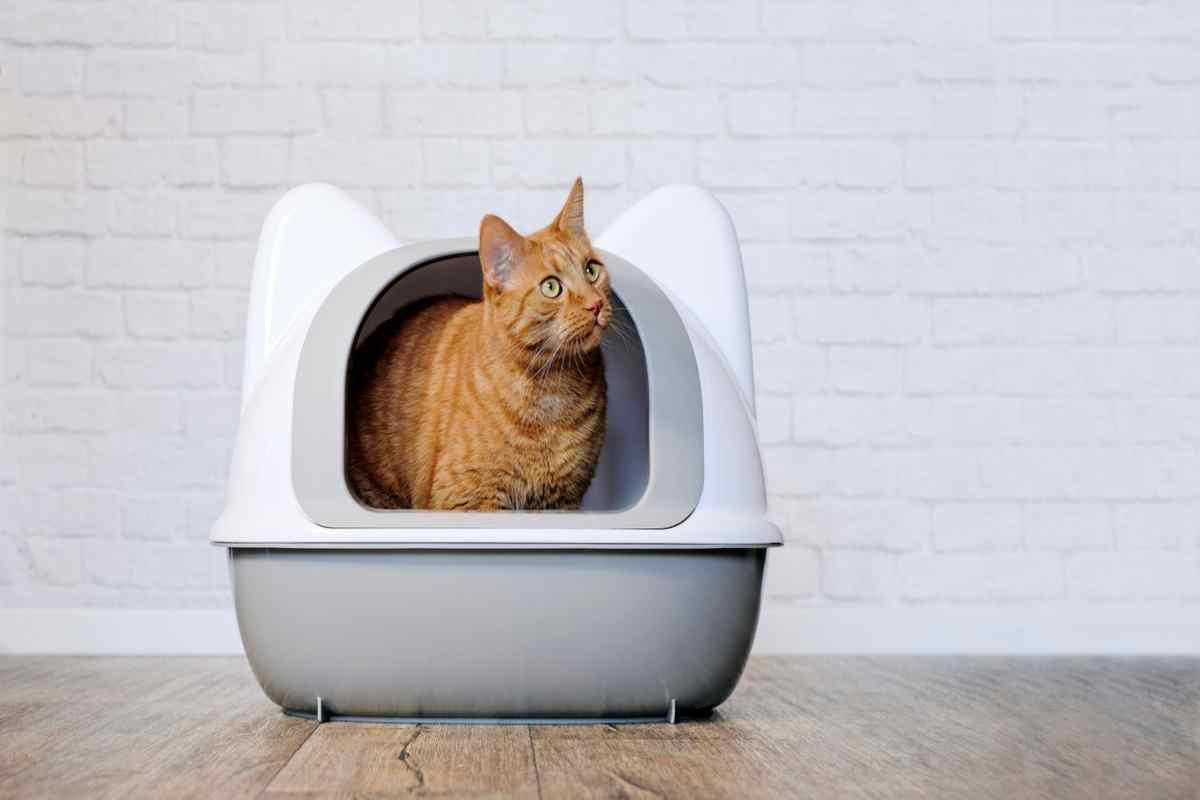
Ginger cat sitting in litter box

Cats typically stop using their litter tray due to stress, anxiety, fear or territorial behaviour.

Q: My dog is always barking at other dogs. Is there a way to train him to ignore other dogs on walks?

A: When a dog doesn't like meeting unfamiliar dogs it's because they cause them fear and anxiety. To help your dog overcome their fear we recommend a combination of desensitisation and counter-conditioning to unfamiliar dogs.

This involves gradual exposure to other dogs, starting at a distance where your dog remains relatively calm, and pairing other dogs in the environment with something your dog loves. Pieces of cooked chicken or hotdog work well. Every time your dog looks at another dog, they get chicken.

Keep the exposure brief and positive (lots of treats) and then decrease the distance between your dog and the 'scary' dog. Repeat this process and gradually get closer to other dogs, but only if your dog is remaining calm and eating the treats. Over time and with repetition your dog should learn that other dogs predict good things, and they should be less fearful.

Dog digging a hole in the garden

Digging is a normal behaviour, so dogs need an appropriate outlet.

Q: How do I stop my dog from digging in the garden?

A: As digging is a normal behaviour, dogs need an appropriate outlet, such as a designated area in the garden where they're allowed to dig. A child's sandpit just for your dog can work well.

Remembering that dogs repeat behaviours that have desired consequences, it's important to make it very reinforcing (rewarding) for your dog to dig in that area. This can be achieved by hiding high-value treats or toys for your dog to find in the designated area. Also, be sure to praise and pat your dog for digging there.

Over time and with repetition your dog will develop a preference for digging in that area because of all the positive association.

Like this article? Share it!

 
Dr Kate Mornement

About Dr Kate Mornement

Dr Kate Mornement is a qualified Animal Behaviourist and is passionate about animal training and behaviour, as well as the human-animal bond. She works with pet owners and people working professionally with animals, and is also a media spokesperson, educator and expert witness.

petsbehavingbadly.com.au

Smiling woman reading something on her phone