












Research suggests that a healthy gut is vital for overall health, and 'friendly bacteria' probiotics have an important role to play. So what do they do and how can they help you?
🕒 6 min read
According to research, healthy gut bacteria don't just improve your digestive health, but can lead to better mental wellbeing, improved immunity, reduced anxiety, better sleep, a healthier weight and even a reduced risk of some chronic diseases. The key to a healthy digestive system lies in having the right balance of bacteria in your gut.
Balancing your gut bugs
The average person has trillions of strains of live bacteria in their gut (interestingly, however, men and women have been shown to have different microbiota) and these are a mixture of 'good' (sometimes known as 'friendly') and 'bad' (or 'unfriendly') bacteria. When we are healthy these bugs live happily side by side, largely in the small and large intestines.
The 'good' bacteria help to perform crucial roles in the body such as digesting food, synthesising some vitamins (including B vitamins and vitamin K) and helping with immunity and regulating mood.
They also help to keep your 'bad' bacteria in check, although it should be pointed out that not all so-called 'bad' bacteria is straightforwardly harmful. Some, such as staphylococcus or E.coli, are present in our bodies in small quantities and only have the potential to cause infection if they are allowed to overgrow.
An imbalance of microorganisms in the intestines is known as gut dysbiosis, and can lead to digestive problems including gas, bloating, food intolerance and acid reflux. It can also cause inflammation in the body, leading to aching joints and skin rashes. For good gut health the goal is to create an equilibrium in the gut where you encourage the good bacteria to flourish so the unfriendly variety doesn't have the necessary space to grow.
Research also links an overgrowth of 'bad' bacteria in the gut microbiome to an increased risk of suffering with inflammatory bowel disorders such as Crohn's disease, Ulcerative colitis and Irritable Bowel Syndrome (IBS), and experts are working to understand how bacteria in the gut can be altered to potentially alleviate these conditions.
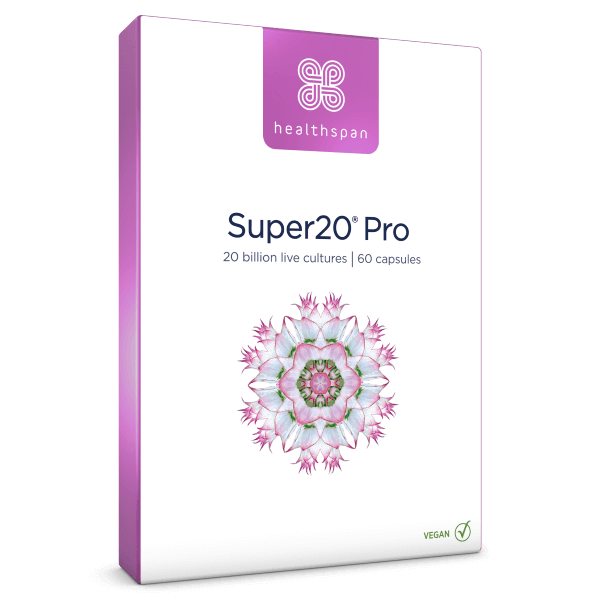
Super20 Pro
Best-selling probiotic
- 20 billion live cultures from 5 well-researched strains
- Contains Lactobacillus acidophilus, Lactobacillus paracasei, Bifidobacterium lactis and Bifidobacterium bifidum
- Supports the protective intestinal microflora in the gut
Feeding the gut
Each of us has a unique microbiome originally shaped by genetics, but over time primarily shaped by lifestyle, including whether you smoke or drink excessively, prolonged stress and what you eat. Research shows that eating a healthy, balanced diet that is as diverse as possible, including plenty of different fibrous vegetables and fruits, nuts, seeds, pulses and fermented foods (plus possibly supplementing with a prebiotic and probiotic) will allow your microbes to flourish and thrive.
Recent research shows that eating ultra-processed foods, on the other hand, appears to cause inflammation in the body and increase levels of 'bad' bacteria that can potentially upset the balance of microbes in your gut. Your gut microbiome can also become quickly unbalanced if you come down with a stomach bug or take a course of antibiotics (see below), which can wipe out your good gut bacteria.
What is in probiotics?
Probiotics are live microorganisms that appear to have health benefits when consumed. Found in some foods including live unsweetened yogurt, aged cheeses, sourdough bread, kefir (a fermented milk drink), miso (fermented soybeans), pickled vegetables like gherkins and other fermented foods like sauerkraut and kimchi, these are 'good' bugs that can add to the bugs in your intestinal tract. They can also be found in supplement form. Generally, the larger the number of bacteria strains in your chosen supplement, the better the chances of creating a colony of good gut bugs.
Eating prebiotic foods such as onions, garlic, leeks, asparagus, Jerusalem artichokes, mushrooms, chicory root, cabbage and apples in conjunction with probiotics can make them more effective. The prebiotic fibres found in these foods act as a kind of fertiliser for the probiotics, helping to 'feed' and strengthen the probiotic bacteria. You can also find prebiotics in supplement form, including those containing inulin: a natural fibre found in chicory root. For more information see "What about prebiotics?" below.
Antibiotics are drugs that help treat bacterial infections, and most of us will take them at some point in our lives. They can however negatively affect your gut microbiome, by causing antibiotic associated diarrhoea (AAD) – and can kill off large swathes of beneficial bacteria, creating more room for the less friendly bacteria to take control and multiply.
Research has shown that taking probiotics during or after a course of antibiotics can help to maintain the bacterial diversity in your gut. A meta-analysis has revealed that taking probiotics with a course of antibiotics may also reduce the risk of AAD by around 37% – and those containing strains of Lactobacilli and Bifidobacterium were found to be the most effective.
Given that probiotics are bacteria themselves, they can also be killed off by antibiotics if taken at the same time, so wait around 4-6 hours after taking your antibiotic tablet before taking a probiotic.
Eating more fermented foods like pickled vegetables, miso, aged cheeses and sourdough have also been found to help recolonise your gut bacteria with good bugs following a course of antibiotics.
Best probiotics for gut health
When choosing a probiotic, the general recommendation is to choose one with as many live bacterial strains as possible (particularly the most researched varieties such as Lactobacillus, Bifidobacterium and Bacillus) and with at least one billion (but ideally up to 50 billion) colony-forming units (CFUs.)
Be aware that heat can kill off the microorganisms in your probiotics, so store them in a cool place to extend their shelf life and do not take them with a hot drink. Also be aware that some probiotics may contain lactose, so if you are lactose-intolerant look for a supplement that does not contain cow's milk.
Prebiotics have the ability to enhance digestive health by fermenting in the colon and 'feeding' beneficial bacteria and producing beneficial short-chain fatty acids.
A common prebiotic available in supplement form is inulin. This is a type of dietary fibre known as a fructan that can be found naturally in foods like onions, garlic, and asparagus.
Inulin has demonstrated benefits in regulating bowel function and modifying gut microbiota, particularly in IBS with constipation (IBS-C). However, for those with Irritable Bowel Syndrome (IBS), inulin's fermentation can lead to gas and other by-products that exacerbate symptoms like bloating, especially in IBS-D (diarrhoea) and IBS-M (mixed) patients.
Should you take a probiotic?
By regularly consuming probiotic foods or taking a supplement, you should help support the community of good bacteria that resides in the gut, resulting in better digestion and potentially improved overall health.
Other supplements that may support gut health, including alleviating bloating and constipation, are ginger extract, gut enzymes, peppermint capsules and artichoke extract.

