













The best omega-3 foods depend on which type you're looking for. Oily fish provides EPA and DHA directly, while foods such as flaxseed, chia seeds and walnuts provide the plant-based omega-3 ALA.
🕒 9 min read
The answer to which foods are high in omega-3 depends on which omega-3 you mean. Fish and seafood provide the long-chain omega-3 fatty acids EPA and DHA directly. Plant foods mainly provide ALA, or alpha-linolenic acid, which the body can convert into EPA and DHA, but only in limited amounts.2
Understanding that distinction makes it much easier to choose the foods that best fit your diet. If you'd like a deeper explanation of the different fatty acids first, read our guide to what omega-3 is and what it does.
What are the best fish and seafood sources of omega-3?
Oily fish is the richest dietary source of the long-chain omega-3 fatty acids EPA and DHA. Good options include salmon, herring, sardines, mackerel and trout.1
The amount varies considerably depending on the species, where the fish was raised, its diet and how it is prepared. The figures below give an indication of the amounts found in several commonly eaten fish.
| Food | Serving | Approx. EPA + DHA |
|---|---|---|
| Atlantic salmon, farmed, cooked | 85g / 3 oz | 1.83g |
| Atlantic herring, cooked | 85g / 3 oz | 1.71g |
| Sardines, canned in tomato sauce | 85g / 3 oz | 1.19g |
| Atlantic mackerel, cooked | 85g / 3 oz | 1.02g |
Figures are examples from food-composition data and can vary according to species, origin and preparation.2
Which food is richest in omega-3?
There isn't one universal winner because omega-3 levels vary between individual species and products. Salmon, herring, sardines and mackerel are all particularly useful sources of EPA and DHA.
If you're looking specifically at plant-based ALA, flaxseed oil is one of the most concentrated food sources. However, ALA and EPA or DHA are not directly interchangeable because only a limited amount of ALA is converted into the longer-chain forms in the body.2
What about tuna?
The NHS does not class either fresh or canned tuna as oily fish, so tuna does not count towards your recommended weekly portion of oily fish.1
How much oily fish should you eat each week?
The NHS recommends eating at least two portions of fish a week, including one portion of oily fish. A portion is around 140g when cooked.1
Oily fish such as salmon, sardines, herring, trout and mackerel are particularly rich in EPA and DHA.
The Great Britain Nutrition and Health Claims Register recognises several functions for EPA and DHA at specific daily intakes. EPA and DHA contribute to the normal function of the heart at a daily intake of 250mg EPA and DHA, while DHA contributes to the maintenance of normal brain function and normal vision at a daily intake of 250mg DHA.3
Women who are planning a pregnancy, may become pregnant, are pregnant or are breastfeeding should have no more than two portions of oily fish a week. If you're pregnant or trying to conceive, the NHS also advises avoiding shark, swordfish and marlin because of their mercury content.1
What are the best plant-based omega-3 foods?
Plant foods mainly provide ALA rather than EPA and DHA. Flaxseed, chia seeds, walnuts and rapeseed oil are among the most useful sources.
| Food | Serving | Approx. ALA |
|---|---|---|
| Flaxseed oil | 1 tablespoon | 7.26g |
| Chia seeds | 28g / 1 oz | 5.06g |
| Walnuts | 28g / 1 oz | 2.57g |
| Whole flaxseed | 1 tablespoon | 2.35g |
| Rapeseed/canola oil | 1 tablespoon | 1.28g |
Approximate values based on food-composition data cited by the NIH Office of Dietary Supplements.2
The body can convert ALA into EPA and then DHA, but the conversion is limited. Eating plant sources of ALA therefore isn't the same as eating foods that provide EPA and DHA directly.2
Which vegetable is high in omega-3?
Vegetables aren't among the most concentrated omega-3 foods. Some vegetables and pulses contain small amounts of ALA, but nuts, seeds and plant oils are considerably more useful if you're specifically trying to increase plant-based omega-3 intake.
Which dry fruit is high in omega-3?
If by "dry fruit" you mean nuts, walnuts are the standout choice. A 28g serving provides around 2.57g of ALA.2
Most other nuts and dried fruits provide much smaller amounts of omega-3.
What fruit is high in omega-3?
No common fruit is a significant source of EPA or DHA. Some fruits, including avocado, contain small amounts of ALA, but fruit isn't a major source of omega-3.
For EPA and DHA, focus on oily fish or algae. For ALA, seeds, walnuts and suitable plant oils are much more useful.
Can you get enough omega-3 from plant foods alone?
A well-planned plant-based diet can provide plenty of ALA. The more difficult question is EPA and DHA.
Because conversion of ALA into EPA and DHA is limited, eating large amounts of flaxseed, chia or walnuts does not necessarily produce the same EPA and DHA intake as eating oily fish.2
For vegetarians and vegans who want a direct dietary source of EPA and DHA without fish, algae oil is an alternative. Fish obtain omega-3 through the marine food chain, while algae-based supplements provide these fatty acids directly from microalgae.
Veg-Omega® 3 1000mg, for example, provides 340mg DHA and 170mg EPA per capsule from microalgae and is suitable for vegetarians and vegans.
What about foods fortified with omega-3?
Omega-3 can also be added to foods such as eggs, milk, yoghurt, spreads and other products. The important thing is to check which type of omega-3 has been added.
Some fortified foods provide ALA, while others may provide DHA or a combination of omega-3 fatty acids. Because formulations vary considerably, check the nutrition information rather than assuming every product labelled "omega-3" provides meaningful amounts of EPA and DHA.
Are two eggs enough omega-3?
Not necessarily. Standard eggs should not be relied on as a primary source of EPA and DHA.
Omega-3-enriched eggs can contain more omega-3 than standard eggs, but the amount and type depend on the hens' feed and the individual product. Check the pack to see whether the stated omega-3 is ALA, DHA, EPA or a combination.
Does cooking affect omega-3 levels?
Omega-3 fatty acids are polyunsaturated fats, so prolonged exposure to high temperatures can encourage oxidation. However, the amount retained after cooking varies according to the fish, cooking method, temperature and cooking time.
You don't need to eat fish raw to obtain omega-3. The NHS recommends steamed, baked or grilled fish as healthier choices than fried fish, particularly because frying can increase the overall fat content.1
Tinned sardines and tinned salmon remain useful sources of long-chain omega-3. Both fresh and canned tuna, however, are not classed as oily fish by the NHS.1
Flaxseed oil is better suited to cold uses such as salad dressings or drizzling over food than prolonged high-temperature frying.
Which omega-3 is best for triglycerides?
There are authorised health claims relating both DHA and combined EPA and DHA to the maintenance of normal blood triglyceride levels.
EPA and DHA contribute to the maintenance of normal blood triglyceride levels when 2g of EPA and DHA is consumed daily. DHA also has an authorised claim at a daily intake of 2g DHA when consumed in combination with EPA. When these claims are used for food supplements, consumers must also be advised not to exceed a supplemental daily intake of 5g of EPA and DHA combined.3
These are substantially higher amounts than are needed for the general heart-function claim and should not be treated as a reason to self-treat high triglycerides. If you've been told your triglycerides are high, follow the advice of your doctor or healthcare professional.
What are the signs of omega-3 deficiency?
True omega-3 deficiency is uncommon. Severe deficiency can cause rough or scaly skin and skin irritation, but everyday symptoms are not a reliable way to judge your EPA and DHA intake.2
A more useful starting point is your diet. If you rarely eat oily fish and don't use another direct source of EPA and DHA, such as algae oil, it may be worth reviewing your intake.
Practical ways to get more omega-3 from food
For most people, the simplest dietary step is to include oily fish regularly. Rotating between salmon, mackerel, sardines, herring and trout gives you variety while providing EPA and DHA.
Tinned sardines and salmon can be particularly convenient because they're easy to keep in the cupboard and add to salads, toast, pasta or other meals.
If you're following a plant-based diet, useful everyday changes include adding ground flaxseed or chia seeds to porridge and smoothies, eating walnuts as a snack and using rapeseed oil where appropriate. These foods increase your ALA intake.
If you want EPA and DHA directly without eating fish, an algae-based omega-3 supplement is an alternative.
Breakfast: add chia seeds or ground flaxseed to porridge or yoghurt.
Lunch: add tinned sardines or salmon to salads, wraps or toast.
Snacks: choose a small handful of walnuts.
Dinner: rotate salmon, mackerel, herring, sardines and trout through your weekly meals.
Plant-based: combine regular ALA-rich foods with a direct source of EPA and DHA from algae if appropriate for you.
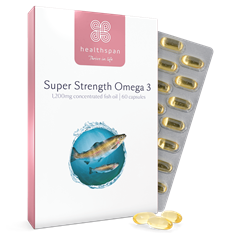
Where diet doesn't provide the amount or type of omega-3 you're looking for, Healthspan offers fish-oil and algae-based options. Super Strength Omega 3 1200mg provides 360mg EPA and 240mg DHA per capsule, while Veg-Omega® 3 1000mg provides EPA and DHA from microalgae.
For more help comparing strengths and formats, read our guide to what to look for in an omega-3 supplement, or browse the full omega-3 range.
Oily fish such as salmon, sardines, herring and mackerel are some of the best food sources of EPA and DHA. Flaxseed, chia seeds, walnuts and rapeseed oil provide ALA. If you follow a plant-based diet and want EPA and DHA directly, algae oil provides a fish-free source.