












Your pet's age, lifestyle and individual health needs can all influence the type of nutritional support that may suit them. Here's how to choose wisely.
🕒 5 min read
A balanced diet, regular exercise and good veterinary care form the foundations of keeping a dog or cat healthy. But there may also be times when pet supplements can provide targeted nutritional support, whether that's for joints and mobility, digestion, skin and coat health or everyday wellbeing.
The important part is choosing support that suits your individual pet rather than assuming every dog or cat needs the same thing. Age, breed, activity levels and existing health needs can all help guide that decision.
Does my pet need supplements?
Not every dog or cat automatically needs a supplement. If your pet is healthy and eating a complete, balanced diet appropriate for their age and life stage, their core nutritional needs should already be catered for.
Supplements are better thought of as targeted nutritional support. Some pets may benefit from additional support for a particular area of health or during certain stages of life, rather than simply being given extra vitamins and minerals without a particular reason.
For example, an older dog beginning to slow down may have different needs from an active young dog, while a cat with particular joint, digestive or skin needs may require a completely different approach.
If you've already chosen a supplement, read our guide to how to get the most out of your pet's supplements for advice on consistency, ingredients and giving them correctly.
How age, breed and lifestyle can affect your pet's needs
There is no one-size-fits-all approach to pet nutrition. The type of support that may be useful can change throughout your pet's life.
Age and life stage
Puppies and kittens are growing rapidly, so their main nutritional priority should be a complete diet designed specifically for growth and development.
Healthy adult pets may not need additional supplementation, but their needs can change depending on activity levels, diet and individual health.
As pets get older, their priorities can shift again. Mobility, digestion and general vitality may become more relevant, particularly if they begin to slow down or experience age-related changes.
How breed and size can shape nutritional needs
Breed and size can influence the areas of health that may need a little more attention. While every pet is different, understanding common breed and size-related tendencies can help you choose more appropriate nutritional support.
For example:

Large breeds
Joint & mobility support
_2026244-144914.png)
Small breeds
Energy & wellbeing support

Sensitive breeds
Skin & digestion support
- Larger dog breeds place greater loads through their joints because of their size and weight, so mobility and joint support may become particularly relevant as they age.
- Smaller breeds can have different energy requirements and may benefit from nutritional support tailored to their size, age and activity levels.
- Some breeds can be more prone to skin or digestive sensitivities, making targeted support for the skin, coat or digestive system worth considering.
These tendencies don't mean every dog of a particular breed will experience the same issues. Breed is simply one factor to consider alongside your pet's age, weight, activity, diet and individual health.
Activity levels
A highly active dog may have very different demands placed on its body compared with a less active companion animal. Regular exercise is important for physical and mental wellbeing, but highly active pets may also place greater demands on areas such as their muscles and joints.
Equally, a pet that has become less active than usual shouldn't simply be given a supplement without considering why. A noticeable change in activity, mobility or behaviour is worth discussing with your vet.
What types of pet supplements are available?
Rather than choosing a supplement based on a long ingredients list, start by thinking about the area of health you actually want to support.
Joint and mobility supplements
Joint supplements are particularly popular for older pets, active dogs and animals that may need additional mobility support.
Healthspan's Flexi-Joints Plus for Dogs, for example, combines glucosamine and chondroitin with green-lipped mussel, while Flexi-Joints for Cats provides a cat-specific joint formulation.
Digestive supplements
Digestive supplements can provide targeted nutritional support for the gut. Probiotic products contain live bacteria selected to help support the balance of bacteria within the digestive system.
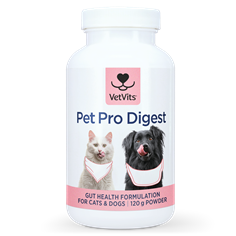
Pet Pro Digest is designed for both cats and dogs and combines probiotic cultures with fibre for digestive and dental support.
Skin and coat supplements
If skin and coat health is the priority, omega fatty acids are commonly used in pet supplements.
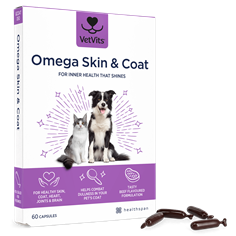
Omega Skin & Coat provides omega 3 and 6 fatty acids and is suitable for both cats and dogs.
You can also learn more in our guide to omega fatty acids for pets.
Everyday multivitamins
A multivitamin provides a broad mix of vitamins and minerals rather than targeting one particular area.
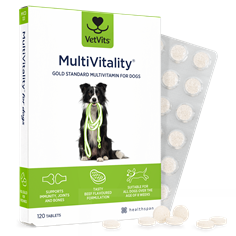
MultiVitality® for Dogs provides 18 vitamins and minerals for everyday nutritional support, while MultiVitality® Senior is formulated specifically with older dogs in mind.
Calming and emotional wellbeing
Changes in routine, travel, fireworks and unfamiliar environments can all be challenging for some dogs. Products designed specifically for calming support are another category of pet supplement.
However, supplements should form only one part of supporting an anxious pet. Environment, behaviour and the underlying cause of anxiety all matter too.
Do dogs and cats need different supplements?
Yes. Dogs and cats have different nutritional requirements, and even products designed for pets are not necessarily suitable for every species.
Some formulations, such as Pet Pro Digest and Omega Skin & Coat, are designed for both cats and dogs. Others are formulated specifically for one species.
Always check the label before giving a product to your pet, including the species it is intended for, minimum age, recommended amount and any warnings.
Can I give my pet human supplements?
Don't assume that a vitamin or supplement designed for people is suitable for your dog or cat.
Pets have different nutritional requirements and need doses appropriate for their species and size. Human supplements can also contain ingredients or levels of nutrients that are unsuitable for animals.
For that reason, choose a formulation specifically designed for pets and follow its feeding instructions. If you're unsure whether a particular ingredient or product is appropriate, ask your vet before giving it.
How to choose the right supplement for your pet
Start with your pet rather than the product. Think about their age, diet, lifestyle and the particular area of health you want to support.
When comparing pet supplements:
- Choose a formula intended specifically for your pet's species.
- Look for clearly stated ingredients and amounts.
- Check that the product is suitable for your pet's age and size.
- Follow the recommended daily amount rather than assuming more is better.
- Choose the type of support that matches your pet's actual needs.
- Check with your vet if your pet has an existing health condition or takes medication.
It's also worth considering practicality. A supplement only provides consistent nutritional support if you're able to give it regularly, so tablets, capsules and powders should be chosen with your pet's preferences in mind.
You can browse Healthspan's full range of supplements for dogs and cats to compare support for joints, digestion, skin and coat, bladder health, calming and everyday nutrition.
When should you speak to your vet?
Supplements complement good nutrition and veterinary care; they don't replace either.
If your pet develops a new symptom or a noticeable change in appetite, mobility, toileting, skin, coat, weight, energy or behaviour, don't assume that a nutritional supplement is the answer. Speak to your vet so that any underlying cause can be investigated.
You should also check with your vet before introducing a supplement if your dog or cat has an existing health condition, is pregnant or nursing, or is taking prescribed medication.
Choosing support that suits your pet
The best approach to supplementation is an individual one. A young active dog, an older dog beginning to slow down and a senior cat will not necessarily benefit from the same nutritional support.
Start with a balanced diet and good everyday care, consider the particular needs of your pet, and choose targeted support only where it makes sense. Used thoughtfully, pet supplements can form one part of helping your dog or cat stay healthy, comfortable and active throughout their life.
Top ↑