









What does vitamin C do in the body? And why do you need a regular intake? Dr Hilary Jones explains.
🕒 5 min read
Vitamin C, otherwise known as ascorbic acid, has many important functions. For a start, it's a powerful antioxidant able to mop up damaging free radicals. These are the unstable molecules responsible for the onset of chronic diseases and ageing, in a cell-damaging process known as oxidative stress.
Vitamin C protects cells from these free radicals and keeps them healthy.
It's also important for the maintenance of healthy blood vessels, bones, cartilage, and skin, and is vital for effective wound healing.
Vitamin C is a water-soluble vitamin and therefore not stored in the body. This is why a regular daily intake is needed.
What happens if you're deficient?
Do you remember those stories about 17th-century sailors, at sea for two years at a time with no fruit or vegetables, who ended up with scurvy? Can you recall cases of scurvy among the most impoverished and malnourished in Victorian England?
Shockingly, this preventable disease is making a comeback in modern Britain.
Fortunately, it is rare, but it's still happening. Symptoms of scurvy include dry skin, weakness and tiredness, swollen and bleeding gums, aching joints and muscles, poor wound healing and skin that bruises easily.
This occurs only in extreme deficiency, but sub-optimal levels of vitamin C provide lower levels of protection against a host of conditions that can affect people's daily lives.

Vitamin C is important for the cells that fight infection, and studies have shown vitamin C can help you kick a cold faster.
How does vitamin C optimise our health?
Vitamin C has an important role in our immunity. It is integral to the function of lymphocytes, the white blood cells that fight infection, and phagocytes, the cells that engulf and remove viruses and bacteria. Many studies have demonstrated vitamin C's ability to reduce the duration and severity of the common cold.
Vitamin C for skin
Ascorbic acid is also vital for the synthesis of the structural protein collagen. This is an important building block in blood vessels, bones, cartilage and skin.
This is why vitamin C facial serums have become so popular, as they help protect and repair skin that has been damaged by exposure to excess ultraviolet light and pollution.
Fine lines and wrinkles can be reduced by such products, as well as through oral supplements, helping make the skin firmer and more elastic.
Vitamin C is also needed to maintain collagen levels – the 'glue' that holds the body together. This explains why wound healing is impaired where vitamin C deficiency exists and why tissue repair is delayed where levels are low.
Vitamin C for heart health
The cardiovascular system benefits because the combined antioxidant and collagen-manufacturing properties of vitamin C maintain the integrity and flexibility of blood vessels. Some authorities believe that this can help control increased blood pressure.
What's more, anybody who has ever been prescribed iron tablets will probably have been told that vitamin C helps absorption of dietary sources of iron – especially non-haem iron. This is the type of iron that comes from plant-based foods rather than red meat.
By increasing how well iron in the diet is absorbed (its bioavailability), vitamin C can help to prevent iron deficiency anaemia and accelerate its treatment.
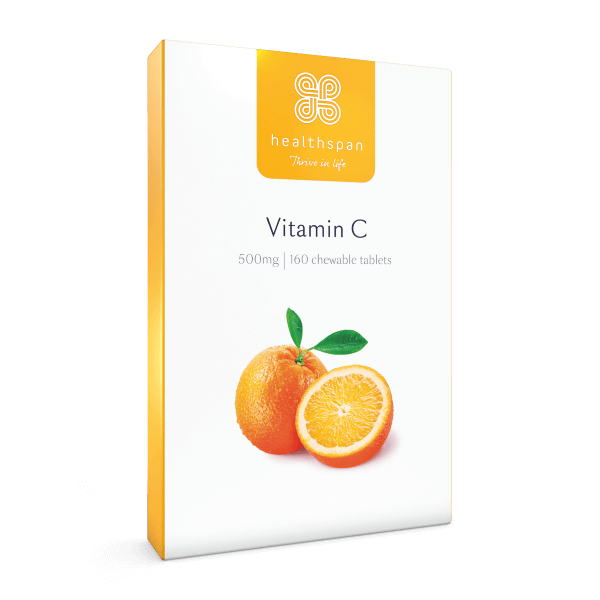
Vitamin C 500mg
Chewable tablets with 500mg vitamin C. Vegan-friendly
- Supports immunity, bones, joints and skin
- Added citrus bioflavonoids to combat free radicals
- Free from aspartame
Anti-ageing
That's not all. This vitamin is also important in the synthesis of neurotransmitters such as norepinephrine and serotonin – essential for normal brain function and mood regulation.
Some studies have even suggested that optimal levels may help reduce the risk of certain neuro-degenerative diseases associated with increasing age.
It's perhaps vitamin C's antioxidant role that is the most important, although this is difficult to measure. Vitamin C may well reduce the risk of developing cataracts and age-related macular degeneration (AMD, a major cause of visual loss in the elderly), but its role in protecting against chronic diseases and the ageing process will only become clearer with further research.
What are the best dietary sources?
Vitamin C is present in a wide variety of fruit and vegetables. This includes citrus fruits such as oranges and lemons but also papaya, kiwi, guava, strawberries, and blackcurrants. Vegetables such as bell peppers, broccoli, Brussels sprouts, kale, spinach, and potatoes are all rich sources.
Who is at risk of deficiency?
Because vitamin C is not stored in the body, anyone with an inadequate dietary intake, such as those having chemotherapy or suffering from an eating disorder, may be at risk of deficiency.
Others with certain medical conditions or increased physiological needs, such as in pregnancy or during breastfeeding, may be susceptible.
Children who are picky eaters, smokers and those who have long-term dependency on alcohol or other drugs may also be at risk. The UK sees over 100 hospital admissions due to rickets every year because malnutrition has increased threefold since 2010. Many more are likely to have sub-optimal levels without yet developing symptoms.
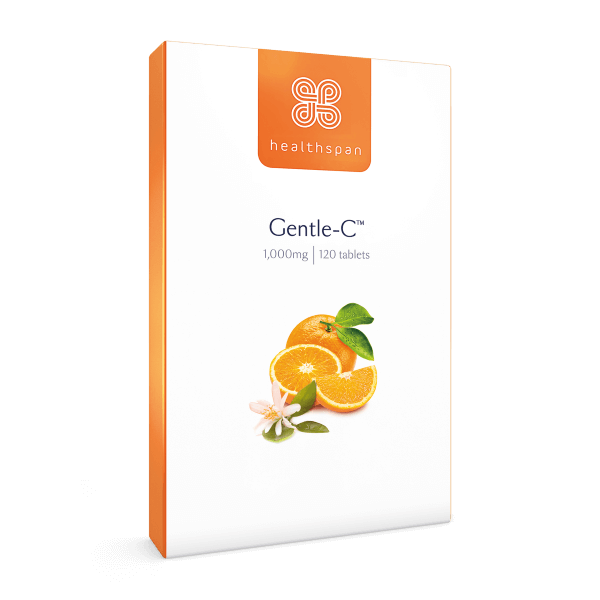
Gentle-C
High-strength vitamin C in a stomach-friendly formulation
- Immune health and joint support for sensitive stomachs
- 1,000mg vitamin C in a single daily tablet
The role of supplements
Ideally, we would all obtain sufficient vitamin C from a healthy balanced diet.
Unfortunately, this does not always happen, and even if you have an excellent diet some research shows that supplementation can boost immunity against the common cold, pneumonias and other infections, and improve skin health, as well as protecting against chronic disease and ageing.
Dosage and safety
The minimum necessary daily intake for adults is between 40 mg and 90 mg, although this should probably be increased by half as much again in smokers, as smoking reduces the absorption of vitamin C from the diet and breaks down collagen in the body more rapidly.
Supplementation with doses up to 1,000 mg can provide the health benefits discussed above. However, some people may find doses above this may cause stomach pain, diarrhoea, flatulence and kidney stones.
If you find vitamin C is giving you stomach trouble, a smaller dose or a gentler formulation may be appropriate. Non-acidic 'gentle' vitamin C is available from Healthspan, for example.
Choosing your supplement
Once you've chosen your dose and formulation, remember to choose a reputable supplier that clearly states the strength and ingredients on the product.
