













From climbing stairs to playing with the grandkids, strong muscles are important. Creatine could help you stay active, mobile and independent as you age, says Patsy Westcott
🕒 5 min read
The signs tend to creep up gradually. Hills start to feel steeper. Shopping bags seem heavier. Grandchildren suddenly appear to weigh a ton. And getting out of a low chair? Cue that unmistakable grunt. These aren’t just signs you’re not as young as you were. They’re clues your muscles are losing strength.
Muscle loss begins earlier than most of us realise. From our 30s onwards both mass and strength start to dwindle – slowly at first but faster as we age. This process - called sarcopenia – can have a real impact on daily life.
Strong muscles aren’t just about fitness or how you look. They are also vital to help us stay steady on our feet, support our joints, help protect us against falls and enable us to stay active and independent. As strength wanes everyday activities become harder, recovery slower, and the risk of falls, hospital stays and loss of independence rises.
The good news is that these consequences are not inevitable. Regular physical activity, especially strength training, can help as can the right diet and in some cases supplements. And one supplement gaining increasing attention right now is creatine.1

What is creatine?
Creatine is a natural compound made in the body from three amino acids: arginine, glycine, and methionine. It is produced in the liver, kidney and pancreas, and also found in animal-based foods, such as meat and fish.1
Most of the body’s creatine (around 95%) is stored in muscles with the rest in the brain and other organs. In total our bodies store around 120 grams of creatine but we also lose almost 2% of this each day.1
To keep levels topped up we need around 2 grams of creatine a day. Roughly half is produced naturally in our bodies, and the rest comes from what we eat.1
Most of the body’s creatine is stored in muscles, where it helps support energy production during short bursts of effort.
Why does creatine matter for muscles?
Creatine’s main job is to help our muscle cells produce energy especially during short bursts of effort such as sprinting, lifting, climbing stairs, or standing up quickly. It also helps our muscles adapt to resistance training.12
It works by helping to recycle a compound called ATP (adenosine triphosphate) the body’s main energy currency. When you move quickly or exert force ATP is used up quickly. Creatine helps replenish ATP, enabling muscles to work that bit harder and recover that bit faster.1
What does the research say?
Creatine is one of the most widely researched dietary supplements. And while early studies focused mainly on athletes and sportspeople, more recent studies have begun to examine its role in healthy ageing.3
The findings are promising. When combined with a healthy, protein-rich diet and resistance exercise, research suggests that creatine supplementation may help support:
- Muscle strength
- Lean muscle mass
- Aspects of physical performance such as balance, walking speed and agility
- The ability to carry out everyday tasks
- Recovery from physical activity
A large meta-analysis of 22 trials including more than 700 older adults aged on average 57-70 years found that combining creatine with resistance training significantly improved both strength and lean muscle mass.3
There’s also growing interest in the potential benefits of creatine beyond muscle health with some research suggesting it may help support brain function, especially during periods of stress such as poor sleep.45 You can also read our article on creatine for women.
Creatine is best thought of as a support act rather than a magic bullet. It appears to work best alongside resistance exercise and a protein-rich diet.
Why you might not be getting enough
Creatine is found almost exclusively in animal foods, such as meat and fish. So, if you are vegetarian or vegan or eat few or no animal products your intake is likely to be low. Even if you do eat meat and fish your levels may be sub-optimal. Research suggests that many of us fall short of that approximately 2 grams a day needed to maintain stores.6
One large US study looking at over 4,000 adults, for example, found around two-thirds (65.2%) of adults were getting less than a gram a day from food. This was especially marked in older people where seven out of ten (70%) consume less than 1 gram of creatine and one in five (19.8%) none at all.6
While the body does produce creatine and can even ramp up production when intake is low, it doesn’t always make enough, especially with age, illness, and certain health conditions.7
At the same time, creatine levels tend to decline as we get older due to eating less overall, reduced production, lower activity levels, and a loss of the muscle mass needed to store it.7
Could it help me?
If you’ve noticed you feel weaker than you used to, are slower to recover or are finding everyday tasks that much more of an effort creatine could be worth a thought.
It may be especially worth considering if you:
- Are aged 50-plus
- Are inactive
- Eat little or no meat or fish
- Have a low protein intake
- Are keen to maintain strength and independence as you age
If staying strong, mobile and independent matters to you, creatine may be worth thinking about as part of a broader healthy ageing plan.
The bigger picture
Creatine works best as part of a wider approach to muscle health. That includes:
Resistance training… the single most important factor. Resistance training - working with weights, bands, kettlebells or body weight helps stimulate muscle growth and slow age-related decline. Experts recommend two or three sessions a week.3
Protein… protein provides the building blocks needed to maintain and repair muscle. As we age we need more. Most experts recommend at least 1.0 to 1.2 grams of protein per kilogram of body weight per day and up to 1.5 grams per kilogram of body weight per day in severe illness or injury. Spread protein across the day e.g. eggs at breakfast, nuts, hummus or cottage cheese as snacks, fish, meat, beans or lentils at lunch and dinner.
Dietary quality… Muscle health doesn’t exist in a vacuum. The overall quality of what you eat is important. Build meals around protein with vegetables, fruit, whole grains, healthy fats as supporting acts. Eat little and often if appetite is a problem.
Lifestyle habits… quit smoking if you need to, moderate alcohol and manage stress.
Creatine can complement a muscle-supporting routine, but it won’t replace resistance exercise, enough protein and good everyday habits.
Is it safe?
Creatine is widely considered to be safe when taken at recommended doses. The Great Britain nutrition and health claims register authorises the claim that daily creatine consumption can enhance the effect of resistance training on muscle strength in adults over the age of 55. The beneficial effect is obtained with a daily intake of 3 grams of creatine alongside regular resistance training.2 Many studies use around 3-5 grams daily, which is usually well tolerated.1
Creatine monohydrate is the most common and well-researched form. It’s inexpensive, easy to use and has a strong safety record.1
Note: as with any supplement it’s a good idea to check with your GP or pharmacist if you have underlying health conditions – especially kidney issues – or take regular medication.
For more information, read our guide to creatine safety, common myths and possible side effects.
Top tips
- Keep it simple. Aim for 3–5 grams of creatine a day
- Be consistent. Take daily. Regular use is important to see benefits
- Pick a time that works for you. Take creatine at a time that’s easy to remember e.g. with a meal or after exercise
- Stick with it. It can take around a month to notice full benefits – and don’t skip that resistance exercise for best results
- For faster results. Try a short ‘loading phase’ (20 grams a day split into four doses for five days) before returning to 3-5 grams daily
For more detail on daily amounts, loading and timing, read our creatine dosage guide.
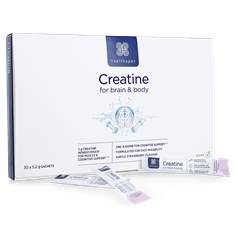
For a convenient, pre-portioned option, Healthspan Creatine for Brain & Body provides 5 grams of creatine per sachet and can be mixed with water. It also contains zinc and iodine, which contribute to normal cognitive function.
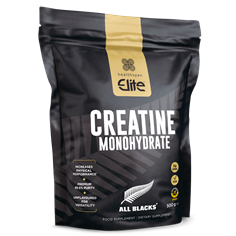
For an unflavoured powder suited to regular training, Healthspan Elite All Blacks Creatine Monohydrate provides 5 grams of micronised creatine monohydrate per serving and can be mixed with water or juice.
Whichever option you choose, follow the on-pack directions and do not exceed the recommended intake.
Top ↑