












CoQ10 is involved in cellular energy production, but levels naturally decline as we get older. This guide looks at the difference between CoQ10, ubiquinone and ubiquinol, and why ubiquinol may be a useful option later in life.
🕒 5 min read
Amongst the panoply of modern supplements available today, one of the most popular and robustly researched is coenzyme Q10, often shortened to CoQ10.
There are good reasons for this. Firstly, it occurs naturally in our bodies and is involved in the generation of cellular energy, heart health and general wellbeing. Secondly, it has antioxidant properties. Thirdly, it is often discussed in relation to heart health and statin-associated muscle symptoms, although anyone taking prescribed medication should speak to a doctor or pharmacist before starting any new supplement.
Finally, CoQ10 is especially relevant as we grow older because our bodies naturally produce less of it with age. Its rather scientific name and different formulations may initially seem puzzling, but once the terminology is explained, it becomes much clearer.
So why, if we make CoQ10 ourselves, might someone consider a supplement? What is it exactly, and why are there different forms of it?
What is CoQ10?
A coenzyme is a small non-protein molecule that links to enzymes to help catalyse chemical reactions in the body. CoQ10 is vital within human cells to burn glucose and fatty acids in order to create energy.
Unsurprisingly, the parts of our body with the greatest energy needs have the greatest demand for CoQ10. This means it is especially important for muscle cells, including those of the heart, as well as organs such as the kidneys, spleen and liver.
As the name suggests, it is ubiquitous: it is found in almost all cells in the body. As well as helping to create energy, it also plays a role in helping to protect cells from damaging particles known as free radicals, which can interfere with cell membranes, tamper with DNA and contribute to cell damage.
It is those tiny powerhouses within our cells, known as mitochondria, which act like batteries in a car and use CoQ10 to help generate energy.
What is the difference between CoQ10, ubiquinone and ubiquinol?
CoQ10 comes in two forms: ubiquinone and ubiquinol.
Standard CoQ10 supplements are usually supplied as ubiquinone. This is the oxidised form, which simply means it has gained oxygen and carries more electrons. The human body must then convert this into ubiquinol before cells can use it.
Ubiquinol is the reduced, active antioxidant form of CoQ10. While the two forms convert backwards and forwards between themselves within our bodies, this conversion process becomes less efficient with age. This is why a ubiquinol supplement confers a slight advantage and is often positioned as the most relevant form for adults over the age of 50.
Whilst ubiquinone and ubiquinol convert backwards and forwards within our bodies, this conversion process becomes less efficient with age, which is why ubiquinol is often positioned as the most relevant form for adults over 50.
Why do CoQ10 levels change with age?
The amount of CoQ10 produced within our cells is maximal at around the age of 20, then gradually diminishes thereafter as a result of cumulative environmental stress and the natural ageing process.
It is estimated that the concentration in heart muscle is reduced by half by the age of 80.
But you do not have to have a medical condition to be interested in ubiquinol. Athletes and sports nutritionists also regularly use it as part of a wider nutrition programme.
CoQ10 and heart health
There are also certain circumstances that may be associated with lower levels of coenzyme Q10 in the body, such as diabetes, an overactive thyroid, vitamin deficiencies and certain genetic mutations.
CoQ10 is especially relevant to discussions around heart health because the heart has such high energy demands. It is also often discussed by people taking statins, although evidence is mixed and anyone taking cholesterol-lowering medication should not stop or change their medication without medical advice.
Some clinical research has also explored CoQ10 in relation to cardiovascular health, heart failure and blood pressure. These are medical areas, so anyone with an existing heart condition or concerns about blood pressure should speak to their GP, pharmacist or specialist before taking supplements for these reasons.
Supplements should not be used as a replacement for prescribed medication or medical advice. If you take statins, blood pressure medication, blood thinners or heart medication, speak to a healthcare professional before taking CoQ10 or ubiquinol.
Which supplement should you take?
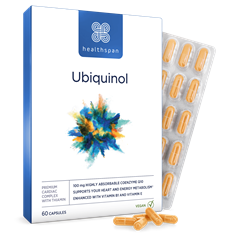
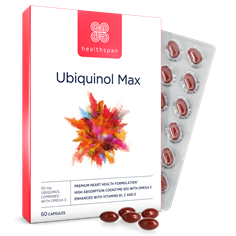
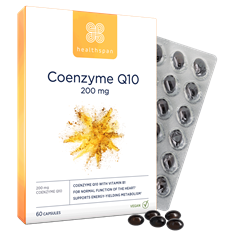
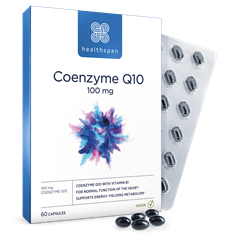
Healthspan produces Coenzyme Q10 in various strengths, including entry, mid-strength and higher-strength options of 60mg, 100mg and 200mg respectively. However, for the reasons explained above, Ubiquinol and Ubiquinol Max are the most relevant options for people in the 50-years-and-over bracket.
In particular, Kaneka Ubiquinol, with its quality seal and bioidentical ingredient, is supported by clinical evidence and has been shown to be better absorbed than conventional CoQ10. Research demonstrates that 200mg increases ubiquinol levels significantly compared with baseline in healthy adults when taken daily for at least 30 days.
It requires no conversion in the body to perform its antioxidant functions, making it readily available to provide protection at a cellular level.