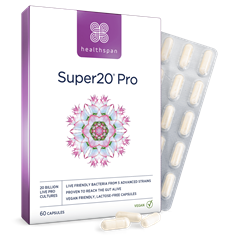














With so many probiotic strains, strengths and formats available, it can be difficult to know where to start. The right probiotic depends on your goal, the evidence for the exact strain and dose, and how easily the product fits into your routine.
🕒 9 min read
How to choose a probiotic at a glance
- Match the exact strain or strain combination to the outcome you are interested in.
- Do not assume that a higher CFU count or a longer strain list makes a product better.
- Choose a format you can take consistently and store according to the label.
- Give one suitable product a fair trial rather than changing several things at once.
- Seek medical advice for severe, persistent or unexplained symptoms.
Understanding probiotic strains
Not every probiotic works in the same way. Probiotics are identified by their genus, species and strain, such as Lacticaseibacillus rhamnosus GG. Research findings for one strain cannot automatically be applied to every strain in the same species.12
This means that the most useful question is not simply “does this contain Lactobacillus?” but “which exact strain does it contain, at what dose, and what has that strain been studied for?” Read our guide to the types of probiotic strains and why they matter for a fuller explanation.
What formats do probiotics come in?
Format affects convenience, storage and how a product is designed to protect live microorganisms. No single format is automatically best for everyone, so follow the individual product instructions.
Capsules
Capsules are widely used because they are convenient, pre-measured and easy to add to a daily routine. Some products use capsule technologies designed to protect the contents during storage or passage through the stomach.
Powders
Powders can be mixed into cool food or drinks and may suit people who struggle to swallow capsules. Measure them carefully and avoid adding live cultures to hot food or drinks unless the label specifically allows it.
Liquids
Liquids can be easy to measure and take, particularly when a product is formulated for children. Storage requirements and shelf life vary, so check whether refrigeration is required.
Gummies and chewables
These may be easier for people who dislike capsules, but the strain, viable count, sugar content and age guidance still matter. Do not assume that a more palatable format provides the same strains or dose as a capsule.
Sachets
Sachets contain a pre-measured powder and can be convenient for travel. Follow the instructions about what to mix them with and how soon to consume the prepared dose.
What strength probiotic should I take?
Probiotic strength is commonly expressed in colony-forming units, or CFUs, which estimate how many viable microorganisms are provided. A larger number does not automatically mean a more effective product. The exact strain, the dose used in human research and the viable count through the product's shelf life are more informative than the headline number alone.12
Check more than the CFU count
Look for the complete strain name, serving size, storage directions, best-before information and the manufacturer's recommended intake. Our guide to reading a probiotic label explains what to compare before buying.
What probiotic should I take?
There is no universal best probiotic. Evidence is usually strain-specific, and results can vary between people. The sections below explain what to consider for common goals without treating probiotics as a substitute for medical diagnosis or treatment.3
What is the best probiotic for gut health?
For general gut-health support, look for a product that clearly identifies its strains and provides them at a meaningful dose. Lactobacillus-related and Bifidobacterium strains are commonly used, but there is no single combination proven to be best for everyone.
Read more about the bacteria commonly associated with digestion, or explore our digestion support range.
What is the best probiotic for IBS?
Some probiotics may help certain IBS symptoms, but studies have not identified one universally effective product or strain.45 NICE advises people who choose to try a probiotic for IBS to take one product at the manufacturer's recommended dose for at least four weeks while monitoring whether it changes their symptoms.4
Speak to your GP if symptoms are persistent, changing or have not been diagnosed.
Which probiotic is best for bloating and gas?
Bloating and gas have many possible causes. Research has examined several individual strains and multi-strain products, but the findings cannot be generalised to every probiotic.5 Choose one clearly labelled product, use it consistently for the recommended period and record whether symptoms improve.
Seek medical advice for persistent bloating, unexplained weight loss, blood in the stool, severe pain or a marked change in bowel habits.
What is the best probiotic for constipation?
Specific probiotic strains, including some Bifidobacterium animalis subsp. lactis strains, have been studied for bowel frequency and stool consistency. However, the evidence is mixed and strain-specific, so probiotics should not replace established measures such as suitable fibre intake, movement and medical advice when needed.6
Contact your GP if constipation persists, is severe or is accompanied by bleeding, vomiting or unexplained weight loss.
Which probiotic is best for diarrhoea?
Diarrhoea has many causes, and a probiotic is not a substitute for hydration or medical assessment. Specific preparations of Saccharomyces boulardii and Lacticaseibacillus rhamnosus GG have been studied particularly for antibiotic-associated diarrhoea, but that evidence does not apply to every probiotic or every type of diarrhoea.7
Seek medical help if diarrhoea is severe, persistent, contains blood, follows foreign travel with significant illness, or is accompanied by signs of dehydration.
What is the best probiotic for children?
Choose only a product that is clearly formulated and labelled for the child's age. Children's products may use powders, liquids or chewable formats, but the correct strain, dose and directions still matter.
Ask a pharmacist, health visitor or GP before giving a probiotic to a young child, particularly if they were born prematurely, have an existing health condition or have a weakened immune system.3
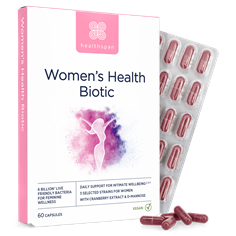
What is the best probiotic for vaginal health?
The healthy vaginal microbiome is commonly dominated by Lactobacillus species. Studies have explored selected oral and vaginal probiotic preparations, including as an addition to conventional treatment for bacterial vaginosis, but the evidence varies by strain and product.8
Probiotics do not diagnose or treat an active infection. Read our guide to acidophilus probiotic benefits for women or our overview of the best probiotics for women. Seek medical advice for unusual discharge, odour, pain, itching or recurrent symptoms.
What is the best probiotic during or after antibiotics?
Selected strains and preparations, particularly Saccharomyces boulardii CNCM I-745 and Lacticaseibacillus rhamnosus GG, have evidence for reducing the risk of antibiotic-associated diarrhoea in certain groups.7 This does not mean that probiotics reliably restore every person's microbiome after antibiotics.
Follow the antibiotic instructions and ask a pharmacist about timing. Our guide explains more about when to take probiotics.
What is the best probiotic for eczema?
Probiotics should not be presented as a treatment for eczema. The NHS notes that there is not good evidence that probiotics treat eczema, and a Cochrane review did not find a meaningful improvement in patient-rated eczema symptoms.39
Continue with your recommended skincare or prescribed treatment and speak to a GP, pharmacist or dermatologist if symptoms are not controlled.
What is the best probiotic for the immune system?
The gut microbiome and immune system interact closely, and researchers have studied selected probiotic strains for particular immune outcomes. However, there is no single probiotic proven to be best for immunity, and findings for one strain cannot be transferred to another.
Read our guide to probiotics and the immune system. A varied diet, sufficient sleep, regular activity and recommended vaccinations remain important foundations of immune health.
Before you choose a probiotic
Safety and expectations
For most healthy people, probiotics appear to be generally safe, but products differ and evidence for many claimed benefits is limited. Speak to a doctor before taking probiotic supplements if you have an existing health condition, are seriously unwell or have a weakened immune system.3
There is no universal best probiotic: the most suitable choice depends on your goal, the exact strain, the research-backed dose, the format and whether you can take it consistently. Avoid switching several products at once, and seek medical advice if symptoms are severe, persistent or unexplained.

Explore probiotic options
Use the probiotic finder for guidance based on your goals, or browse the full Healthspan probiotic range.
.png)