













How much omega-3 you need depends on the EPA and DHA you're getting, not simply the total milligrams of fish oil shown on the front of the pack. Here's how to understand the numbers.
🕒 8 min read
How much omega-3 should you take per day? The first thing to understand is that the amount of fish oil in a capsule and the amount of the long-chain omega-3 fatty acids EPA and DHA are not the same thing.
For example, a capsule containing 1,200mg of concentrated fish oil might provide 360mg EPA and 240mg DHA. That's 600mg of EPA and DHA combined, even though the number on the front of the pack says 1,200mg.
Knowing which numbers to look for makes choosing the right strength much easier.
What are the general recommendations for omega-3 intake?
For food, the NHS recommends eating at least two portions of fish each week, including one portion of oily fish such as salmon, sardines, mackerel, herring or trout.2
There isn't one universal UK supplement dose of EPA and DHA that applies to everyone. Instead, the Great Britain Nutrition and Health Claims Register sets specific intake conditions for the recognised functions of EPA and DHA.
| Recognised function | Daily intake associated with the authorised claim |
|---|---|
| Normal heart function | 250mg EPA and DHA combined |
| Normal brain function | 250mg DHA |
| Normal vision | 250mg DHA |
| Maintenance of normal blood triglyceride levels | 2g EPA and DHA combined |
| Maintenance of normal blood pressure | 3g EPA and DHA combined |
These figures are the conditions attached to specific authorised health claims. They should not be interpreted as personalised treatment targets or as a reason to take higher-dose supplements without appropriate advice.1
How much EPA and DHA do you actually need?
The amount that's relevant depends partly on what you're looking at. For the authorised normal heart-function claim, 250mg of EPA and DHA combined is the required daily intake. For normal brain function and vision, the condition of use is 250mg DHA each day.1
This distinction matters. A supplement can contain more than 250mg of EPA and DHA combined but still provide less than 250mg DHA on its own.
Don't judge an omega-3 supplement only by the large milligram figure on the front of the pack. Check the nutrition panel for the amount of EPA and DHA provided by the recommended daily serving.
Is 1000mg of omega-3 enough per day?
It depends on what the 1,000mg refers to.
A product labelled “1,000mg fish oil” does not necessarily contain 1,000mg of EPA and DHA. For example, Healthspan's High Strength Omega 3 1000mg contains 1,000mg fish oil per capsule, providing 170mg EPA and 120mg DHA.
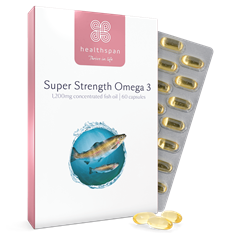
By comparison, Super Strength Omega 3 1200mg contains a more concentrated fish oil and provides 360mg EPA and 240mg DHA per capsule.
So rather than asking whether “1,000mg” is enough, look at the EPA and DHA figures on the back of the pack and compare them with the product's recommended intake.
Do active people need more omega-3?
Sports nutrition research has examined omega-3 intake in athletes and active populations. A 2025 position stand from the International Society of Sports Nutrition concluded that athletes may be at greater risk of low omega-3 status and that diets rich in long-chain omega-3 fatty acids, including supplements, can increase omega-3 levels.4
However, there is currently no separate authorised UK daily intake for EPA or DHA based simply on being physically active. Research studies use a wide variety of supplement amounts depending on their population and research question, so those study doses shouldn't be treated as a universal recommendation.
If you train intensively and are considering taking more than the recommended intake shown on your supplement, speak to a registered sports dietitian, doctor or other appropriately qualified healthcare professional.
How much omega-3 for endurance vs strength training?
There isn't an authorised UK omega-3 dosage specifically for endurance athletes or strength athletes.
The 2025 ISSN position stand reviews research using different EPA and DHA intakes across endurance, resistance-training and athletic populations, but these are research protocols rather than one agreed daily recommendation for everyone who exercises.4
For everyday supplement use, follow the recommended intake on the product. If you're using omega-3 as part of a more specialised sports nutrition plan, personalised advice is more appropriate than simply copying the dose used in an individual study.
How do you read an omega-3 supplement label?
The most important numbers are EPA and DHA, not simply the total amount of fish oil.
Example: Super Strength Omega 3 1200mg
Fish oil concentrate: 1,200mg per capsule
EPA: 360mg per capsule
DHA: 240mg per capsule
EPA + DHA combined: 600mg per capsule
Healthspan's current directions for Super Strength Omega 3 1200mg are one to two capsules daily. Two capsules therefore provide 720mg EPA and 480mg DHA.
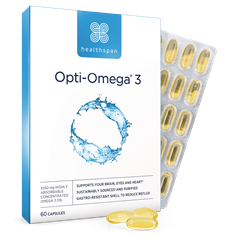
Opti-Omega® 3 takes a different approach. Each capsule contains 1,050mg of triglyceride-form marine oil concentrate, providing 320mg EPA and 320mg DHA — 640mg EPA and DHA combined. The current recommended intake is one to two capsules daily.
This is why comparing the EPA and DHA figures is much more useful than comparing the headline fish-oil strength alone.
Is it safe to take a higher dose of omega-3?
The European Food Safety Authority has reviewed the safety of long-chain omega-3 fatty acids and concluded that supplemental intakes of EPA and DHA combined of up to 5g per day do not raise safety concerns for adults.3
Importantly, EFSA did not establish 5g as a recommended daily intake or as a target to work towards. Most standard supplement serving sizes are considerably lower.
Omega-3 supplements may interact with some medicines. If you take anticoagulant medication such as warfarin, have a clotting disorder, take prescribed medication or have a medical condition, speak to your doctor or pharmacist before taking a supplement or increasing your intake.5
How much omega-3 is too much?
There is no established tolerable upper intake level for EPA and DHA. EFSA concluded that the available evidence wasn't sufficient to establish one, although supplemental EPA and DHA intakes of up to 5g per day did not raise safety concerns for adults in its assessment.3
That figure is a safety assessment, not a recommended dosage. Always follow the recommended intake of the product you're using unless a healthcare professional has advised otherwise.
What if you're taking cod liver oil?
Cod liver oil requires an additional consideration because it naturally contains vitamin A.
The NHS advises that if you take supplements containing vitamin A, your average daily intake from food and supplements should not exceed 1.5mg, or 1,500 micrograms. People who eat liver every week are advised not to take supplements containing vitamin A.6
For more detail, read our guide to omega-3 fish oil vs cod liver oil.
What time of day should you take omega-3?
There is no established benefit to taking omega-3 specifically in the morning or evening. The best time is generally the time that makes it easiest for you to take your supplement consistently.
Follow the directions supplied with your individual product. If taking fish oil causes mild stomach discomfort, some people find it easier to take with a meal or divide their daily serving.
For example, both Super Strength Omega 3 and Opti-Omega® 3 can be taken as a single daily serving or as a divided dose when two capsules are being used.
How do you choose the right omega-3 supplement?
Once you know how to read the EPA and DHA figures, a few other factors can help you choose between products.
- EPA and DHA concentration: Compare the actual amounts provided per capsule and per recommended daily serving.
- Number of capsules: More concentrated oils can provide more EPA and DHA in fewer capsules.
- Source: Most omega-3 supplements use fish oil, while algae oil offers a vegetarian and vegan source of EPA and DHA.
- Formulation: Different fish-oil forms and capsule technologies are available, including triglyceride-form oils and gastro-resistant capsules.
- Quality and sustainability: Look for purified oils and recognised sustainability certification.
Opti-Omega® 3 provides 320mg EPA and 320mg DHA per capsule in triglyceride form and uses a gastro-resistant capsule designed to help reduce reflux and fishy aftertaste.
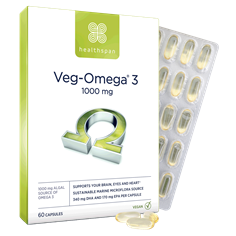
For a fish-free alternative, Veg-Omega® 3 1000mg provides 170mg EPA and 340mg DHA per capsule from microalgae and is suitable for vegetarians and vegans.
You can also browse the full omega-3 range to compare the available strengths and formats.
When deciding how much omega-3 to take, focus on the EPA and DHA supplied by the recommended serving rather than the headline amount of fish oil. The authorised heart-health claim requires 250mg EPA and DHA combined each day, while the recognised brain and vision benefits require 250mg DHA. Follow the product directions and seek professional advice before using higher doses.