













EPA and DHA are the two main long-chain omega-3 fatty acids found in oily fish and marine algae. They aren't identical: DHA has recognised roles in normal brain function and vision, while EPA and DHA together contribute to normal heart function.
🕒 8 min read
EPA and DHA are both omega-3 fatty acids, but they're not interchangeable. They have different structures, occur in different proportions in foods and supplements, and have different recognised functions in the body.
Understanding the difference can make supplement labels much easier to interpret. Instead of looking only at the total amount of fish oil, you can see exactly how much EPA and DHA a product actually provides.
If you're completely new to omega-3, start with our guide to what omega-3 is and what it does.
What is EPA (eicosapentaenoic acid)?
EPA
Eicosapentaenoic acidEPA is a long-chain omega-3 fatty acid found primarily in oily fish, fish oils and marine algae.
EPA becomes incorporated into cell membranes and can also act as a precursor to signalling compounds produced by the body.2
On the Great Britain Nutrition and Health Claims Register, EPA has a recognised function when consumed together with DHA: EPA and DHA contribute to the normal function of the heart. The beneficial effect is obtained with a daily intake of 250mg EPA and DHA.1
You'll often see EPA discussed in research looking at areas such as cardiovascular health, inflammatory processes and sports nutrition. However, these research areas shouldn't be confused with authorised supplement claims: there is currently no authorised GB health claim stating that EPA alone reduces inflammation, joint discomfort or exercise-related soreness.
What is DHA (docosahexaenoic acid)?
DHA
Docosahexaenoic acidDHA is another long-chain omega-3 fatty acid found primarily in oily fish, fish oils and marine algae.
DHA is an important structural component of cell membranes and is particularly abundant in the brain and retina.2
DHA contributes to the maintenance of normal brain function and normal vision. The beneficial effect for each is obtained with a daily intake of 250mg DHA.1
DHA also has recognised functions during pregnancy and breastfeeding. Maternal DHA intake contributes to the normal brain and eye development of the foetus and breastfed infants. The beneficial effect is obtained with a daily intake of 200mg DHA in addition to the recommended daily intake for adults of 250mg EPA and DHA.1
EPA vs DHA: what's the difference?
EPA and DHA are both long-chain omega-3 fatty acids, but their recognised functions aren't identical.
| EPA | DHA | |
|---|---|---|
| Full name | Eicosapentaenoic acid | Docosahexaenoic acid |
| Main dietary sources | Oily fish, fish oil and marine algae | Oily fish, fish oil and marine algae |
| Normal heart function | Works together with DHA | Works together with EPA |
| Normal brain function | No specific authorised claim | Recognised function at 250mg DHA daily |
| Normal vision | No specific authorised claim | Recognised function at 250mg DHA daily |
| Pregnancy | No specific maternal-development claim | Recognised role in normal foetal and breastfed infant brain and eye development at the required intake |
The simplest way to think about it is that DHA has specific recognised functions for the brain and vision, while EPA and DHA work together for the recognised normal heart-function benefit.
Why doesn't ALA provide the same EPA and DHA directly?
Flaxseed, chia seeds, walnuts and rapeseed oil contain a different omega-3 fatty acid called ALA, or alpha-linolenic acid.
The body can convert ALA into EPA and then DHA, but the process is limited. The US National Institutes of Health notes that reported conversion of ALA into EPA and DHA is generally below 15%.2
That doesn't make ALA unimportant: it is an essential fatty acid that must come from the diet. It simply means that eating ALA-rich plant foods isn't the same as consuming EPA and DHA directly.
For people who don't eat fish, algae oil provides a direct fish-free source of EPA and DHA.
What does EPA do for athletes?
EPA and DHA are widely studied in sports nutrition, including research into exercise, muscle function and recovery.
However, there is currently no authorised GB health claim stating that EPA reduces exercise-related inflammation, improves recovery or prevents muscle soreness. Research in these areas uses different populations, amounts and combinations of EPA and DHA, so individual studies shouldn't be treated as general supplement recommendations.
If you're training regularly and want to understand EPA and DHA intake in more detail, read our guide to how much omega-3 to take per day.
What does DHA do for the brain and eyes?
DHA is particularly concentrated in the brain and retina and is incorporated into the membranes of these tissues.2
The recognised nutritional benefits are clear: DHA contributes to the maintenance of normal brain function and normal vision. Both benefits are obtained with a daily intake of 250mg DHA.1
These are maintenance claims. They don't mean that taking extra DHA beyond your needs has been proven to enhance memory, intelligence or eyesight.
Do you need both EPA and DHA?
EPA and DHA aren't identical, so it's useful to know how much of each you're getting.
For normal heart function, the authorised benefit relates to EPA and DHA together, with a daily intake of 250mg EPA and DHA. For normal brain function and vision, the recognised benefit relates specifically to DHA, at 250mg per day.1
A supplement that contains both provides these two long-chain omega-3 fatty acids directly, but the ratio can vary considerably between products. That's why checking the individual EPA and DHA figures is more informative than looking only at the amount of fish oil.
Is DHA enough without EPA?
DHA alone can meet the conditions attached to the recognised claims for normal brain function and vision if the required 250mg daily intake is provided.
However, the authorised normal heart-function claim relates to EPA and DHA combined. So whether a DHA-only product is appropriate depends on why you're taking it and the amount supplied.
What are the symptoms of low EPA and DHA?
There isn't a reliable list of everyday symptoms that can tell you whether your EPA or DHA intake is low.
Severe essential fatty-acid deficiency can cause rough, scaly skin and dermatitis, but this is different from simply having a lower dietary intake of EPA and DHA.2
Symptoms such as dry eyes, low mood, difficulty concentrating, joint discomfort or tiredness can have many different causes and shouldn't be used to diagnose an omega-3 deficiency.
A more useful first step is to look at what you eat. The NHS recommends at least two portions of fish each week, including one portion of oily fish.3
Do EPA and DHA increase hair growth?
There is no authorised GB health claim for EPA or DHA promoting hair growth, and current evidence isn't strong enough to recommend omega-3 supplements specifically for this purpose.
If you're experiencing unexplained hair loss or a significant change in hair condition, there are many possible causes, so speak to your GP or another healthcare professional rather than assuming omega-3 is responsible.
Who should seek advice before taking EPA and DHA supplements?
If you're taking prescribed medication or have a medical condition, check with your doctor or pharmacist before starting a supplement or substantially increasing your intake.
Fish oil supplements can potentially interact with medicines including anticoagulants, so people taking medicines that affect blood clotting should seek professional advice.2
If you're pregnant, the NHS specifically advises avoiding cod liver oil and supplements containing vitamin A, or retinol, because too much vitamin A can harm your baby's development.4
If you're pregnant or breastfeeding and considering an omega-3 supplement, check the product carefully and speak to your midwife, GP or pharmacist if you're unsure.
Why do some people say fish oil is no longer recommended?
There hasn't been a blanket withdrawal of advice to consume omega-3-rich fish. The NHS continues to recommend at least two portions of fish a week, including one portion of oily fish.3
Some of the recent concern around supplements came from a large 2024 prospective cohort study using UK Biobank data. Among people without known cardiovascular disease, regular fish-oil supplement use was associated with a 13% higher relative risk of developing atrial fibrillation and a small increase in the observed risk of stroke.5
However, this was an observational study. It can identify an association, but it cannot establish that fish oil caused those outcomes. The researchers also did not have detailed information about supplement dose or formulation and called for further research.5
Don't interpret one observational study as evidence that everyone should stop eating oily fish or taking omega-3 supplements. Follow the recommended intake on your product, and if you have atrial fibrillation, another heart-rhythm condition, take prescribed medication or are considering a high supplemental intake, discuss it with your doctor or pharmacist.
What foods are high in EPA and DHA?
The main dietary sources of EPA and DHA are oily fish. The NHS includes:
- salmon
- mackerel
- sardines
- herring
- trout
- pilchards
- sprats
Some shellfish also provide long-chain omega-3 fatty acids, although generally in smaller amounts than oily fish.3
Both fresh and canned tuna are not classed as oily fish by the NHS, so they don't count towards the recommended weekly oily-fish portion.3
Most plant foods provide ALA rather than EPA and DHA. Marine algae are the important exception and can be used to produce vegetarian and vegan supplements containing DHA and EPA.
For a more detailed food breakdown, read what foods are high in omega-3?
How can you get enough EPA and DHA through diet and supplements?
The NHS recommends eating at least two portions of fish a week, including one portion of oily fish.3
If you don't regularly eat oily fish and are considering a supplement, check the label for the amount of EPA and DHA provided by the recommended serving rather than relying only on the total fish-oil weight.
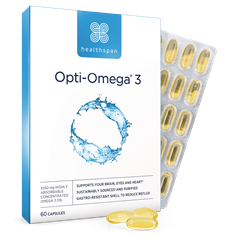
For example, Opti-Omega® 3 provides 320mg EPA and 320mg DHA per capsule, giving 640mg EPA and DHA combined. It uses triglyceride-form marine oil and a gastro-resistant capsule designed to help reduce reflux and fishy aftertaste.
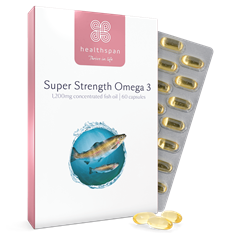
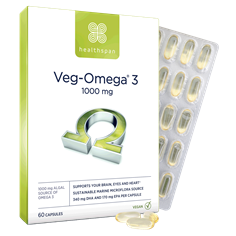
Super Strength Omega 3 1200mg provides 360mg EPA and 240mg DHA per capsule, while Veg-Omega® 3 1000mg provides 170mg EPA and 340mg DHA from microalgae and is suitable for vegetarians and vegans.
This difference in ratios is exactly why the EPA and DHA lines on the label are worth checking.
EPA: a long-chain omega-3 found mainly in oily fish and marine algae. Together with DHA, it contributes to the normal function of the heart when the required daily intake is met.
DHA: a long-chain omega-3 with recognised roles in the maintenance of normal brain function and normal vision. It also contributes with EPA to normal heart function.
Choosing a supplement: check how much EPA and DHA the recommended serving actually provides, because the total fish-oil figure alone doesn't tell you the full story.
Browse the full omega-3 range to compare different strengths and formulations.
Top ↑