












Vitamin D3 and K2 work together to support bones, immunity and healthy calcium balance – but how much should you take each day, and when might you need more or less?
🕒 7 min read
Vitamin D3 and K2 are two nutrients that support bone strength, immune health and cardiovascular wellbeing. Many people are aware of the benefits of vitamin D, but fewer understand how vitamin K2 works alongside it, and more importantly, how to get the right amounts.
Taking the correct dose is important: too little may limit the benefits, while too much vitamin D could cause unwanted effects. This guide explains the recommended dosages, who might need more or less, and the best way to take them.
How vitamin D3 and K2 work together
Vitamin D3 helps your body absorb calcium, which is essential for strong bones, while vitamin K2 supports the use of calcium in the body by helping maintain normal bones and normal blood clotting. Together, they can be useful nutrients for people looking to support bones, muscles, immune function and overall wellbeing.
For a deeper explanation of what these vitamins are and how they interact, read our full guide on vitamin D3 and K2 for bones and immune support.
Quick summary
Vitamin D3 helps maintain normal bones, teeth, muscles and immune function. Vitamin K2 contributes to normal blood clotting and the maintenance of normal bones. If you take a higher-strength vitamin D supplement, choosing a formula that also contains K2 may help support healthy calcium balance.
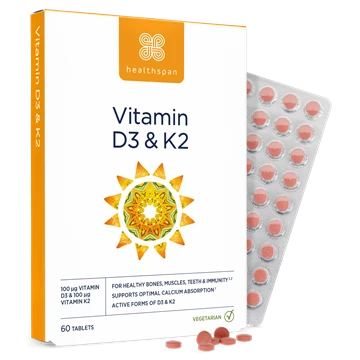
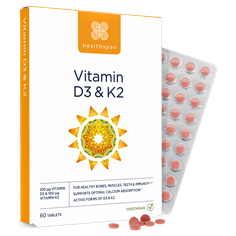
Vitamin D3 & K2
For immune, bone and blood health with vitamin D3 and vitamin K2 as MK-7
- 100 micrograms vitamin D3, equivalent to 4,000 IU
- 100 micrograms vitamin K2 in the MK-7 form
- Supports normal bones, muscles, immunity and blood clotting
Vitamin K2 and D3 dosage recommendations
Vitamin D3 dosage
The NHS advises that everyone in the UK should consider taking a daily vitamin D supplement during autumn and winter. The standard guidance is 10 micrograms, or 400 IU, daily for most adults and children above the age of one.1
For this daily amount, see Healthspan Vitamin D3 10mcg.
People with limited sun exposure, darker skin or who are housebound should consider 10 micrograms daily throughout the year. Higher doses may be needed if a healthcare professional advises them, for example to treat a diagnosed deficiency. Many adult supplements provide 25 micrograms, or 1,000 IU, while higher-strength products may provide up to 100 micrograms, or 4,000 IU, per day.
Vitamin K2 dosage
There is no separate UK reference intake specifically for vitamin K2, but the NHS advises that adults need approximately 1 microgram of vitamin K per kilogram of body weight each day. For example, an adult weighing 70kg would need around 70 micrograms of vitamin K daily. This is total vitamin K from your diet, not a recommended K2 supplement dose; a varied, balanced diet should provide what you need.2
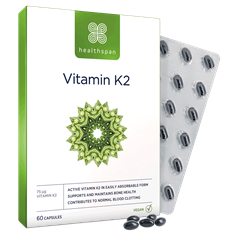
Vitamin K2 supplements often use the MK-7 form, which is widely used because it is an active form of vitamin K2. Combined D3 and K2 supplements commonly provide around 75–100 micrograms of vitamin K2 per daily dose. For a separate option, Healthspan Vitamin K2 provides 75 micrograms per capsule; follow the label.
How much K2 should you take with D3?
When taking vitamin D3 and K2 together, the ratio matters less than ensuring you are getting appropriate amounts of both. A common daily approach for adults is to take vitamin D3 in line with your needs, alongside a vitamin K2 dose that fits the supplement guidance and your personal circumstances.
The key reason for combining them is that vitamin D supports calcium absorption, while vitamin K contributes to the maintenance of normal bones. If you are unsure whether a combined supplement is right for you, or you already take medication, speak to a healthcare professional before starting.
| Nutrient or use | Daily amount | What to know |
|---|---|---|
| Vitamin D3: general UK guidance | 10 micrograms (400 IU) daily | Consider a supplement in autumn and winter; people at risk of low vitamin D should consider it all year.1 |
| Vitamin K: total daily intake | Approximately 1 microgram per kg of body weight | This includes vitamin K from food. It is not a K2 supplement dose or a D3-to-K2 ratio.2 |
| Healthspan D3 & K2: product example | 100 micrograms D3 (4,000 IU) + 100 micrograms K2 per tablet | A higher-strength adult formula. Follow the one-tablet daily directions and review intake after 16 weeks. |
| Taking 5,000 IU of D3 | 125 micrograms D3: above the usual adult daily limit | Use this dose only on medical advice. UK guidance does not set a K2 dose to pair with it.1 |
How much K2 should I take with 5,000 IU of D3?
There is no official UK recommendation for a K2 dose to take alongside 5,000 IU of D3. That amount of D3 equals 125 micrograms, which is above the NHS adult daily limit of 100 micrograms (4,000 IU) unless your doctor advises otherwise. Adding K2 does not make a higher vitamin D dose safe. If you have been prescribed 5,000 IU, ask your doctor whether you need K2 rather than choosing a ratio yourself.12
Who might need different doses of vitamin K2 and D3?
Age, health status, medication use and lifestyle factors can all influence how much vitamin D3 and K2 you need.
People who may require higher doses of vitamin D3
- People with diagnosed vitamin D deficiency: vitamin D-deficient adults may require higher treatment doses under medical supervision.
- Those with limited sun exposure, darker skin tones, or who are housebound: consider 10 micrograms of vitamin D daily throughout the year; a higher dose is not automatically needed.
- Older adults: vitamin D status can become harder to maintain with age, particularly if time outdoors is limited.
- Those with osteoporosis or specific bone health concerns: higher intakes may be recommended as part of a wider plan, but this should be discussed with a healthcare professional.
People who may need lower doses or medical advice first
- Those taking blood-thinning medication: vitamin K can interfere with anticoagulant medicines such as warfarin, so you should speak to your doctor before taking vitamin K2.
- People with medical conditions affecting calcium metabolism: seek medical advice before supplementing with higher-strength vitamin D.
- Children: babies and young children require lower doses than adults. K2 supplementation in children should be discussed with a doctor or pharmacist first.
- Pregnant or breastfeeding women: speak to a healthcare professional before using higher-strength supplements or combined products.
Can you take too much vitamin D3 and K2?
Vitamin D toxicity is rare, but it can occur when very high doses are taken over extended periods. The upper safe limit for adults is generally considered to be 100 micrograms, or 4,000 IU, per day unless a healthcare professional advises otherwise.
Taking too much vitamin D over time can cause too much calcium to build up in the body. Symptoms can include nausea, vomiting, weakness, excessive thirst, frequent urination and confusion. More serious effects can include kidney problems and heart rhythm issues.
Vitamin K2 appears to have low toxicity, and there is currently no established upper limit for vitamin K in the same way there is for vitamin D. The main caution with K2 is for people taking anticoagulant medication, where even normal supplemental doses may interfere with treatment.
How to know if your dose is right for you
The most reliable way to understand your vitamin D status is through a blood test. If you have not had your levels tested, starting with standard guidance is suitable for many healthy adults, but those with deficiency risk factors or health conditions should seek personalised advice.
When is the best time to take vitamin D3 and K2?
There is no strong evidence that taking vitamin D3 and K2 at a specific time of day is more beneficial, so choose the time that best fits your routine and helps you remember. Some people prefer taking vitamin D earlier in the day, especially if they feel more alert after taking supplements.
The most important factor is consistency. Taking your supplement at the same time each day, such as with breakfast or lunch, can make it easier to build into your routine.
How to take vitamin D3 and K2
Both vitamin D3 and K2 are fat-soluble vitamins, which means they are best absorbed when taken with food containing some fat. Taking them with a meal may support absorption and reduce the chance of forgetting your dose.
Good options include taking them with eggs, avocado, nuts, oily fish, yoghurt, or a meal cooked with olive oil. If your supplement label gives specific directions, follow those instructions.
Should you take vitamin K2 and D3 together or separately?
You can take D3 and K2 together in a single supplement or as separate tablets. Combined supplements offer convenience and ensure you are getting both nutrients in appropriate amounts.
However, if you need different doses of each vitamin based on blood test results or medical advice, taking them separately gives you more flexibility. This may be useful if your healthcare professional has recommended a specific vitamin D dose but not a higher vitamin K2 intake.
How to choose a vitamin K2 and D3 supplement
When selecting a combined D3 and K2 supplement, look for products that provide vitamin D3 as cholecalciferol and vitamin K2 in an active form such as MK-7. Check the daily dose carefully, especially if you already take a multivitamin, cod liver oil, bone health supplement or another product containing vitamin D.
If you need higher doses of one nutrient but not the other, separate supplements may work better. If you want a convenient one-a-day option, a combined formula may be easier to take consistently.
The Healthspan Vitamin D3 & K2 supplement provides both nutrients in forms your body can use effectively, combining vitamin D3 with vitamin K2 as MK-7. Each tablet delivers 100 micrograms of vitamin D3, equivalent to 4,000 IU, and 100 micrograms of vitamin K2.
This makes it a suitable option for adults looking for a higher-strength vitamin D3 and K2 formula, while also supporting healthy calcium balance, bone strength and overall wellbeing. After a period of 16 weeks, intake should be reviewed in line with the product directions.
Vitamin D3 and K2 dosage FAQs
Getting the right balance
Getting the right balance of vitamin D3 and K2 can play an important role in supporting bone health, immune function and healthy calcium balance. By understanding recommended dosages, knowing who may need more or less, and taking these vitamins consistently and correctly, you can make informed choices that support your long-term wellbeing.
If you are unsure what is right for you, starting with general guidance and seeking personalised advice where needed can help ensure you are getting the optimal amount safely.