









Creatine is one of the most researched supplements for strength, power and muscle performance – but how much should you take each day, and is creatine loading really necessary?
🕒 7 min read
Creatine is one of the most researched supplements for supporting strength, power and performance during repeated bursts of high-intensity exercise. Yet despite its popularity, one question continues to dominate online searches: “How much creatine should I take?”
In this article, we outline evidence-based creatine dosages for different goals, helping you determine how much you need based on your body weight, training objectives and individual response.

How does creatine work?
Creatine helps your muscles produce energy more efficiently during high-intensity exercise by increasing phosphocreatine stores within the muscle. Phosphocreatine is used to regenerate ATP, or adenosine triphosphate, the body’s primary energy source for short, powerful movements such as lifting weights or sprinting.1
Maintaining consistently elevated muscle creatine levels ensures ATP can be replenished quickly, supporting performance and repeated efforts during training.
To learn more about creatine, read our comprehensive guide: What is creatine and what does it do? Benefits beyond the gym.
How much creatine should you take a day?
The standard recommendation to maintain optimal muscle stores is 3-5g of creatine daily.2 This maintenance dose keeps your muscles saturated once initial stores are built up. Most people fall comfortably within this range, though individual needs vary based on body weight, muscle mass, training intensity and diet.
Quick answer
For most healthy adults, 3-5g of creatine per day is enough to maintain muscle creatine stores. People who train hard, have higher body weight, or want the simplest daily approach often use the upper end of this range.
| Goal or situation | Typical creatine dose | Useful to know |
|---|---|---|
| General daily maintenance | 3-5g per day | The standard daily range used by most adults once muscle stores are built up. |
| Regular strength training | 4-5g per day | Useful for people training intensely four or more times per week. |
| Moderate exercise | Around 3g per day | Often suitable for people training two to three times per week. |
| Creatine loading | 20-25g per day for 5-7 days, split into smaller doses | Can saturate muscle stores faster, followed by a 3-5g daily maintenance dose. |
How much creatine is safe for the kidneys?
A common misconception is that creatine harms kidney health. Reviews of the available evidence have generally not found harmful effects on kidney function in healthy people using recommended doses, although anyone with pre-existing kidney disease should seek medical advice before supplementing.3
Creatine supplementation may also increase blood creatinine without necessarily indicating kidney damage. Creatinine is a natural by-product of creatine metabolism, so clinicians may need to consider creatine use when interpreting kidney-function test results.3
If you use creatine, inform your GP before having kidney function tests. Anyone with existing kidney disease should seek medical advice before supplementing, but for healthy adults, creatine taken at recommended doses poses no known risk to kidney health.
What factors affect creatine dosage?
1. Body weight and muscle mass
How much creatine you should take a day can be influenced by your size. Larger individuals with more muscle mass may require slightly more creatine to saturate their muscles than smaller individuals.
A useful guideline is approximately 0.03g per kilogram of body weight4. For a 70kg person, this works out to around 2.1g daily, while an 85kg individual might need closer to 2.5g. These calculations explain why the 3-5g recommendation provides suitable coverage for most adults.
2. Training intensity and goals
Your ideal creatine dosage depends partly on your training demands. Therefore, how much creatine you need per day to build muscle can vary. Those engaged in regular high-intensity training, such as weightlifting, sprinting or competitive sports, may benefit from the upper end of the daily range.
If you train intensely four or more times weekly, aim for 4-5g daily. For moderate training schedules, such as two to three sessions weekly, 3g is usually adequate.
Research indicates that creatine supplementation alongside resistance training can support gains in strength and some measures of muscular endurance.5 These benefits are most relevant when supplementation accompanies an appropriate training programme.
How can you adjust your creatine dosage to fit your goals?
While 3-5g provides a solid starting point, individual responses vary. Some people are “responders” who experience pronounced benefits, while others are “non-responders” who notice minimal effects.
Non-response often occurs in individuals who already consume substantial creatine from their diet, primarily from red meat and fish, and therefore have naturally higher baseline muscle stores. These individuals may not experience dramatic improvements from supplementation.
If you’ve been taking 3g daily for a month without noticing any strength or performance benefits, consider increasing to 5g before concluding that creatine does not work for you. Similarly, if 5g causes any digestive discomfort, try reducing to 3g.
Simple adjustment guide
- Start with 3g daily if you are new to creatine or have a lower body weight.
- Move up to 5g daily if you train hard, have higher body weight, or want a simple maximum-maintenance dose.
- Reduce the dose if you experience digestive discomfort.
What is creatine loading, and is it necessary?
Creatine loading involves taking 20-25g daily, split into four smaller doses, for 5-7 days, followed by a maintenance dose of 3-5g. This approach rapidly saturates muscle creatine stores2 within a week.
Both creatine loading and taking a more gradual 3-5g per day work. However, creatine loading delivers faster results, which appeals to athletes approaching competition or those eager to experience benefits quickly.
Some people experience mild digestive discomfort with loading doses, so they choose the gradual method to avoid stomach upset. If you are not in a rush, simply taking 3-5g daily is an effective and easier approach.
Does it matter when you take creatine?
There’s plenty of debate around the best time to take creatine, but the evidence suggests that consistency matters far more than timing. Creatine works by gradually building up stores in your muscles, and taking it daily is what maintains these levels.
Whether you take it in the morning or evening makes little difference to the results. Some research has explored whether taking creatine close to exercise offers an advantage, but the evidence remains limited and inconsistent, so timing should not be treated as a major concern.6
In practice, the most important thing is choosing a time you’ll remember and taking it every day.
How can you maximise creatine's benefits?
Beyond getting your dose right, a few additional factors can enhance creatine’s effectiveness:
- Hydration: creatine supplementation can increase total body water without necessarily changing how fluid is distributed.7 Maintain normal hydration habits, especially when exercising or training in warm conditions.
- Consistency: daily supplementation works best. Missing occasional days will not undo your progress, but regular gaps can reduce muscle saturation.
- Training: creatine supports the results of training but does not replace the work itself. You will see the greatest benefits when supplementation supports a consistent training programme.
How do you choose a high-quality creatine supplement?
Once you know your ideal dose, choosing a reliable product matters. Creatine monohydrate is the most widely researched form of creatine and is commonly used to support performance during repeated bursts of high-intensity exercise.
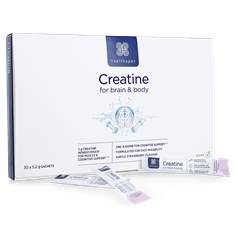
If you prefer a convenient, pre-portioned option, Healthspan Creatine for Brain & Body provides 5g of creatine per sachet and can be added directly to water. It also contains zinc and iodine, which contribute to normal cognitive function.
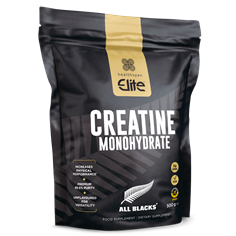
For a larger-format powder suited to regular training, Healthspan Elite All Blacks Creatine Monohydrate provides 5g of micronised creatine monohydrate per serving and is unflavoured for easy mixing with water, shakes or smoothies.
Whichever format you choose, check the serving size, follow the on-pack directions and select an option that makes consistent daily use straightforward.
Getting your creatine dose right
How much creatine per day you need is guided by simple, evidence-based advice. For most people, 3-5g daily is enough to maintain optimal muscle creatine levels, with those training harder or with higher body weight often benefiting from the upper end of the range.
Creatine loading can speed up saturation, but it is not essential if you are happy to build stores gradually over a few weeks. Timing is far less important than daily consistency, and standard doses are considered safe for healthy individuals.