









Products
Subtotal
£0.00
Est. delivery
FREE
Order total
£0.00

Please enter a promotion code

Finish


The benefits of subscribing

How much do I pay?

Save % off your first subscription order, paying just today. You will then save off RRP on all recurring subscription orders, paying

Save % off your first subscription order, paying just today. You will then save off RRP on all recurring subscription orders, paying

Plus, our Price Match Promise* ensures you will always receive the best available price on your subscription products, even if the one-time purchase price on our website falls below your ongoing subscription price.

When do I pay?

Payment will be taken on dispatch of your subscription. If your subscription is due on a non-working day (like a weekend or national holiday), we will bring the dispatch and payment forward so you don't run out of your product. Your following subscription will still be processed on its original date. You will be notified up to 14 days ahead of dispatch to allow you to make any necessary changes.

How do I sign up for Subscribe & Save?

It’s simple to subscribe to a product; just select the 'Subscribe & Save' option, choose the delivery frequency you require and click 'Set up now'. Your subscription will be added to your basket like a normal order.

After you have placed the order you will receive an email confirmation with all the details. You will then be able to see your subscription details on the ‘My Subscriptions’ page in your account area on the website too.

How do I change or delay my order?

You can change the number of packs, delivery frequency or next scheduled dispatch date of your subscriptions at any time by logging in to your account and going to My Subscriptions. You can also update your delivery address and credit card details.

Can I cancel a subscription?

Yes, you can cancel your subscription at any time by contacting our customer service team on 0800 7812345. Please note subscriptions must be cancelled 72 hours before the scheduled dispatch date to avoid any charges.

How do I return an item?

UK orders can be returned for FREE for a refund of the price paid for the product. Please note that returns must be made within 30 days of purchasing and can only be accepted if the products are unopened, undamaged and in their original packaging.

For further information please view our Returns Policy.

Where Is my order?

Orders are being processed and dispatched as normal, however can be subject to routine customs checks, which can cause delays. If you are concerned about the whereabouts of your order, please contact us at customercare@healthspan.co.uk or on 0800 73 123 77. If you are calling from outside the UK please phone +44 2392 714175.

Further information can be found on our Subscribe & Save Policy and Terms & Conditions pages.


*Price match promise is based on the one time purchase price excluding new subscription discounts and voucher offers.


Where is my order?

Orders are being processed and dispatched as normal.

Orders are regularly subject to routine customs checks, which can cause delays. If you are concerned about the whereabouts of your order, please contact us at customercare@healthspan.co.uk or on 0800 73 123 77. If you are calling from outside the UK please phone +44 2392 714175.

UK
CostTarget delivery times*
UK Super Saver - SubscriptionsFREE Approx. 3-4 working days  
UK Super Saver - orders over £30
FREEApprox. 3-4 working days 
UK Super Saver - orders under £30£2.45Approx. 3-4 working days
UK Priority Service£2.95Approx. 1-2 working days
UK Courier  £7.95Next working day (for orders placed before 1pm)**

*Remote delivery times may vary - details listed here
**Orders placed after 1pm on Friday or over the weekend will be dispatched on Monday.

Republic of Ireland

For orders to the Republic of Ireland, please visit www.healthspan.ie 

Europe (EU)
CostTarget delivery times
Royal Mail – Priority Service£7.95Up to 10 working days*
Royal Mail – Priority Service (Subscriptions)£3.95Up to 10 working days*

Rest of WorldCostTarget delivery times
Royal Mail – Priority Service£14.95Up to 15 working days*
Royal Mail – Priority Service (Subscriptions)£3.95Up to 15 working days*

*All transit times are dependent on country of destination and may vary.

What is quercetin and why is it important for older adults?

Patsy Westcott
Article written by Patsy Westcott

Date published 04 September 2026

Find out about the author

Back to article list

Latest articles

Quercetin, found in a wide range of everyday foods and drinks, is attracting attention for its potential health benefits, especially in later life. What is it and how might it help you?

🕒 8 min read

You've probably consumed some quercetin today without knowing it. A plant pigment found in many fruits and vegetables, as well as the flowers, bark, stems and roots of plants, quercetin has been quietly working its magic in food and medicine for centuries.1 In the past few years its many and varied properties and biological activities have placed it high on scientists’ agenda as one of the most promising plant compounds for health.

What is quercetin?

Quercetin – Latin for oak forest2 – is one of the most abundant members of the flavonoid family,3 a large group of natural phytochemicals, responsible for the vibrant colour of many plants.

In plants, flavonoids play a key role in stress survival. In humans, they are among the many plant compounds being researched for their potential benefits for lifelong health.45

Did you know?

Quercetin is responsible for the colour found in the papery outer skins of brown onions. It’s used as a yellow or yellow-orange dye, especially for wool and silk.6

How does it work?

Scientists are still trying to work out exactly how quercetin behaves in the body, but research suggests there are several mechanisms of action.

Could quercetin help fight oxidative stress?

Some of the most persuasive research on quercetin revolves around its role in helping the body withstand oxidative stress, the everyday wear and tear caused by attack from unstable molecules. Indeed, lab studies suggest quercetin may be one of the most potent antioxidant flavonoids, although it’s not yet entirely clear how this may translate to humans.789

Could quercetin help calm inflammation?

Inflammation is how the body defends itself and heals from injury, irritation or infection. When it becomes chronic, as it tends to do in later life (inflammageing), immune cells release chemicals that can impact organs and tissues. Numerous studies suggest that quercetin helps dampen down some of the enzymes and other chemicals involved.10

Could quercetin help the immune system?

Quercetin has attracted interest for its potential role in helping immune cells stay resilient, although findings are mixed.

  • In an early study published in 2007 of 40 trained cyclists, those who took 1000mg of quercetin a day for three weeks before and after a period of intense exercise caught significantly fewer colds and respiratory infections, compared with those who took a placebo.11
  • The same researchers looked at quercetin supplementation (again 1000mg/day) in 1,000 people aged 18-85 years. In this study published in 2010 supplementation failed to reduce the number of sick days overall. However, in an intriguing – and unexpected finding – a subgroup of 325 people aged 40-plus who rated themselves physically fit took a third fewer days off sick and had milder respiratory symptoms than those who took a placebo.12

How might quercetin help as we get older?

Quercetin’s antioxidant and anti-inflammatory properties have brought it under the spotlight of scientists studying what happens in cells as we age. Both oxidative damage and inflammation are thought to be underlying drivers of ageing as is another process: cell senescence.

As we get older more of our cells stop dividing but don’t die and send out inflammatory signals that can affect other tissues. Researchers are beginning to explore whether quercetin could be used to target these senescent or ‘zombie’ cells.13

In a study reported online in 2026, 21 days of 1000 mg a day of quercetin helped support DNA repair capacity as well as to stabilise inflammation-related blood markers in a group of middle-aged men doing high-intensity interval training.

The study involved just 13 men, and hasn't yet been independently checked by other scientists, so it's hard to draw a definitive conclusion. However, it offers an intriguing glimpse into quercetin's potential to protect against DNA damage, oxidative stress and inflammation, all processes implicated in ageing.14

Cognition

Could quercetin help cognition?

Quercetin's influence on brain health is under research, although human studies are sparse.15

  • In a 40-week RCT published in 2022, 80 healthy adults aged 60–75 years complaining of age-related forgetfulness consumed a drink containing 110mg of quercetin. This was linked to significantly quicker reaction times compared with placebo.16
Ageing muscles

Could quercetin help ageing muscles?

Muscle mass and strength diminish with the passing years (sarcopenia), leading to a higher risk of falls and fractures. Resistance training – with weights, bands, machines, kettlebells or body weight – can help maintain muscle health as we age. Emerging research suggests quercetin might help enhance the benefits of such training.

  • In a 6-week trial published in 2025, 26 older adults did resistance training while taking either 200 mg of quercetin a day or a placebo. Although both groups experienced gains in strength the quercetin group saw a noticeably bigger effect. The researchers surmise that quercetin helped muscles fire more efficiently.17
  • In a 2023 review, quercetin supplementation was linked to faster recovery after intense exercise, including reduced muscle soreness and lower blood markers of muscle damage and inflammation, although studies were not confined to older people.18
Heart and circulatory health

Is quercetin good for the heart?

Research suggests that quercetin may influence heart and circulatory health as well as metabolic health – meaning how well the body processes and uses energy from food – as measured by blood glucose, blood pressure, blood fats and waist size.

Its benefits may derive from its potential to influence the elasticity of blood vessels as well as its antioxidant and anti-inflammatory properties.19

  • A 2016 review and meta-analysis of seven randomized controlled trials (RCTs) involving 587 people, published in the Journal of the American Heart Association found quercetin supplementation lowered blood pressure, especially at doses of 500mg a day or more.20
  • A 2022 meta-analysis of ten RCTs involving 841 people found that quercetin lowered systolic blood pressure (the top figure on the blood pressure reading) in people with normal blood pressure and lowered diastolic blood pressure (the bottom figure) in those with high blood pressure.21
  • In a small 12-week trial of overweight men and women published in 2016 a quercetin-rich onion extract (100mg/day) was linked to a reduction in body weight and percentage of body fat, an effect not seen in the placebo group.22
  • A 2011 trial in 92 male smokers revealed lower total and ‘bad’ LDL cholesterol, along with reductions in blood pressure and blood glucose in those who took a quercetin-rich onion extract (100mg/day), for 10 weeks.23

What foods are high in quercetin?

Quercetin is found in a wide range of fruit, vegetables and herbs, although amounts vary. Capers are among the most concentrated sources weight for weight,24 with red onions, leafy greens, berries and herbs such as dill and oregano also contributing significant amounts, although of course we tend to eat the latter in much smaller quantities than onions or greens.25

Natural food sources include:

Capers
Onions
Kale
Spinach
Broccoli
Asparagus
Lettuce
Apples
Berries
Dill
Oregano
Black tea

Could I benefit from a supplement?

While a healthy varied diet is always the best place to start – and has other benefits such as fibre together with a slew of other nutrients and plant compounds that work synergistically – a supplement could be worth considering if:

  • You find it difficult to eat a wide range of fresh fruit and vegetables regularly, for whatever reason
  • Your diet is lacking in quercetin-rich foods such as onions, leafy greens, apples or berries
  • You want a more consistent daily intake than diet alone usually provides.

The amount of quercetin we get from a typical Western diet is estimated at 0–30mg,26 whereas in studies doses tend to fall anywhere between 100 mg and 1000 mg a day.

With so many products out there it can be hard to know which to go for. It pays to bear in mind that:

01 Not all supplements are equal

Quercetin comes attached to different glucose molecules and forms designed for better bioavailability so it’s important to choose carefully.

02 Combinations count

You may see quercetin combined with resveratrol and other plant compounds or nutrients in supplements, based on the idea that they may work together more effectively than on their own.27

03 Quality matters

When considering a supplement look for one made to Good Manufacturing Practice (GMP) standard. This helps ensure that products are manufactured to recognised quality standards. Find out more about what to look for when buying supplements.28

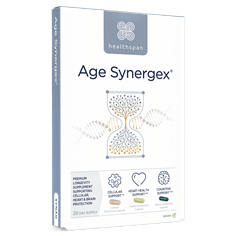
Interested to explore quercetin alongside other researched longevity-linked ingredients? Healthspan’s longevity range, including Age Synergex, which brings together several researched plant compounds and other nutrients could be worth a look.

How can you get the most from quercetin?

Quercetin is poorly absorbed on its own, but you can help optimise its benefits by:29

Pairing with fat… consuming quercetin-rich foods or taking your supplement alongside a source of dietary fat e.g. avocado or olive oil appears to roughly double how much is absorbed.

Considering how you cook… frying onions rather than boiling or steaming has been shown to increase quercetin content so, provided you don’t make too much of a habit of it, getting out the frying pan is no bad thing.

How long before I might experience benefits?

As with any supplement it can take time to experience benefits. The studies cited above range from six weeks to 40 weeks. Incidentally there’s no best time of day to take quercetin, although as suggested healthy fats may aid absorption.

Most of the research uses daily dosing so if you do decide to try a supplement taking it every day with food is likely to be your best bet. Always follow the instructions on the label and check with your doctor or pharmacist if you’re at all unsure.

Can anyone take quercetin?

Quercetin is usually considered safe and well tolerated with reported side effects tending to be mild. Think the occasional headache, upset tummy or tingling in the arms and legs at higher doses. In studies using doses of around 500 mg twice daily for up to 12 weeks there have been few problems.

Check with your doctor or pharmacist first if you:

  • Are taking blood thinners such as warfarin30
  • Are taking antibiotics or other prescribed medications31
  • Have kidney disease or other existing medical condition32
  • Are pregnant or breastfeeding

The bottom line

Scientific interest in quercetin continues to grow, and the evidence so far is encouraging, although more research is needed. The five pillars of healthy ageing – regular movement, healthy nutrition, sleep, stress management and social connection – remain key to a long, healthy life.33

But, whether or not you choose to add a supplement to your regime, the science around quercetin is a reminder that some of the most valuable compounds for health are to be found in your veg box.
References

1. Aghababaei F, Hadidi M. Recent Advances in Potential Health Benefits of Quercetin. Pharmaceuticals (Basel). 2023;16(7):1020. View study

2. Vollmannová A, Bojňanská T, Musilová J, Lidiková J, Cifrová M. Quercetin as one of the most abundant represented biological valuable plant components with remarkable chemoprotective effects – A review. Heliyon. 2024;10(12):e33342. View study

3. Panche AN, Diwan AD, Chandra SR. Flavonoids: an overview. J Nutr Sci. 2016;5:e47. View study

4. Zhong J, Fang J, Wang Y, et al. Dietary flavonoid intake is negatively associated with accelerating aging: an American population-based cross-sectional study. Nutr J. 2024;23:158. View study

5. Al-Khayri JM, Sahana GR, Nagella P, et al. Flavonoids as Potential Anti-Inflammatory Molecules: A Review. Molecules. 2022;27(9):2901. View study

6. Mechotech Global. Yellow color extraction from brown onion skins. View source

7. Aghababaei F, Hadidi M. Recent Advances in Potential Health Benefits of Quercetin. Pharmaceuticals (Basel). 2023;16(7):1020. View study

8. Qi W, Qi W, Xiong D, Long M. Quercetin: Its Antioxidant Mechanism, Antibacterial Properties and Potential Application in Prevention and Control of Toxipathy. Molecules. 2022;27(19):6545. View study

9. Li Y, Yao J, Han C, et al. Quercetin, Inflammation and Immunity. Nutrients. 2016;8(3):167. View study

10. Aggarwal D, Chaudhary M, Mandotra SK, et al. Anti-inflammatory potential of quercetin: From chemistry and mechanistic insight to nanoformulations. Curr Res Pharmacol Drug Discov. 2025;8:100217. View study

11. McAnulty S. Quercetin Reduces Illness but Not Immune Perturbations after Intensive Exercise. Medicine & Science in Sports & Exercise. 2007. View study

12. Heinz SA, Henson DA, Austin MD, Jin F, Nieman DC. Quercetin supplementation and upper respiratory tract infection: A randomized community clinical trial. Pharmacol Res. 2010;62(3):237-242. View study

13. Saliev T, Singh PB. Targeting Senescence: A Review of Senolytics and Senomorphics in Anti-Aging Interventions. Biomolecules. 2025;15(6):860. View study

14. Juan CG, Šimunić-Briški N, Volpe-Zanutto F, Matchett K, Davison GW. Quercetin activates the SIRT6-Nrf2 axis during oxidative stress, modulating ageing-associated markers in healthy men. medRxiv. 2026 preprint. View preprint

15. Deepika, Maurya PK. Health Benefits of Quercetin in Age-Related Diseases. Molecules. 2022;27(8):2498. View study

16. Nakamura Y, Watanabe H, Tanaka A, Nishihira J, Murayama N. Effect of quercetin glycosides on cognitive functions and cerebral blood flow: a randomized, double-blind, and placebo-controlled study. Eur Rev Med Pharmacol Sci. 2022;26(23):8700-8712. View study

17. Nishikawa T, Takeda R, Ueda S, et al. Quercetin ingestion alters motor unit behavior and enhances improvement in muscle strength following resistance training in older adults: a randomized, double-blind, controlled trial. Eur J Nutr. 2025;64:117. View study

18. Rojano-Ortega D, Peña-Amaro J, Berral-Aguilar AJ, Berral-de la Rosa FJ. Quercetin supplementation promotes recovery after exercise-induced muscle damage: a systematic review and meta-analysis of randomized controlled trials. Biol Sport. 2023;40(3):813-825. View study

19. Ozorowski M, Wiciński M, Kuźmiński O, et al. The Effects of Quercetin on Vascular Endothelium, Inflammation, Cardiovascular Disease and Lipid Metabolism – A Review. Nutrients. 2025;17(9):1579. View study

20. Serban MC, Sahebkar A, Zanchetti A, et al. Effects of Quercetin on Blood Pressure: A Systematic Review and Meta-Analysis of Randomized Controlled Trials. J Am Heart Assoc. 2016;5(7):e002713. View study

21. Popiolek-Kalisz J, Fornal E. The Effects of Quercetin Supplementation on Blood Pressure – Meta-Analysis. Curr Probl Cardiol. 2022;47(11):101350. View study

22. Lee JS, Cha YJ, Lee KH, Yim JE. Onion peel extract reduces the percentage of body fat in overweight and obese subjects: a 12-week, randomized, double-blind, placebo-controlled study. Nutrition Research and Practice. 2016;10(2):175-181. View study

23. Lee KH, Park E, Lee HJ, et al. Effects of daily quercetin-rich supplementation on cardiometabolic risks in male smokers. Nutrition Research and Practice. 2011;5(1):28-33. View study

24. Dabeek WM, Marra MV. Dietary Quercetin and Kaempferol: Bioavailability and Potential Cardiovascular-Related Bioactivity in Humans. Nutrients. 2019;11(10):2288. View study

25. Dabeek WM, Marra MV. Dietary Quercetin and Kaempferol: Bioavailability and Potential Cardiovascular-Related Bioactivity in Humans. Nutrients. 2019;11(10):2288. View study

26. Egert S, Wolffram S, Bosy-Westphal A, et al. Daily quercetin supplementation dose-dependently increases plasma quercetin concentrations in healthy humans. J Nutr. 2008;138(9):1615-1621. View study

27. Arias N, Macarulla MT, Aguirre L, Milton I, Portillo MP. The combination of resveratrol and quercetin enhances the individual effects of these molecules on triacylglycerol metabolism in white adipose tissue. Eur J Nutr. 2016;55(1):341-348. View study

28. Healthspan. Buying supplements: what to look for. View guide

29. Liu L, Barber E, Kellow NJ, Williamson G. Improving quercetin bioavailability: A systematic review and meta-analysis of human intervention studies. Food Chemistry. 2025;477:143630. View study

30. Patel R, Stine A, Zitko K. Enhanced Anticoagulant Effect of Warfarin When Co-administered With Quercetin. J Pharm Technol. 2022;38(6):374-375. View study

31. Andres S, Pevny S, Ziegenhagen R, et al. Safety Aspects of the Use of Quercetin as a Dietary Supplement. Mol Nutr Food Res. 2018;62:1700447. View study

32. Andres S, Pevny S, Ziegenhagen R, et al. Safety Aspects of the Use of Quercetin as a Dietary Supplement. Mol Nutr Food Res. 2018;62:1700447. View study

33. Harvard Health Publishing. The 5 pillars of longevity: movement, nutrition, sleep, stress reduction, and social connection. View source

Like this article? Share it!

 
Patsy Westcott

About Patsy Westcott

Patsy Westcott MSc is a freelance writer specialising in health and nutrition, and writes regularly for various print and online publications. She has a Master's degree in Nutritional Medicine and has contributed to more than 40 health and nutrition books.

Smiling woman reading something on her phone