








Products
Subtotal
£0.00
Est. delivery
FREE
Order total
£0.00

Please enter a promotion code

Finish


The benefits of subscribing

How much do I pay?

Save % off your first subscription order, paying just today. You will then save off RRP on all recurring subscription orders, paying

Save % off your first subscription order, paying just today. You will then save off RRP on all recurring subscription orders, paying

Plus, our Price Match Promise* ensures you will always receive the best available price on your subscription products, even if the one-time purchase price on our website falls below your ongoing subscription price.

When do I pay?

Payment will be taken on dispatch of your subscription. If your subscription is due on a non-working day (like a weekend or national holiday), we will bring the dispatch and payment forward so you don't run out of your product. Your following subscription will still be processed on its original date. You will be notified up to 14 days ahead of dispatch to allow you to make any necessary changes.

How do I sign up for Subscribe & Save?

It’s simple to subscribe to a product; just select the 'Subscribe & Save' option, choose the delivery frequency you require and click 'Set up now'. Your subscription will be added to your basket like a normal order.

After you have placed the order you will receive an email confirmation with all the details. You will then be able to see your subscription details on the ‘My Subscriptions’ page in your account area on the website too.

How do I change or delay my order?

You can change the number of packs, delivery frequency or next scheduled dispatch date of your subscriptions at any time by logging in to your account and going to My Subscriptions. You can also update your delivery address and credit card details.

Can I cancel a subscription?

Yes, you can cancel your subscription at any time by contacting our customer service team on 0800 7812345. Please note subscriptions must be cancelled 72 hours before the scheduled dispatch date to avoid any charges.

How do I return an item?

UK orders can be returned for FREE for a refund of the price paid for the product. Please note that returns must be made within 30 days of purchasing and can only be accepted if the products are unopened, undamaged and in their original packaging.

For further information please view our Returns Policy.

Where Is my order?

Orders are being processed and dispatched as normal, however can be subject to routine customs checks, which can cause delays. If you are concerned about the whereabouts of your order, please contact us at customercare@healthspan.co.uk or on 0800 73 123 77. If you are calling from outside the UK please phone +44 2392 714175.

Further information can be found on our Subscribe & Save Policy and Terms & Conditions pages.


*Price match promise is based on the one time purchase price excluding new subscription discounts and voucher offers.


Where is my order?

Orders are being processed and dispatched as normal.

Orders are regularly subject to routine customs checks, which can cause delays. If you are concerned about the whereabouts of your order, please contact us at customercare@healthspan.co.uk or on 0800 73 123 77. If you are calling from outside the UK please phone +44 2392 714175.

UK
CostTarget delivery times*
UK Super Saver - SubscriptionsFREE Approx. 3-4 working days  
UK Super Saver - orders over £30
FREEApprox. 3-4 working days 
UK Super Saver - orders under £30£2.45Approx. 3-4 working days
UK Priority Service£2.95Approx. 1-2 working days
UK Courier  £7.95Next working day (for orders placed before 1pm)**

*Remote delivery times may vary - details listed here
**Orders placed after 1pm on Friday or over the weekend will be dispatched on Monday.

Republic of Ireland

For orders to the Republic of Ireland, please visit www.healthspan.ie 

Europe (EU)
CostTarget delivery times
Royal Mail – Priority Service£7.95Up to 10 working days*
Royal Mail – Priority Service (Subscriptions)£3.95Up to 10 working days*

Rest of WorldCostTarget delivery times
Royal Mail – Priority Service£14.95Up to 15 working days*
Royal Mail – Priority Service (Subscriptions)£3.95Up to 15 working days*

*All transit times are dependent on country of destination and may vary.

What is resveratrol and how may it support longevity?

Patsy Westcott
Article written by Patsy Westcott

Date published 04 September 2026

Find out about the author

Back to article list

Latest articles

Resveratrol has captured attention as an ingredient that may help support healthy ageing. Find out what it is and what it could do for you

🕒 8 min read

Looking for ways to add more healthy years to your life? One ingredient that regularly crops up everywhere from scientific journals, books, articles to the far reaches of the internet is resveratrol, a naturally occurring plant compound, found in grapes, red wine, peanuts, blueberries and other foods.1

Scientists’ interest in resveratrol’s potential role in healthy ageing was first piqued when it was discovered that it could extend lifespan in yeast2, worms3, fruit flies and turquoise killifish.4 Subsequent research found it extended the health and survival of mice fed a high fat diet.5 Since then numerous studies have explored whether it might help support healthy human ageing too.6

Here’s what is known so far.

What is resveratrol?

Resveratrol belongs to a huge family of plant compounds called polyphenols, produced by plants to defend against UV damage, fungi and other threats. Studies have focused on their potential influence on oxidative stress, cell damage, and inflammation, which play a role in the ageing process.7

Resveratrol is part of a smaller sub-group of polyphenols called stilbenes – Greek for ‘to shine’8 – which studies suggest may help support healthy ageing.910

How does resveratrol work in the body?

As an antioxidant

Resveratrol is thought to help support the body’s antioxidant defences by boosting the activity of enzymes that help protect cells from oxidative stress and helping to neutralise some of the molecules involved in this process.11

Need to know

Oxidative stress, the bodily equivalent of iron rusting or a cut apple turning brown, is thought to play a key role in ageing.12 It happens when rogue molecules called free radicals overwhelm the body’s natural defence mechanisms causing cell damage.13 Sun exposure, pollution, stress, poor sleep, and unhealthy habits such as smoking or a poor diet, are all triggers.

As an anti-inflammatory

Inflammageing, low-grade, chronic inflammation that accumulates with the passing years, is increasingly thought to be one of the underlying drivers of ageing. Resveratrol seems to help to quell inflammation by influencing several of the ‘pathways’ involved in the body’s inflammatory response, turning down enzymes that produce inflammatory chemicals and helping regulate the ‘chatter’ between immune cells.14

By activating ‘longevity enzymes’

Resveratrol's apparent ability to activate sirtuins, sometimes called ‘longevity enzymes’ which help protect cells, caused a wave of excitement when scientists first discovered this.1516 Sirtuins are a family of enzymes long linked to calorie restriction and ageing, which are thought to work by helping the body manage energy, repair, and stress. More recent research suggests that while sirtuins do have a part to play in the ageing process it is complicated.17

Scientists are investigating how resveratrol may support mitochondria, the powerhouses of cells, influence AMPK, an enzyme that monitors cell energy levels, and help clear away damaged proteins and other cell debris associated with ageing.18

By regulating programmed cell death

The body’s cells are programmed to self-destruct when damaged or no longer useful, a natural process called apoptosis. But if this process gets out of balance it is thought to contribute to age-related conditions. Animal studies suggest resveratrol may help preserve the balance.19

What are the potential health benefits of resveratrol?

Much of the evidence for the benefits of resveratrol comes from lab and animal studies rather than large-scale human studies, such as randomised controlled trials (RCTs), considered the gold standard for proving cause and effect. Nevertheless, there are some clues as to how resveratrol may influence healthy ageing.

Musculoskeletal health

Early human studies suggest resveratrol may help support joint and muscle health, although differences in how studies were set up, how many people took part, and the doses they took mean findings are somewhat inconsistent.

  • Knee osteoarthritis. In a study published in 2018 of 110 people with osteoarthritis (OA), resveratrol (500 mg a day) combined with the OA drug, meloxicam, was associated with less pain and improved mobility, compared with meloxicam alone or placebo.20
  • Inflammation markers. A 2026 study in obese post-menopausal women found resveratrol reduced inflammation and cartilage breakdown.21
  • Exercise. A 2021 pilot study in older people found resveratrol combined with exercise improved walking distance more than exercise alone, with early signs of better muscle mitochondrial function – the process that helps generate energy in cells – at higher doses.22
  • Physical function. A 2025 study of 137 people with knee OA found 500mg/day resveratrol improved pain, stiffness, walking speed, and grip strength, possibly via one of those so-called longevity enzymes, SIRT1.23
  • Muscle health. In a 2023 review of 21 clinical trials most (14) pointed to some benefit for muscle health, an encouraging sign, though 10 did not find any benefit, so more research is needed.24
Heart health
  • Heart function. A small (60 people) 2020 trial in people with heart failure found that 100 mg resveratrol was associated with improved heart function and quality of life.25
  • Blood vessel health markers. A 2025 RCT found that resveratrol (500mg twice daily for four weeks) boosted levels of nitric oxide, which helps keep blood vessels elastic, though it had no effect on blood pressure.26
  • Dietary polyphenols. A 2026 review in Nutrients of polyphenols including resveratrol in grapes and blueberries found ‘modest but consistent improvements’ in markers of blood vessel health.27
Blood glucose and metabolic health

Several studies suggest resveratrol may help the body manage blood sugar and insulin, the hormone that keeps glucose levels balanced, especially in people with type 2 diabetes or obesity, although results vary between trials.

  • Metabolic health. A 2026 review pooling the results of 40 clinical trials, involving more than 2,500 adults, found resveratrol was linked to improvements across several markers of metabolic health – including how well the body responds to insulin, cholesterol levels, blood pressure and inflammation. It didn’t, however, appear to help with weight loss, BMI, or liver fat.28
Brain health

A 2010 study found that resveratrol improved blood flow and oxygen usage in the frontal region of the brain during mental tasks although no immediate improvement in cognitive performance was observed.29 This part of the brain is involved in skills like planning, focusing, making decisions, and solving problems.

Gut health

Thousands of studies have now looked at how the trillions of bacteria living in our gut – the gut microbiota – may influence health. In animal studies, resveratrol has been shown to influence the balance of gut bacteria30 and to help maintain the protective barrier of the gut lining.31

Foods high in resveratrol

As always when looking to boost your intake of any nutrient, it's best to opt for a ‘food first’ approach.

These are some foods to put on your plate:3233

Red and black grape skins
Blueberries
Cranberries
Redcurrants
Strawberries
Cucumber
Tomato
Red cabbage
Spinach
Peanuts & peanut butter
Pistachios & pistachio butter
Dark chocolate & cocoa
The French Paradox: is it a myth?

The so-called French Paradox – by which the French appear resistant to heart disease despite a diet high in butter, cheese, red meat, and smoking – was once largely attributed to resveratrol in red wine.

Recent research, however, shows that wine contains too little resveratrol to have this effect and researchers suggest that any small benefit is likely to be outweighed by the health risks of alcohol. Food sources like those listed above are a better bet for health.3435

Resveratrol supplementation

Resveratrol supplements usually contain ‘trans-resveratrol,’ a biologically active form of the compound that is closest to that found in food.

01 Look at the form

Resveratrol supplements usually contain ‘trans-resveratrol,’ a biologically active form of the compound that is closest to that found in food.

02 Absorption matters

One of the biggest challenges is that the body absorbs and breaks resveratrol down rapidly, so relatively little enters the bloodstream in its active form. That’s why it’s important to look for a good quality supplement.

03 Combinations count

Some products combine resveratrol with other ingredients, such as quercetin,3637 found in onions, capers, apples, berries, and leafy green vegetables, and vitamin B1 to optimise synergy.

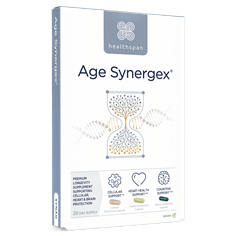
Healthspan’s Age Synergex brings together ingredients selected as part of a healthy ageing formulation.38 You can also explore Healthspan’s wider longevity range.

If you're considering a supplement, follow the pack instructions for optimum benefits. Fat can help absorption, so take it with foods containing healthy fats such as those found in avocados and olive oil.

Timing matters

Research suggests that resveratrol may help modulate the body clock via SIRT1 activity.39 What time of day is best to take it? Research from the University of Waterloo suggests that for older people resveratrol may work best when taken at midday, whereas for younger people taking it at night may be more effective.4041

Is resveratrol safe?

For most people, resveratrol appears well tolerated. Reported side effects, which mainly affect the digestive system, tend to be mild.42 However check with your doctor if you:

  • Take blood-thinning medication (anticoagulants), as resveratrol may affect how these drugs work
  • Take hormone-related medicines, since resveratrol can have mild hormone-like effects in the body
  • Take any other prescribed medication, as resveratrol may interact with it
  • Have an existing medical condition
  • Are pregnant or breastfeeding

The bottom line

Resveratrol is emerging as a highly intriguing compound linked to healthy ageing with interest spanning a wide number of potential benefits for health.

Remember, no single ingredient can replace the established pillars of health: a balanced diet, regular movement, good sleep and stress management.

Resveratrol could be a part of the story. Watch this space!
References

1. Zhou DD, Luo M, Huang SY, et al. Effects and Mechanisms of Resveratrol on Aging and Age-Related Diseases. Oxid Med Cell Longev. 2021;2021:9932218. View study

2. Howitz KT, Bitterman KJ, Cohen HY, et al. Small molecule activators of sirtuins extend Saccharomyces cerevisiae lifespan. Nature. 2003;425(6954):191-196. View study

3. Zarse K, Schmeisser S, Birringer M, Falk E, Schmoll D, Ristow M. Differential effects of resveratrol and SRT1720 on lifespan of adult Caenorhabditis elegans. Horm Metab Res. 2010;42(12):837-839. View study

4. Hector KL, Lagisz M, Nakagawa S. The effect of resveratrol on longevity across species: a meta-analysis. Biol Lett. 2012;8(5):790-793. View study

5. Baur JA, Pearson KJ, Price NL, et al. Resveratrol improves health and survival of mice on a high-calorie diet. Nature. 2006;444(7117):337-342. View study

6. Saad AM, Mohammed DM, Alkafaas SS, et al. Dietary polyphenols and human health: sources, biological activities, nutritional and immunological aspects, and bioavailability – a comprehensive review. Front Immunol. 2025;16:1653378. View study

7. Saad AM, Mohammed DM, Alkafaas SS, et al. Dietary polyphenols and human health: sources, biological activities, nutritional and immunological aspects, and bioavailability – a comprehensive review. Front Immunol. 2025;16:1653378. View study

8. Wikipedia. (E)-Stilbene. View source

9. Al-Khayri JM, Mascarenhas R, Harish HM, et al. Stilbenes, a Versatile Class of Natural Metabolites for Inflammation – An Overview. Molecules. 2023;28(9):3786. View study

10. Lin S, Tang RW-L, Duan R, Leung KW, Dong TTX, Tsim KWK. Natural Source, Chemical Classification and Medicinal Application of the Stilbene-Type Compounds. Molecules. 2026;31:2208. View study

11. Ren ZQ, Zheng SY, Sun Z, et al. Resveratrol: Molecular Mechanisms, Health Benefits, and Potential Adverse Effects. MedComm. 2025;6(6):e70252. View study

12. Liguori I, Russo G, Curcio F, et al. Oxidative stress, aging, and diseases. Clin Interv Aging. 2018;13:757-772. View study

13. Hussain T, Tan B, Yin Y, Blachier F, Tossou MC, Rahu N. Oxidative Stress and Inflammation: What Polyphenols Can Do for Us? Oxid Med Cell Longev. 2016;2016:7432797. View study

14. Meng T, Xiao D, Muhammed A, Deng J, Chen L, He J. Anti-Inflammatory Action and Mechanisms of Resveratrol. Molecules. 2021;26(1):229. View study

15. Ziętara P, Dziewięcka M, Augustyniak M. Why Is Longevity Still a Scientific Mystery? Sirtuins – Past, Present and Future. Int J Mol Sci. 2023;24(1):728. View study

16. Mohar DS, Malik S. The Sirtuin System: The Holy Grail of Resveratrol? J Clin Exp Cardiolog. 2012;3(11):216. View study

17. Carollo C, Sorce A, Cirafici E, Mulè G, Caimi G. Sirtuins and Resveratrol in Cardiorenal Diseases: A Narrative Review of Mechanisms and Therapeutic Potential. Nutrients. 2025;17(7):1212. View study

18. Ahmed M. Targeting aging pathways with natural compounds: a review of curcumin, epigallocatechin gallate, thymoquinone, and resveratrol. Immun Ageing. 2025;22:28. View study

19. Zhou DD, Luo M, Huang SY, et al. Effects and Mechanisms of Resveratrol on Aging and Age-Related Diseases. Oxid Med Cell Longev. 2021;2021:9932218. View study

20. Hussain SA, Marouf BH, Ali ZS, Ahmmad RS. Efficacy and safety of co-administration of resveratrol with meloxicam in patients with knee osteoarthritis: a pilot interventional study. Clin Interv Aging. 2018;13:1621-1630. View study

21. Leonov G, Malvina A, Kosyura S, Livantsova E, Varaeva Y, Starodubova A. Effects of Resveratrol as an Adjunct to a Low-Calorie Diet in Postmenopausal Women with Obesity and Knee Osteoarthritis. medRxiv. 2026 preprint. View preprint

22. Harper SA, Bassler JR, et al. Resveratrol and exercise combined to treat functional limitations in late life: A pilot randomized controlled trial. Experimental Gerontology. 2021;143:111111. View study

23. Karim A, Khan HA, Ahmad F, Qaisar R. Resveratrol supplementation improves functional performance in knee osteoarthritis by upregulating sirtuin 1: a randomized study. Inflammopharmacology. 2025;33(11):6877-6886. View study

24. Toniolo L, Concato M, Giacomello E. Resveratrol, a Multitasking Molecule That Improves Skeletal Muscle Health. Nutrients. 2023;15(15):3413. View study

25. Gal R, Deres L, Horvath O, et al. Resveratrol Improves Heart Function by Moderating Inflammatory Processes in Patients with Systolic Heart Failure. Antioxidants. 2020;9(11):1108. View study

26. Shafiei E, Rezaei M, Mahmoodi M, et al. Preliminary, randomized, double-blinded, placebo-controlled cross-over study with resveratrol in hypertensive patients. Sci Rep. 2025;15(1):31297. View study

27. Derbyshire EJ, Abellán-Alemán JA, Aslam N. Polyphenols and Cardiovascular Health: Emerging Relevance for Blueberries, Grapes, and Red-Fleshed Table Grapes. Nutrients. 2026;18(12):1968. View study

28. Shen CY, Li CP, Yu JT, Ho YJ, Tsai RY. Resveratrol Supplementation and its Potential Benefits in Obesity-related Non-communicable Diseases. In Vivo. 2026;40(2):748-783. View study

29. Kennedy DO, Wightman EL, Reay JL, et al. Effects of resveratrol on cerebral blood flow variables and cognitive performance in humans: a double-blind, placebo-controlled, crossover investigation. Am J Clin Nutr. 2010;91(6):1590-1597. View study

30. Zhou L, Xiao X, Zhang Q, Zheng J, Deng M. Deciphering the Anti-obesity Benefits of Resveratrol: The “Gut Microbiota-Adipose Tissue” Axis. Front Endocrinol. 2019;10:413. View study

31. Wang Y, Hong C, Wu Z, et al. Resveratrol in Intestinal Health and Disease: Focusing on Intestinal Barrier. Front Nutr. 2022;9:848400. View study

32. Phenol-Explorer. Resveratrol food composition data. View source

33. Zhou DD, Luo M, Huang SY, et al. Effects and Mechanisms of Resveratrol on Aging and Age-Related Diseases. Oxid Med Cell Longev. 2021;2021:9932218. View study

34. Weiskirchen S, Weiskirchen R. Resveratrol: How Much Wine Do You Have to Drink to Stay Healthy? Adv Nutr. 2016;7(4):706-718. View study

35. Xiang L, Xiao L, Wang Y, Li H, Huang Z, He X. Health benefits of wine: Don't expect resveratrol too much. Food Chem. 2014;156:258-266. View study

36. Zhao L, Cen F, Tian F, et al. Combination treatment with quercetin and resveratrol attenuates high fat diet-induced obesity and associated inflammation in rats via the AMPKα1/SIRT1 signaling pathway. Exp Ther Med. 2017;14(6):5942-5948. View study

37. Smoliga JM, Blanchard O. Enhancing the Delivery of Resveratrol in Humans: If Low Bioavailability is the Problem, What is the Solution? Molecules. 2014;19(11):17154-17172. View study

38. Healthspan. Age Synergex. View product

39. Spaleniak W, Cuendet M. Resveratrol as a circadian clock modulator: mechanisms of action and therapeutic applications. Mol Biol Rep. 2023;50(7):6159-6170. View study

40. University of Waterloo. Time of day boosts effectiveness of anti-aging supplements. View source

41. Sadria M, Layton AT. Aging affects circadian clock and metabolism and modulates timing of medication. iScience. 2021;24(4):102245. View study

42. Linus Pauling Institute, Oregon State University. Resveratrol. View source

Like this article? Share it!

 
Patsy Westcott

About Patsy Westcott

Patsy Westcott MSc is a freelance writer specialising in health and nutrition, and writes regularly for various print and online publications. She has a Master's degree in Nutritional Medicine and has contributed to more than 40 health and nutrition books.

Smiling woman reading something on her phone